Ingredients
Method
Make the Peel-Infused Syrup
- Combine the 180ml of water and 150g of white sugar in a small saucepan over medium-low heat. Stir continuously until the sugar has completely dissolved — the liquid should be clear and the sugar visibly absent. Remove from the heat at the moment of full dissolution, specifically before any simmering begins. Add the peeled strips of pink grapefruit and orange peel immediately. Use a vegetable peeler to cut wide strips of the coloured outer layer only — the white pith beneath is the concentrated source of bitter naringin and limonin compounds that produce an unpleasant, harsh bitterness distinct from the pleasant, dry bitter character of the peel's aromatic outer surface. Wide strips maximise the aromatic oil surface area available for extraction while allowing easy, complete removal during straining. Cover the saucepan and steep for 10–15 minutes. The covered steep is specifically important: the aromatic oils from both peels — primarily limonene, nootkatone, and various grapefruit-specific terpenes — are volatile and would escape as steam from an uncovered vessel. At 10 minutes the syrup has a clean, aromatic, specifically dry citrus depth with clearly grapefruit-forward character. At 15 minutes it is more intensely aromatic. Beyond 15 minutes the slower-extracting bitter pith compounds begin contributing even without the pith being directly present — always strain within the 15-minute window. Strain completely and allow to cool.
Prepare the Citrus Pulp
- Cut the 2 pink grapefruits and 1 orange for pulp — removing the peel, sectioning, and removing the seeds. Place the pulp directly in the bottom of a large pitcher. Using a muddler or the back of a large spoon, mash the pulp gently — pressing firmly enough to release the juice and break down the cellular structure partially, but specifically not mashing to a fine purée. The goal is a lightly broken-down pulp that releases its juice while retaining visible pieces of citrus segment — providing both textural presence and the light citrus structure that distinguishes a properly made fruit-pulp lemonade from a smooth, filtered preparation. The orange pulp is present in specifically a supporting role — its function is to provide a background sweetness and mellow the grapefruit's bitterness slightly at the level of the raw fruit rather than through added sugar. The grapefruit must remain dominant and identifiable throughout; if the orange pulp's quantity is increased, the drink loses its specifically adult, grapefruit-forward character.
Build the Lemonade Base
- Add the 500ml of fresh pink grapefruit juice, 120ml of fresh orange juice, 120ml of the cooled peel-infused syrup, the pinch of fine sea salt, and 1 litre of ice-cold water to the pitcher with the mashed pulp. Stir thoroughly. Taste carefully. The grapefruit should be immediately identifiable as the dominant flavour — the orange present as a background sweetness and the peel-infused syrup's aromatic depth contributing a complexity that the fresh juice alone does not. The balance should lean specifically toward dry rather than sweet: a sweetness that tames the grapefruit's bitterness into pleasantness but does not suppress it into approachability. If additional sweetness is genuinely needed, add the remaining 30ml of syrup; if the grapefruit's bitterness is at the correct level but the overall balance needs sharpening, add an additional squeeze of fresh pink grapefruit juice. The salt at a pinch is the sub-threshold amplifier — specifically more important in this preparation than in sweeter lemonade preparations because salt specifically accentuates the perception of bitterness at low concentration, making the grapefruit's dry bitter character taste more precisely itself rather than simply unsweet.
Chill and Serve
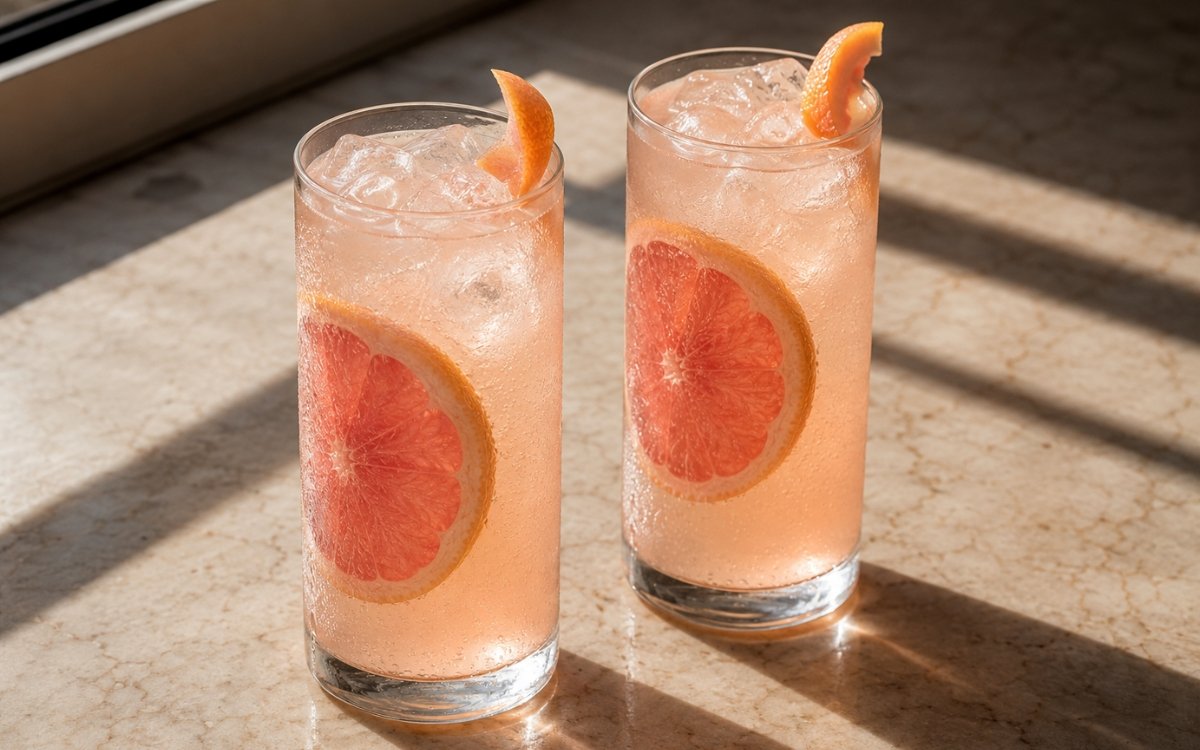
- Refrigerate for 1–2 hours until completely cold and the peel-infused aromatic depth has integrated into the combined base. Stir before serving. Fill glasses with ice. Pour the chilled lemonade over the ice, including some of the mashed pulp in each glass if desired — the pulp provides textural interest and additional fresh citrus character in the glass. Garnish with a pink grapefruit slice. Serve immediately.
Notes
Pink grapefruit's primary bitter compound — naringenin — is specifically the flavour component that makes this lemonade taste specifically adult rather than accessible. Naringenin's bitterness is structurally different from the astringency of over-steeped tea or the harsh bitterness of overcooking: it is a clean, dry, specifically citrus-bitter character that is specifically pleasurable when balanced by the right quantity of sweetness. The peel-infused syrup's role is to provide this additional layer of specifically aromatic, terpene-rich grapefruit character alongside the naringenin in the juice.
Nootkatone — the primary aroma compound responsible for grapefruit's specifically distinctive, unmistakable aromatic character — is concentrated in the peel rather than the juice. The peel infusion is specifically how this compound enters the finished drink; a preparation using juice alone without the peel infusion produces a drink that tastes of grapefruit but lacks the specifically aromatic depth that makes pink grapefruit lemonade smell and taste immediately identifiable as grapefruit rather than generically citrus.