Ingredients
Method
Blanch and Clean the Bones
- Place the beef bones in a large pot and cover with cold water. Bring to a hard boil and boil for 10–12 minutes. Drain the bones, discard the water, and rinse the bones very thoroughly under warm running water. Scrub away any grey foam, blood residue, or loose bits. Wash the pot before continuing. The bones should look clean, pale, and free of grey scum. If you skip this step, your broth will be cloudy and dirty-tasting. That is not rustic; it is just lazy. This aggressive initial boil and rinse forces out the coagulated proteins and impurities that would otherwise cloud the broth during the long simmer to come — removing them now, decisively, protects clarity for the entire remainder of the cook.
Char the Onion and Ginger
- Place the onion halves and ginger cut-side down in a dry skillet, under a broiler, or directly over a gas flame. Char until deeply browned and blackened in spots, about 8–12 minutes. Rinse off any loose burnt flakes if needed, but keep the smoky charred aroma. The onion and ginger should smell sweet, smoky, and aromatic. Pale onion and raw ginger give a flat broth. Direct charring caramelises the onion's natural sugars and blooms the ginger's aromatic oils in a way gentle cooking never would — that smoky, sweet character becomes a foundational flavour note running through the entire finished broth.
Start the Broth
- Return the cleaned bones to the clean pot. Add the brisket or chuck and 4.5 litres cold water. Bring slowly to a gentle simmer. Do not let it boil hard. Skim off any foam that rises during the first 30–45 minutes. Add the charred onion and ginger. Keep the broth at a bare simmer, partially covered, for 1½ to 2 hours, until the brisket is tender. The surface should barely move, with small bubbles rising slowly. If the pot is rolling and boiling, you are wrecking the clarity of the broth. A hard boil physically agitates and emulsifies fat directly into the surrounding liquid, turning a clear broth cloudy in a way that can't be corrected later by straining — the bare simmer specified here is the only way to keep fat and broth as genuinely separate as pho's signature clarity requires.
Remove and Chill the Brisket
- When the brisket is tender, remove it from the broth and transfer it to a bowl of cold water for 5 minutes to stop the cooking and keep it from drying out. Drain, cover, and refrigerate until slicing. Continue simmering the bones. Do not leave the brisket in the broth for the full bone simmer or it can become dry and stringy. The bones need long cooking; the brisket does not. Shocking the brisket in cold water the moment it's tender halts residual cooking immediately, protecting it from the many additional hours the bones still need — brisket left in that long simmer would simply overcook well past its ideal tender point.
Toast and Add the Spices
- Toast the star anise, cinnamon, cloves, coriander seeds, fennel seeds, and black cardamom if using in a dry skillet over medium heat for 1–2 minutes, just until fragrant. Place the spices in a spice bag, cheesecloth, or fine mesh infuser. Add to the broth during the final 60–75 minutes of simmering. Continue simmering until the broth is aromatic, beefy, and lightly golden. The spices should perfume the broth without dominating it. If you simmer the spices for the full 6 hours, the broth can turn bitter and muddy. This narrow window of exposure is a genuine calibration — the spices need enough time in the hot broth to release their aromatics, but extended contact over many hours would extract harsher, more bitter compounds that a shorter simmer never reaches.
Season and Strain the Broth
- Remove the spice bag, onion, ginger, and bones. Strain the broth through a fine sieve. Season with fish sauce, sugar, and fine sea salt. Taste and adjust carefully. The broth should be savory, lightly sweet, aromatic, and clean. It should taste slightly stronger than a normal soup broth because the noodles and toppings dilute it in the bowl. Good pho broth is not bland beef water. It should have clear beef depth, ginger warmth, sweet onion, spice aroma, and fish sauce salinity without tasting aggressively salty. Seasoning the broth to taste noticeably stronger than a standalone soup is a deliberate adjustment for how it's actually eaten — once poured over noodles, raw beef, and a full plate of garnishes, that same broth will read as properly balanced rather than over-seasoned.
Prepare the Noodles
- Cook the dried rice noodles according to package directions, usually by soaking first and then briefly boiling, or blanch fresh noodles briefly until hot and loosened. Drain well. The noodles should be flexible and tender but not mushy. Overcooked rice noodles turn the bowl into glue. Rice noodles continue softening from residual heat even after draining, which is part of why they're best pulled slightly before feeling fully done — a noodle that seems perfect straight out of the water can turn soft and gluey by the time it's sitting in a hot bowl of broth.
Slice the Beef and Prepare Garnishes
- Slice the chilled cooked brisket thinly across the grain. Slice the raw beef paper-thin. If needed, place the beef in the freezer for 20–30 minutes first so it firms up and slices cleanly. Prepare the white onion, scallions, bean sprouts, Thai basil, lime wedges, and jalapeños. The raw beef must be very thin because it cooks from the heat of the broth in the bowl. Thick slices will stay chewy and awkward. Briefly firming the raw beef in the freezer addresses the same problem that chilling solves for other thin-sliced meats throughout this collection — fully soft, room-temperature beef is too pliable to slice consistently thin, while a firm, partially chilled piece holds its shape cleanly under the knife.
Assemble the Pho Bowls
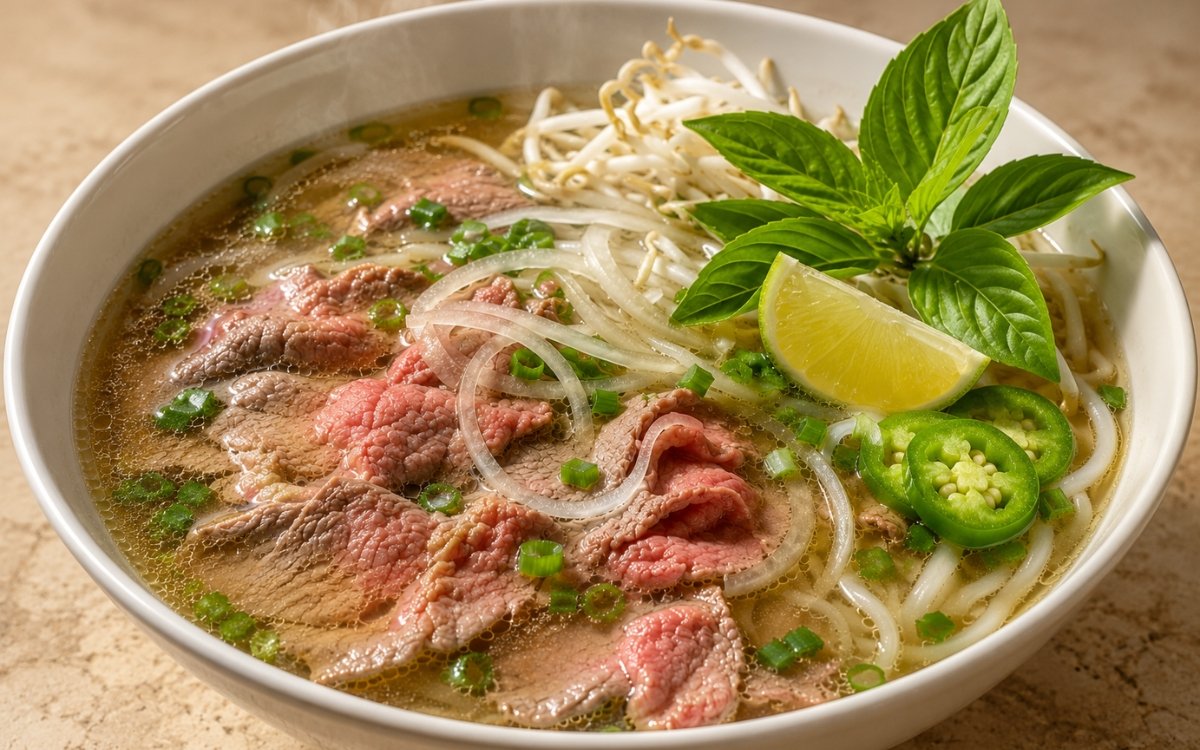
- Warm 4 large bowls. Divide the hot noodles among the bowls. Add sliced cooked brisket. Lay the raw beef slices over the noodles in a single layer. Add thin white onion and scallions. Bring the broth back to a full boil. Ladle the boiling broth directly over the raw beef to cook it lightly. Serve immediately with bean sprouts, Thai basil, lime wedges, jalapeño slices, and extra herbs on the side or arranged at the bowl edge. The broth must be boiling hot when it hits the beef. The beef should turn from raw red to pink and tender in the bowl, not grey and overcooked. Genuinely boiling broth is what cooks the paper-thin raw beef gently and evenly the instant it's poured — broth that's merely hot rather than actively boiling won't carry enough heat to properly cook that beef through in the brief window before serving.
Notes
The discipline required for a genuinely clear pho broth is worth understanding as a chain of dependent steps rather than any single decisive action. Blanching and thoroughly rinsing the bones removes the bulk of the impurities that would otherwise cloud the broth; keeping the subsequent simmer at a genuine bare simmer, never a rolling boil, prevents fat from emulsifying into the liquid; and straining carefully at the end catches anything that remains. Skipping or rushing any single link in that chain compromises the clarity the whole broth depends on, regardless of how carefully the other steps were handled.
The timing separation between the brisket and the bones deserves real attention, since it addresses two components with genuinely different cooking needs sharing the same pot. Brisket reaches its ideal tenderness in roughly 1½ to 2 hours; the bones need many more hours beyond that to fully release their flavour and body into the broth. Removing and chilling the brisket once it's done, rather than leaving it in for the full simmer, is what protects it from turning dry and stringy over those additional hours.
Adding the toasted spices only during the broth's final 60–75 minutes, rather than throughout the entire multi-hour simmer, reflects a real understanding of how spice extraction behaves over time. A shorter window releases the spices' pleasant, aromatic compounds without extracting the harsher, more bitter notes that longer exposure at simmering temperature would eventually draw out — this is a case where more time genuinely produces a worse result, not a better one.
The final assembly's requirement for genuinely boiling broth, poured directly over paper-thin raw beef, is the moment every earlier step in this recipe has been building toward. That beef is meant to cook entirely from the broth's residual heat in the bowl, turning from raw red to tender pink within moments — broth that's merely warm, rather than actively at a full boil when ladled, simply won't carry enough heat to finish that beef properly in the short time before the bowl reaches the table.