Ingredients
Method
Cook the Rice
- Wash the short-grain rice 3 times, rubbing gently and changing the water until it runs mostly clear. Drain well. Add the rice, water, and salt to a small pot. Bring to a simmer, then reduce the heat to low, cover, and cook for 15 minutes without lifting the lid. Turn off the heat and let the rice rest, still covered and undisturbed, for another 15 minutes. Fluff gently before serving. Do not open the lid during cooking or resting. That steam is what finishes the rice cleanly. Lifting the lid at any point releases trapped steam that's still actively finishing the rice — even a quick peek costs real cooking time and moisture that the grains need to fully hydrate and separate.
Soak the Potatoes
- Place the cut potatoes in ice-cold water and soak for 30 minutes. Drain, rinse, and dry extremely well with towels. The potatoes must be dry before frying. Wet potatoes spit oil and fry badly. The cold soak draws out excess surface starch that would otherwise cause the fries to stick together and brown unevenly across the two separate fries this recipe calls for.
First Fry the Potatoes
- Heat neutral oil to 150°C. Fry the potatoes in batches for 5–6 minutes, until cooked through and pale blond but not browned. Transfer to a rack and let them cool for at least 10–15 minutes. This first fry cooks the interior. Do not try to brown them yet. The lower temperature here cooks the potato through gently without the surface setting a crust too early — that crust-building is deliberately saved for the second, hotter fry.
Prepare the Sauce
- Mix the soy sauce, red wine vinegar, beef stock or water, aji amarillo paste if using, garlic, ginger if using, and brown sugar if using. Taste carefully. The sauce should be salty, sharp, slightly spicy, and punchy. It should not taste sweet. Mixing the sauce fully before the beef ever hits the pan means it's ready for a single, decisive pour once the stir-fry stage begins — lomo saltado moves fast once cooking starts, and there's no time to measure out individual components mid-toss.
Prepare the Beef
- Pat the beef strips very dry. Season with salt and black pepper. This is non-negotiable. Wet beef steams, and steamed beef in lomo saltado is weak. You need direct high heat contact. A genuinely dry surface is what lets the pan's intense heat go straight into browning rather than first evaporating surface moisture — any lingering dampness works directly against the fast, hard sear this dish depends on.
Sear the Beef
- Heat a wok, cast-iron skillet, or heavy pan over very high heat until almost smoking. Add half the oil. Sear the beef in batches for 60–90 seconds per side, until deeply browned and charred at the edges but still juicy inside. Transfer to a plate. Do not crowd the pan. If the beef releases liquid and starts simmering, stop — the pan is overloaded. Work in smaller batches. This is the single most consequential decision point in the whole recipe — the instant a pan holds more beef than it can properly sear, released moisture pools and the beef starts simmering in its own juices instead of charring, and there's no recovering that texture once it happens.
Cook the Shallots and Tomatoes
- Add the remaining oil to the same hot pan. Add the feathered shallots and stir-fry for 1–2 minutes, just until browned at the edges but still slightly crisp. Add the tomato wedges and optional chilli. Toss for 30–60 seconds only. The tomatoes should warm and blister slightly but not collapse into sauce. Using the same hot pan the beef was just seared in means the shallots and tomatoes pick up residual browned flavour left behind, and the brief cook time on the tomatoes specifically is what keeps them in distinct, recognisable wedges rather than breaking down.
Finish the Lomo Saltado
- Return the beef and any resting juices to the pan. Pour in the soy-vinegar sauce and toss aggressively over high heat for 45–60 seconds, just until the sauce bubbles, reduces slightly, and coats the beef and vegetables in a glossy layer. Do not simmer this for minutes. Lomo saltado is a fast stir-fry. Long cooking turns the tomatoes mushy and the beef dry. This final toss is genuinely brief by design — the goal is a quick reduction that glosses everything in sauce, not a simmer that would continue cooking the already-seared beef past its ideal juicy doneness and break the tomato wedges down completely.
Second Fry the Potatoes
- Raise the oil to 185°C. Fry the potatoes again in batches for 2–4 minutes, until golden, crisp, and firm at the edges. Transfer to a rack and salt immediately while hot. This second, hotter fry is what builds the genuinely rigid, crisp exterior this dish needs — a fry that's merely golden but still flexible won't hold its structure once it's sitting on the plate next to the saucy beef.
Serve
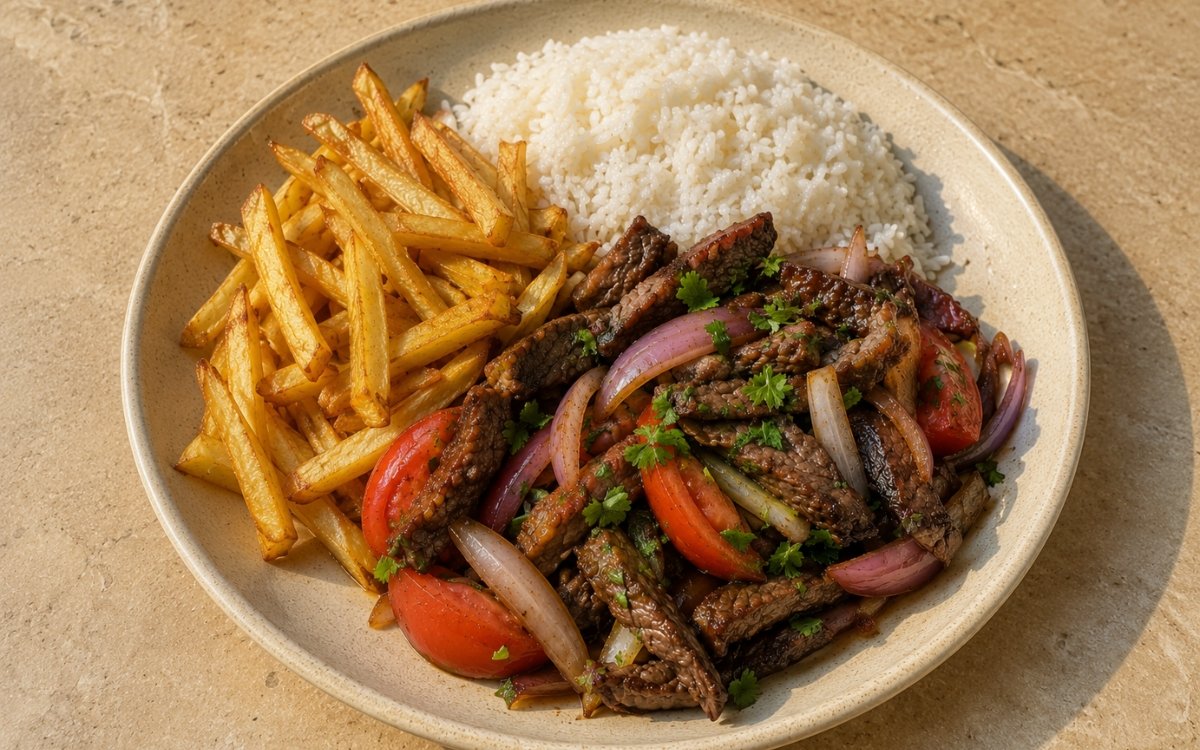
- Divide the rice between four plates or bowls. Add a pile of fries beside the rice. Spoon the glossy beef, shallots, tomatoes, and sauce onto the remaining section of each plate. Scatter fresh cilantro over the beef and finish with black pepper if needed. Serve immediately while the beef is hot, the fries are crisp, and the rice is fluffy. Keeping the fries mostly separate on the plate, rather than piling the saucy beef directly over them, protects their crispness for as long as possible before they're eaten.
Notes
Searing the beef in properly sized, uncrowded batches is worth treating as the single non-negotiable step in this recipe. A crowded pan can't maintain the intense heat lomo saltado depends on — the beef releases moisture that has nowhere to evaporate quickly, and instead of charring, it simmers in that released liquid, producing grey, flat-tasting strips instead of the deeply browned, charred-edged beef this dish is named for. Working in smaller batches, even if it adds a few extra minutes to the total cook time, produces a categorically different and better result.
The double-fried potatoes follow the same structural logic used for fries throughout this collection: a cooler first fry cooks the potato through without colour, and a hotter second fry builds a genuinely rigid, crisp crust. That crisp structure matters more here than it might in a simpler fried-potato application, since these fries sit on the plate directly beside — and are often eaten alongside bites of — the glossy, saucy beef, and only a properly double-fried potato holds up to that proximity without softening quickly.
The brief, aggressive final toss that brings the beef, vegetables, and sauce together is deliberately fast rather than a leisurely simmer, and that speed is what preserves the dish's core textural identity. The beef has already been seared to the correct doneness in the previous step; further cooking during this final toss would only push it past that point. The same logic applies to the tomato wedges, which are meant to warm through and blister slightly while staying visibly intact rather than breaking down into a sauce.
Steamed white rice's uninterrupted covered cooking and resting period is a small detail that's easy to compromise on, particularly out of curiosity to check progress, but doing so costs real texture. The trapped steam inside a covered pot is actively finishing the rice throughout both the active cooking time and the following rest — lifting the lid at any point, even briefly, releases that steam and can leave the rice underdone or unevenly cooked.