Ingredients
Method
Finely Dice the Cucumbers
- Wash the cucumbers thoroughly under cold running water and dry them completely with a clean kitchen towel. Trim the ends and cut the cucumbers lengthwise into quarters if they are large. Using a sharp knife, dice the cucumbers into very small, uniform cubes approximately 4–5 mm in size. Maintaining a consistent dice is essential for authentic Shirazi salad because it ensures the dressing distributes evenly and creates the signature delicate texture. Transfer the diced cucumbers to a large mixing bowl.
Prepare the Tomatoes
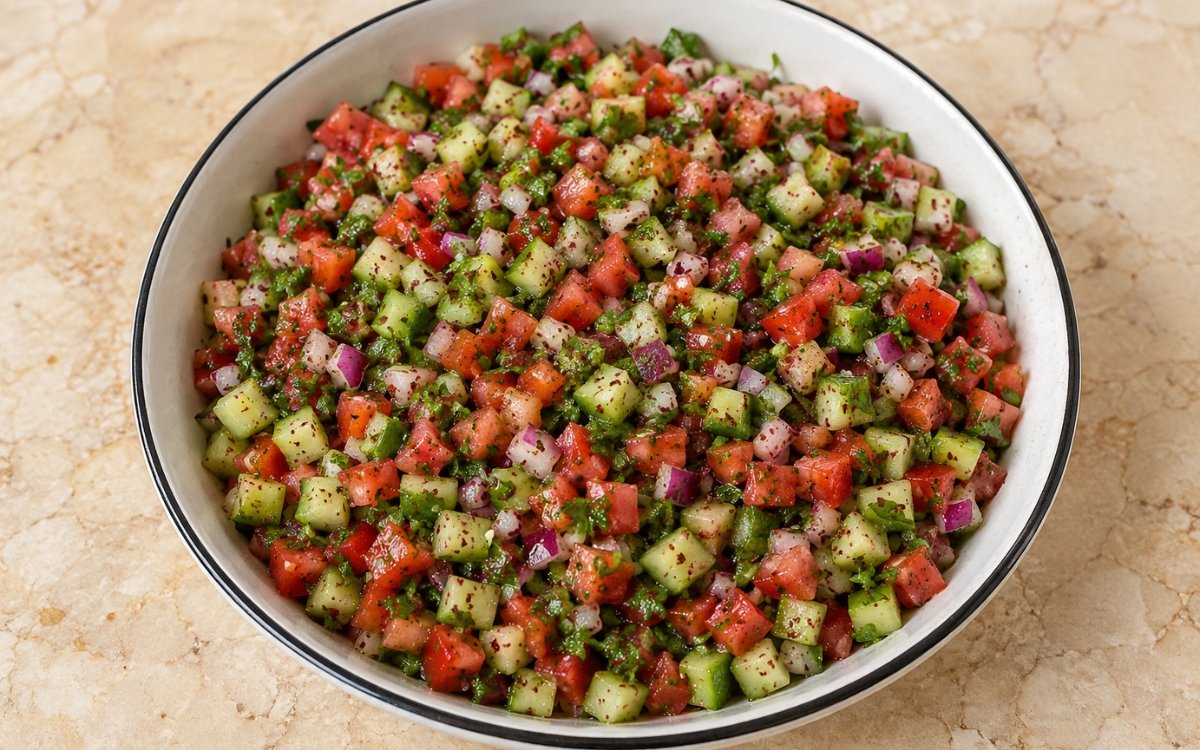
- Rinse the tomatoes and pat them dry. If the tomatoes are particularly juicy, cut them in half and gently scoop out excess seeds to prevent the salad from becoming watery. Dice the tomato flesh into cubes roughly the same size as the cucumbers, about 4–5 mm. Uniformity is key in this salad; the vegetables should appear almost jewel-like and evenly sized. Add the diced tomatoes to the bowl with the cucumbers.
Dice the Onion
- Peel the red onion and cut it into the same small dice as the cucumbers and tomatoes. If the onion is very sharp or pungent, rinse the diced onion briefly under cold water and pat dry with paper towels. This step softens the harsh bite while preserving the onion’s crisp texture. Add the diced onion to the mixing bowl.
Chop the Fresh Herbs
- Finely chop the fresh mint and parsley using a sharp knife. Avoid crushing the herbs, as bruising can cause them to lose their bright aroma. The herbs should be finely chopped but still retain visible texture. Add the chopped herbs to the bowl with the diced vegetables.
Prepare the Sumac Lime Dressing
- In a small bowl, combine the fresh lime juice, olive oil, salt, black pepper, and ground sumac. Whisk the mixture thoroughly until the oil and lime juice emulsify slightly and the sumac distributes evenly throughout the dressing. The dressing should taste bright, slightly tangy, and lightly fruity due to the sumac.
Combine the Salad
- Pour the dressing over the diced vegetables and herbs. Using a large spoon or salad tongs, gently toss the mixture until all ingredients are evenly coated. The dressing should lightly coat the vegetables rather than pool at the bottom of the bowl.
Allow the Flavors to Rest
- Let the salad rest for 5–10 minutes before serving. During this brief resting period the vegetables absorb the citrus dressing and the flavors of mint, parsley, and sumac blend together. The vegetables will also release a small amount of natural juice, creating a light, flavorful dressing.
Serve
- Stir the salad once more just before serving and transfer it to a serving bowl. Shirazi salad can be served at room temperature or lightly chilled, depending on preference. It pairs particularly well with grilled meats, rice dishes, and roasted vegetables.
Notes
Authentic Shirazi salad is defined by its fine and uniform vegetable dice. Unlike many Western salads that feature large chunks, Shirazi salad relies on very small pieces that combine into a cohesive mixture where each spoonful contains every ingredient.
Choosing the right cucumbers is important. Persian cucumbers or English cucumbers work best because they have thin skins, small seeds, and a crisp texture. Standard slicing cucumbers may contain more water and larger seeds, which can affect the final texture of the salad.
Tomatoes should be ripe but firm. Overripe tomatoes release too much liquid and can make the salad watery. Roma or vine-ripened tomatoes typically provide the best balance of sweetness and structure.
Sumac is a defining flavor of the dish. It provides a tangy, citrus-like brightness with subtle fruity notes that enhance the lime juice and add complexity without overwhelming the vegetables.
Because the salad is lightly dressed and composed of fresh vegetables, it is best eaten shortly after preparation. As the salad sits, the vegetables release moisture, which gradually softens the texture and dilutes the dressing.