Ingredients
Method
Make the Honey-Pear Syrup at the Lowest Effective Temperature
- Combine the 250–300g of small-cubed pear flesh, 120ml of water, and 80g of honey in a small saucepan over low to medium-low heat. The pear selection specifically matters for this preparation — ripe Comice, Williams, or Bartlett pears with their high natural sugar and specific fruity-floral aromatic character produce the most vivid finished syrup; Conference pears at full ripeness produce a subtler, slightly more austere result; unripe pears of any variety produce a flat, under-flavoured syrup that no technique can correct. Soft enough to yield clearly to thumb pressure is the correct ripeness indicator. Stir gently until the honey dissolves into the warming water and pear juice begins releasing. Bring to the gentlest possible simmer and cook for 8–10 minutes, stirring occasionally and using the back of a spoon to lightly mash some of the softening pear pieces against the pan's surface — not all of them, and not with the aggressive mashing applied to harder or more robust fruits in this collection, but enough to encourage additional juice release and fragrance development from the breaking-down fruit. The goal at the end of 8–10 minutes is pear pieces that are fully softened and partially broken down, with the surrounding liquid a pale golden-amber and specifically fragrant — the distinctive warm, floral, pear-ester aroma of gently cooked ripe pear. The liquid should remain fluid and flowing; any significant thickening suggests either too high a heat or too long a cook. Remove from heat if the liquid begins reducing or thickening before the 10-minute point.
Lemon Zest Off Heat and Steep
- Remove from the heat. Add the lemon zest immediately and cover. Steep for 5–8 minutes. The lemon zest's integration into the warm pear-honey medium provides the citrus aromatic bridge — a soft, integrated lemon-pear aromatic depth in the syrup itself rather than only in the separately added lemon juice. This integration is specifically important in pear lemonade because the lower lemon juice quantity means the syrup carries more of the drink's aromatic character than in preparations with a higher juice-to-syrup ratio. Strain through a fine-mesh sieve, pressing gently but firmly on the softened pear pieces. The pressing is specifically intermediate — firmer than the light pressing used for rose and elderflower botanicals, which release unpleasant compounds under firm pressure, but gentler than the firm pressing used for harder-fleshed berries. Softened pear at this cooking temperature yields its juice readily under moderate pressing without releasing significant bitter or astringent compounds. Allow to cool completely.
Build the Pear Lemonade Base
- Prepare the lemon pulp from 1–2 lemons only — the deliberately reduced quantity reflecting the pear-forward calibration. Segment carefully, removing all seeds and pith with the clean pulp retained. Add to the pitcher and mash very gently. Add the 150ml of fresh lemon juice, 120ml of cooled honey-pear syrup, 750ml of ice-cold water, and the pinch of fine sea salt. Stir thoroughly. Taste with the specific pear-first assessment: the lemon should be clearly present as a refreshing acid brightness but should not be identifiable as the primary flavour. The pear should be the flavour that defines the drink — warm, delicate, specifically pear-forward — with the lemon as the element that makes it refreshing rather than the element that defines it as lemonade. This is a fundamentally different balance point from every other lemonade in this collection, and the tasting approach needs to reflect it. If the pear is vivid and the lemon is bright in the background — correct. If the lemon tastes equally prominent to the pear — too much lemon; add cold water to dilute the acidity. If the pear is insufficient — more syrup in small increments.
Chill and Serve
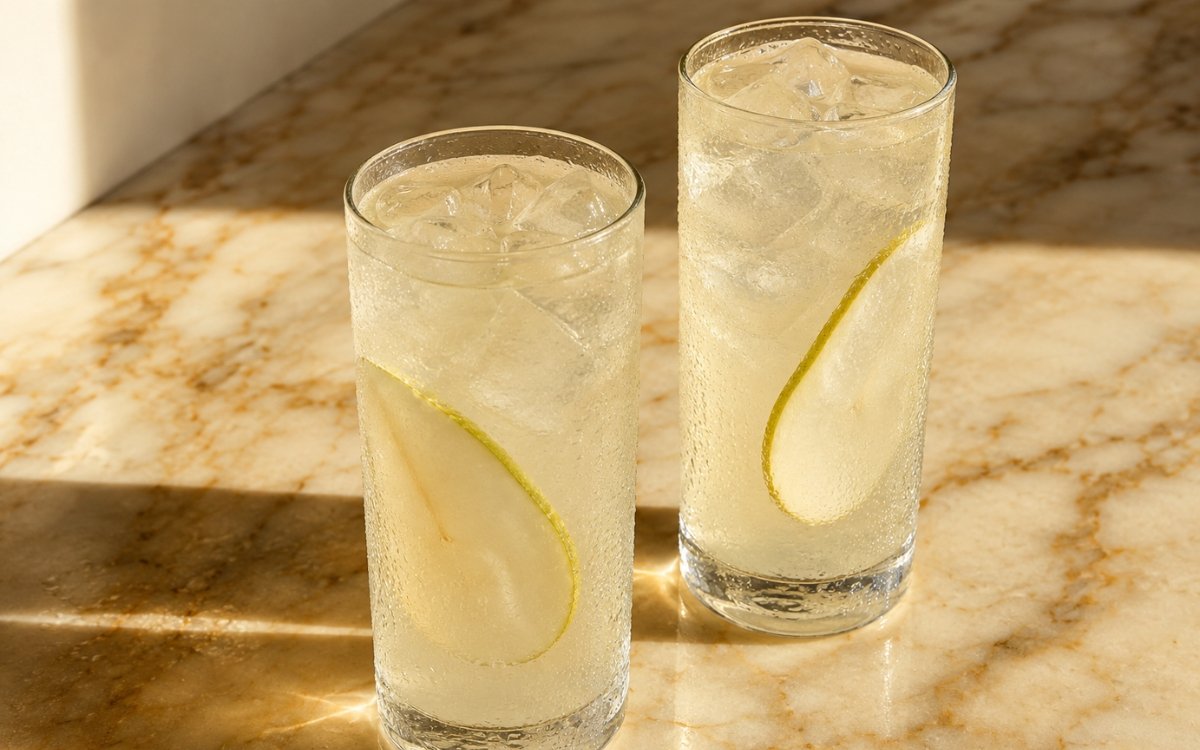
- Refrigerate for 1–2 hours. Fill glasses with ice. Pour the chilled pear lemonade over the ice. Prepare the garnish pear slices immediately before assembly to prevent browning — a brief dip in cold water with a squeeze of lemon juice delays oxidation if needed. Garnish with a lemon slice and the thin pear slices pressed against the glass wall. Serve immediately.
Notes
Pear's primary aromatic compounds — the ethyl esters responsible for its characteristic warm, fruity, floral character, and the lactone compounds that produce its specific sweet-fruit aroma — are among the most volatile of any fruit used across this collection. They are specifically why pear lemonade requires the inverted structure (pear-forward rather than lemon-forward) and the lower-lemon calibration: the pear's fragile aromatic presence must be protected at every stage rather than simply allowed to compete on equal terms with the lemon's robust citric acidity.
The pear garnish browning is the same oxidation issue noted in the Pear Ginger Sparkler Mocktail — phenolic compounds in pear flesh reacting with oxygen within minutes of the cut surface being exposed. Always slice immediately before serving.