Ingredients
Method
Boil the Vegetables
- Place the 500g potatoes, 250g cauliflower florets and 120g peas in a pressure cooker or a large pot. For the pressure cooker, add the 1 tbsp water, or the minimum your cooker requires, and cook for 2 whistles, until fully tender but not waterlogged. For the pot, cover the vegetables with water, bring to a boil, then simmer for 15–20 minutes until the potatoes and cauliflower are very soft. A knife should meet no resistance in the potato, and a floret should crush easily against the side of the pot. Drain off any excess water, reserving a little of the cooking liquid, and mash the vegetables roughly while still hot, then set aside. That full tenderness is what lets the vegetables mash smoothly into the bhaji later, since firm potato or undercooked cauliflower stays lumpy however long it is worked.
Build the Masala Base
- Heat the 3 tbsp butter and 1 tbsp oil together in a wide pan or kadai over medium heat. Add the cumin seeds and let them sizzle for a few seconds. Add the diced onion and cook for 5–7 minutes until softened and lightly golden, then add the bell pepper and cook for another 3–4 minutes until soft. Stir in the ginger-garlic paste and green chillies and cook for 1 minute, stirring constantly so the paste does not catch. Add the tomatoes and cook for 8–10 minutes, stirring and pressing them down, until they break down completely, lose their raw smell and the butter starts to separate lightly at the edges. Add the 2½ tbsp pav bhaji masala, the Kashmiri chilli powder, the turmeric and 1 tsp of the salt, and cook for 30–60 seconds to bloom the spices. The base should look thick and glossy, with no watery pooling. That thorough cook-down is what removes the raw, sharp edge of the tomato before the vegetables go in, since it can no longer be cooked out properly once the base is diluted.
Mash Into Bhaji
- Add the mashed potato, cauliflower and pea mixture to the pan and mix it thoroughly into the masala base. Pour in 350ml of the hot water, using the reserved cooking liquid as part of it, and mash everything together with a potato masher directly in the pan. Keep mashing and stirring over medium-low heat for 8–12 minutes, adding more hot water as needed, up to 500ml in total, until the bhaji is thick, smooth and scoopable — never stiff like mashed potato and never soupy. Stir in 1 tsp of the lemon juice, then taste and adjust with the remaining salt, a little more pav bhaji masala or the remaining lemon juice. Stir in the 2 tbsp chopped cilantro. Mash firmly, but stop short of a purée, so a little genuine vegetable body remains. That gradual addition of hot water is what lets the bhaji reach a glossy, slowly spreading consistency, because pouring it all in at once makes the right thickness impossible to judge.
Finish the Bhaji
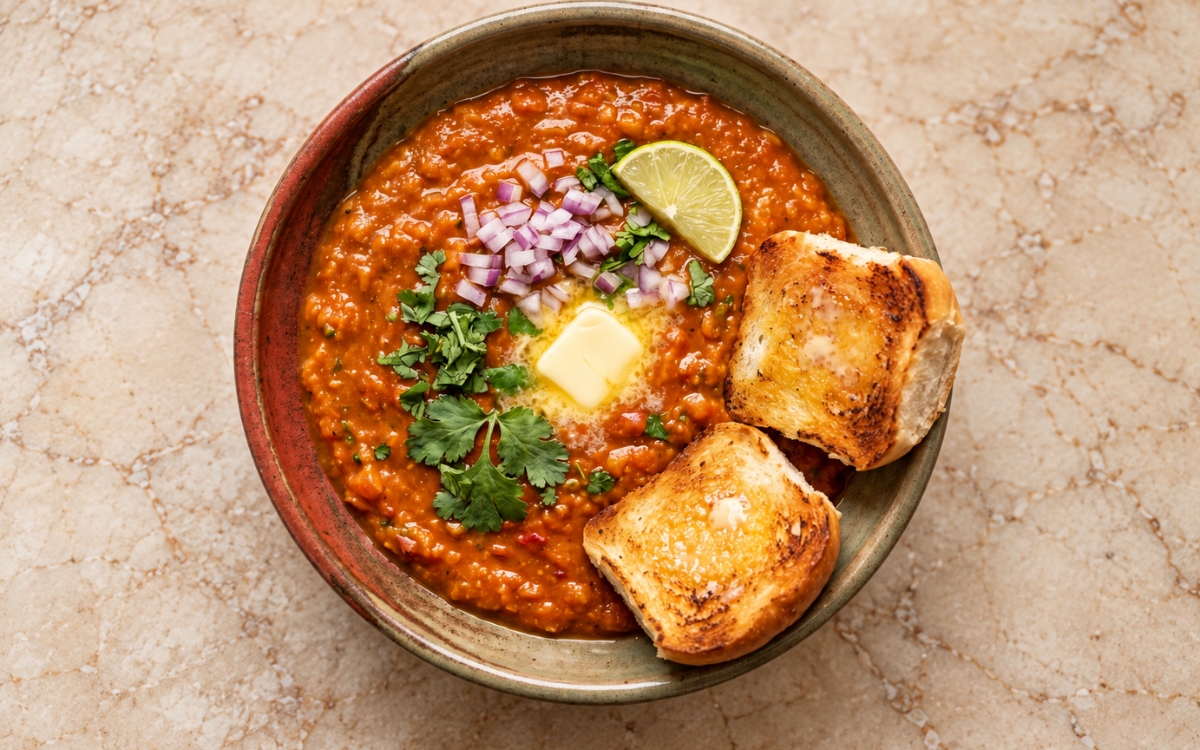
- Add the 1–2 tbsp butter for finishing and let it melt into the bhaji, then simmer for 2–3 minutes more, stirring, until rich and glossy. Stir in the 1 tbsp chopped cilantro and the 1 tbsp finely chopped onion, if using. The finished bhaji should be orange-red, buttery and thick enough to hold its shape on a spoon while still soft and spreadable. If it thickens too much while resting, loosen it with a splash of hot water just before serving. Keep it warm over the lowest heat while the pav are toasted. That final butter, stirred in after the mashing rather than cooked in from the start, is what gives the bhaji its glossy surface and genuinely rounded richness.
Toast the Pav
- Slice each pav horizontally, keeping it hinged on one side if preferred. Heat a griddle or skillet over medium heat and add about 1 tbsp of the butter for toasting, sprinkling a little of the 1 tsp pav bhaji masala into it, if using. Place the pav cut side down in the butter and toast for about 1–2 minutes, until golden, buttery and lightly crisp on the surface but still soft inside. Toast the outer side briefly if desired. Repeat in batches with the remaining butter, masala and pav until all 8 are done. If the butter darkens before the bread warms through, lower the heat. That moderate heat is what lets the butter soak into the crumb and turn it golden, since high heat burns the butter long before the pav is warmed through.
Serve
- Divide the hot bhaji between 4 plates or shallow bowls. Top each portion with a piece of the 20g butter, a spoonful of the diced red onion and some of the chopped cilantro, and set 2 lime wedges on each plate. Serve 2 toasted pav per plate alongside the bhaji. The butter should just begin melting into the bhaji as it reaches the table, with the pav still hot and soft. Squeeze the lime over the bhaji at the table and scoop it up with torn pieces of pav. That last-minute toasting is what keeps the bread hot, soft and buttery on the plate, since pav toasted ahead turns dry and firm as it cools.
Notes
Cooking the tomatoes down until the butter separates at the edges deserves genuine recognition as the technique most directly responsible for whether this bhaji tastes deep and rounded or flat and sharp. Tomatoes that go in with the mashed vegetables while still watery never lose their raw acidity — the potato starch absorbs the liquid before it can reduce, locking a thin, tinny edge into the whole pan.
Mashing directly in the pan with hot water added gradually deserves the same attention this technique receives throughout this collection's other slow-cooked, spiced vegetable dishes. Mashing in the masala works the spiced butter into every bit of potato, while adding water in stages lets the texture be judged as it develops — a single large pour leaves a soupy pan that must then be cooked down again.
The green bell pepper deserves genuine respect as the detail most directly responsible for the bhaji's characteristic background flavour. The recipe's own note that it "is classical and important" reflects how its grassy, faintly bitter sweetness sits beneath the spice blend — without it, the bhaji reads as a spiced potato mash rather than the recognisable Mumbai street dish.
The bhaji's final texture — thick enough to hold its shape on a spoon, yet soft enough to spread slowly on the plate — deserves attention as a genuine, checkable readiness cue rather than a loose approximation. Hot water, butter and resting time all shift it, so the cue is checked again after the finishing butter and just before serving, when a splash of hot water restores a bhaji that has tightened.