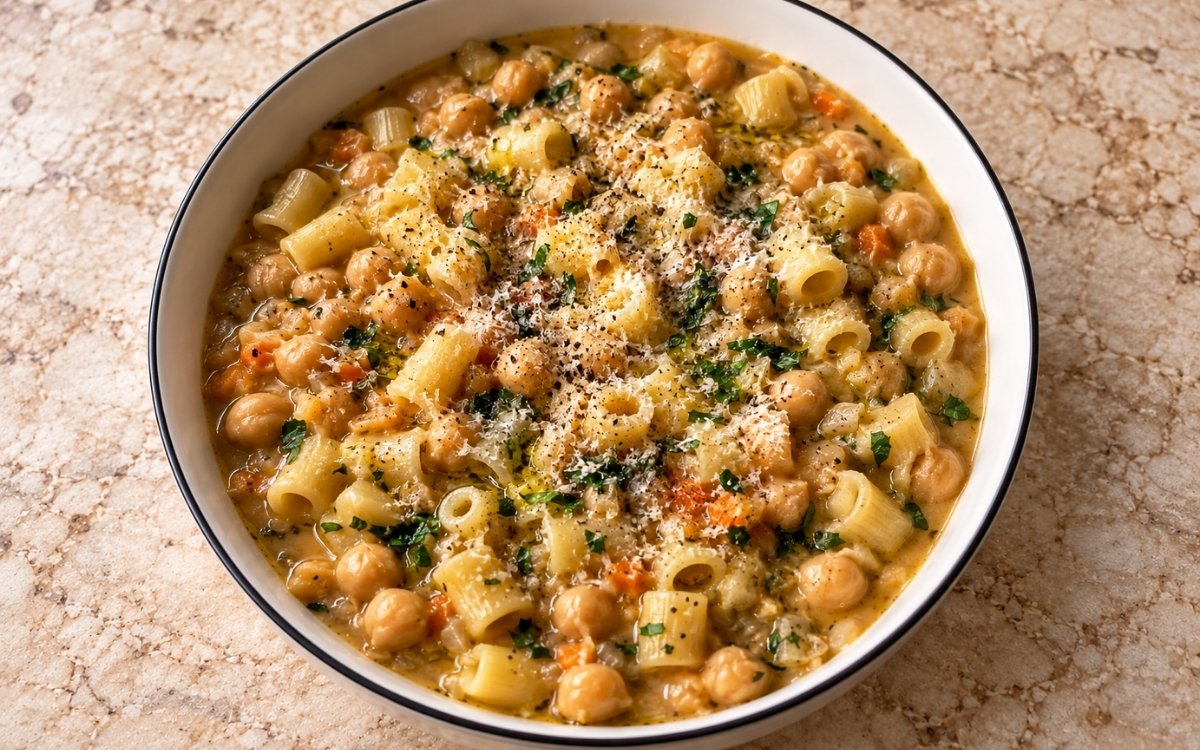
Ingredients
Method
Build the Soffritto
- Heat the olive oil in a heavy pot over medium-low heat. Add the onion, carrot, and celery. Cook for 8–10 minutes, stirring often, until softened and sweet but not browned. Add the garlic, rosemary, and bay leaf. Cook for 1 minute, just until fragrant. The vegetables should soften slowly and melt into the base. If they brown aggressively, the final flavor becomes heavier and less clean. That deliberately gentle, slow cooking protects the soffritto's own intended role — melting into the base as a sweet, aromatic foundation rather than announcing itself with the heavier flavour real browning would introduce.
Add Tomato Paste and Chickpeas
- Add the tomato paste if using and cook for 1–2 minutes, stirring it into the oil and vegetables until it darkens slightly. Add the chickpeas and stir to coat them in the soffritto. Cook for 2–3 minutes so they absorb the aromatic oil. If using canned chickpeas, drain and rinse them first. If using home-cooked chickpeas, keep some chickpea cooking liquid for the broth. Coating the chickpeas directly in the aromatic oil before any liquid is added gives them real, direct contact with the soffritto's own flavour, letting them absorb it rather than simply floating in a separately built broth later.
Simmer the Chickpea Base
- Add the stock, chickpea cooking liquid, or water. Add the Parmesan rind if using, salt, and black pepper. Bring to a simmer and cook gently for 20–25 minutes, until the chickpeas are very tender and the broth tastes seasoned and rounded. Remove the rosemary stem, bay leaf, and Parmesan rind. That extended simmer gives the chickpeas real time to soften fully while the Parmesan rind, if used, slowly releases genuine savoury depth directly into the surrounding broth.
Thicken the Base
- Scoop out about one-third of the chickpeas and broth and blend until smooth, or mash them directly in the pot with a potato masher. Return the blended chickpeas to the pot and stir. The base should now look creamy and thickened, but still loose enough to cook pasta. This is what gives pasta e ceci its body without cream. If you skip this, the dish can taste watery. If you blend too much, it becomes heavy and pasty. That specific one-third portion is a genuine, deliberate balance point — blending less would leave the dish thinner than intended, while blending more would push it toward a heavier, pastier texture than this rustic dish is meant to have.
Cook the Pasta in the Chickpea Broth
- Bring the pot back to a steady simmer. Add the small pasta directly into the chickpea base and cook, stirring often, until the pasta is al dente. Add hot water or stock as needed during cooking to keep the texture loose and brothy. Pasta cooked directly in the chickpea broth releases starch and thickens the dish quickly. Stir often, especially near the end, so the pasta does not stick to the bottom. The final texture should be thick, glossy, and spoonable — not dry. Cooking the pasta directly in this already-thickened broth, rather than boiling it separately, is what lets its own released starch join and further thicken the base, building real cohesion between the pasta and the surrounding chickpea liquid.
Finish
- When the pasta is just tender, turn off the heat. Stir in the grated Parmigiano-Reggiano, finishing olive oil, parsley, and more black pepper. Rest for 3–5 minutes before serving. Add a splash of hot water or stock if it tightens too much. Pasta e ceci keeps thickening as it sits. Finish it slightly looser than you want on the plate. That deliberate looseness at the finishing stage accounts directly for how much the dish continues absorbing liquid and thickening even after the heat is off, protecting it from turning too dense by the time it's actually served.
Notes
Blending or mashing about a third of the chickpeas back into the broth deserves genuine recognition as the technique most directly responsible for whether this dish achieves real, creamy body or tastes thin and watery. The recipe's own explicit framing — "this is what gives pasta e ceci its body without cream" — reflects exactly how central this step is, and the specific one-third portion protects against both the watery result of skipping it and the overly heavy, pasty texture that blending too much would produce.
Cooking the pasta directly in the chickpea broth, rather than boiling it separately and combining afterward, deserves the same attention this technique receives throughout this collection's other brothy, one-pot pasta dishes. That direct contact lets the pasta's own released starch join and thicken the surrounding liquid quickly, building real cohesion between every component rather than simply combining two separately cooked elements at the end.
Keeping the soffritto vegetables cooking gently, without any real browning, deserves genuine respect as a deliberate restraint specific to this dish's own intended character. The recipe's own explicit warning that aggressive browning makes the final flavour "heavier and less clean" reflects real understanding of what a proper soffritto's job actually is — melting into sweetness rather than contributing the deeper, more assertive flavour real caramelisation would introduce.
Finishing the dish deliberately looser than the intended final serving texture deserves attention as a genuine, practical adjustment rather than an inconsistency. Pasta e ceci continues absorbing liquid and thickening considerably even after the heat is turned off, and finishing it at the exact texture you want on the plate would mean it's already too thick by the time it's actually served.