Ingredients
Method
Prepare the Frites
- Cut the peeled potatoes into very thin 3mm julienne strips. Transfer them immediately to a large bowl of cold water and soak for 20–30 minutes to remove excess surface starch. Drain well, then dry thoroughly using clean kitchen towels or paper towels. The fries must be very dry before frying. Surface moisture causes splattering and prevents proper crisping. This cold soak draws out surface starch that would otherwise cause the thin sticks to clump together in the fryer — at this thinness, clumped potatoes fry considerably less evenly than a standard-cut fry would.
Make the Café de Paris-Style Herb Sauce
- In a bowl, combine the softened butter, shallot, garlic, Dijon, Worcestershire, lemon juice, capers, and anchovy if using. Mix until smooth. Add the parsley, chives, tarragon, paprika, and curry powder if using. Season lightly with salt and black pepper. Mix until evenly combined. Set aside at room temperature if using soon, or chill and re-soften before finishing the steaks. The sauce should taste rich, savory, herbaceous, and slightly sharp. It should not be plain garlic butter — it needs depth and café-style complexity. Building the savoury base — anchovy, capers, Worcestershire, Dijon — before folding in the fresh herbs is what gives this sauce its genuine depth, since those umami-rich components need to be fully incorporated into the butter first for their flavour to distribute evenly rather than sitting as isolated pockets.
First Fry the Frites
- Heat frying oil to 150°C. Fry the dried potato strips in batches for 3–4 minutes, just until softened and lightly cooked through without taking on much color. Lift out and drain on a rack or paper-lined tray. Let them rest for at least 10–15 minutes while you cook the steaks. This first fry cooks the interior and sets the structure. The second fry is what makes them golden and crisp. This lower-temperature first fry cooks the thin potato strips through gently without pushing toward colour — that colour-building is deliberately saved for the second, hotter fry, letting the interior finish cooking without the exterior overcooking or burning first.
Prepare and Sear the Steaks
- Pat the steaks completely dry. Season both sides generously with fine sea salt and black pepper. Heat a heavy skillet or pan until very hot. Add a thin film of neutral oil. Sear the steaks for about 2–3 minutes per side, depending on thickness, until a deep brown crust forms. Add the butter, crushed garlic, and thyme during the final minute, then baste the steaks with the foaming butter. Cook to medium-rare, aiming for an internal temperature of about 52–54°C before resting. Transfer the steaks to a rack or plate and rest for 6–8 minutes. Do not move the steaks too early. A proper crust forms only after the meat has had time to brown undisturbed. Adding the butter, garlic, and thyme only in the final minute, rather than from the start, protects them from burning over the sear's full cook time while still giving the foaming, aromatic butter enough time to baste real flavour into the steak's surface.
Second Fry the Frites
- Increase the frying oil temperature to 190°C. Fry the blanched fries a second time in batches for 1½–3 minutes, until deeply golden, crisp, and lightly blistered. Drain immediately and season with fine sea salt while still hot. Season the fries the second they come out of the oil. Salt sticks best while the surface is still hot and lightly oily. This second, hotter fry is what builds the genuinely rigid, crisp exterior the whole plate depends on — a fry that's merely golden but still flexible won't hold that crisp structure once it's plated alongside the steak and warm sauce.
Finish the Herb Sauce
- While the steaks rest or just before slicing, place the herb butter mixture into a small saucepan over very low heat. Warm only until melted and glossy. Do not boil. The sauce should become spoonable and shiny, not split or greasy. Low heat is enough. Genuinely gentle heat is what keeps this butter-based sauce properly emulsified — pushed to a boil, the butter's fat and the sauce's other liquid components risk separating into something greasy and broken rather than staying glossy and cohesive.
Slice and Plate
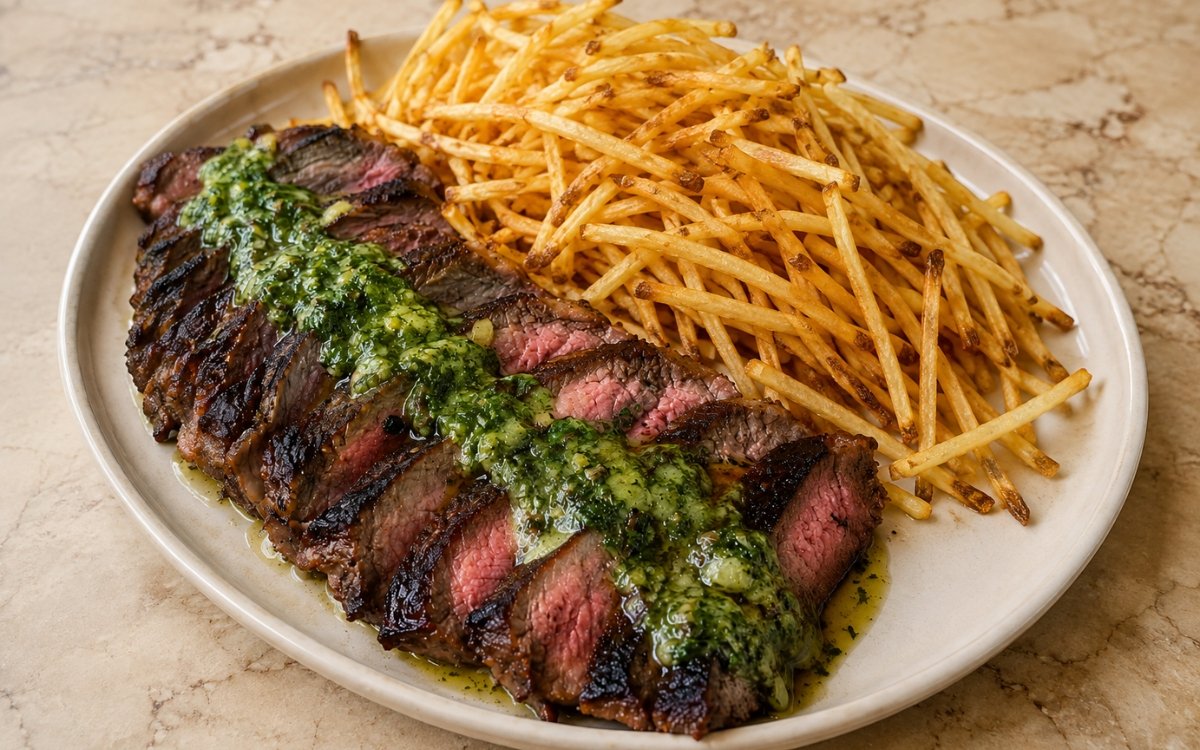
- Slice the rested steaks against the grain and fan them across warm plates. Spoon or drizzle the café de Paris-style herb sauce over the steak so it settles into the slices. Add a generous pile of shoestring frites beside each steak. Serve immediately. This plate is best when everything lands hot at once — crisp fries, rested steak, and warm herb butter sauce. Slicing against the grain shortens the muscle fibres in each individual piece, which is what makes the steak noticeably more tender to bite through than slicing with the grain would.
Notes
The two-stage frying method for the shoestring frites is worth understanding as two genuinely distinct jobs rather than the same process repeated twice. The first, cooler fry handles cooking the potato through completely, with colour deliberately kept minimal at this stage. The second, much hotter fry is reserved entirely for building the deep golden colour and crisp, blistered exterior — attempting to combine both jobs into a single fry would force a trade-off between an undercooked centre and an overly dark, potentially burnt exterior.
Letting the steak sear fully undisturbed before it's ever moved is worth treating as a genuinely non-negotiable step rather than a minor patience exercise. A proper, deep brown crust develops through sustained, uninterrupted contact between the meat's surface and the hot pan — moving or flipping the steak before that contact has had time to build the crust interrupts the process and produces a paler, less flavourful sear regardless of how long the steak spends in the pan overall.
The café de Paris-style butter's specific composition — anchovy, capers, Worcestershire, Dijon mustard, alongside the fresh herbs — deserves recognition as what actually separates it from a simple compound garlic butter. Those savoury, umami-forward ingredients are what give the sauce its real depth and complexity; a version built only from butter, garlic, and herbs would taste noticeably flatter and less distinctly bistro-style, missing the layered richness this specific sauce is known for.
Warming the finished herb sauce only very gently, stopping well short of a boil, protects a genuine structural vulnerability in any butter-based sauce. Butter's fat content can separate from the sauce's other liquid components under too much heat, breaking the emulsion into something visibly greasy rather than staying smooth and glossy — the low heat specified here is what keeps that structure intact right up until it's spooned over the steak.