Ingredients
Method
Prepare the Molds
- Lightly grease 4 ramekins, dariole molds, or cups with a very thin film of neutral oil, then wipe out any excess with paper towel. Use only the faintest coating. Too much oil leaves a visible film on the panna cotta. A very thin coating helps the dessert release cleanly without leaving visible residue on its smooth, glossy surface.
Bloom the Gelatin
- In a small bowl, sprinkle the powdered gelatin evenly over the 30g cold water. Let sit for 5–10 minutes until fully hydrated and thickened. Never dump gelatin straight into hot cream without blooming first, or it can clump and dissolve unevenly. That blooming period lets the gelatin granules absorb water gradually and evenly before they ever meet heat, protecting them from clumping the way direct contact with hot liquid would otherwise cause.
Heat the Cream Base
- In a saucepan, combine the heavy cream, milk, sugar, vanilla, and salt. Heat over medium-low heat, stirring occasionally, until the sugar fully dissolves and the mixture is hot but not boiling. If using a vanilla bean, add both the seeds and the pod and let it steep for a few minutes in the hot dairy. Remove from the heat. The mixture should be steaming and fully hot, but not simmering hard. Do not boil aggressively. Overheating can affect the clean dairy flavor and final texture. Gentle heat protects the dairy's own clean, delicate flavour from the slightly cooked or scalded character a hard boil would introduce.
Dissolve the Gelatin
- Remove the vanilla pod if using. Add the bloomed gelatin to the hot cream mixture and stir until completely dissolved. Strain through a fine sieve into a jug or bowl for the smoothest texture. The gelatin must dissolve fully, but once added, the mixture should not be boiled. That final straining step catches any tiny undissolved gelatin granules or vanilla bean fragments, keeping the final texture smooth and silky.
Fill and Chill
- Divide the mixture evenly among the 4 prepared molds. Let cool for 15–20 minutes at room temperature, then cover and refrigerate for at least 6 hours, preferably overnight, until softly but fully set. The panna cotta should jiggle gently when the mold is nudged, not feel liquid in the center. The long chill gives the gelatin time to set the whole mixture evenly throughout, right down to the very center, rather than only firming at the surface.
Make the Berry Sauce
- Place 180g berries, 35g sugar, and 10g lemon juice in a small saucepan. Cook over medium-low heat for 4–6 minutes, stirring gently, until the fruit releases juice and the mixture becomes glossy and lightly syrupy. Add a small splash of water only if needed. For a smoother sauce, lightly crush some of the berries. For a chunkier topping, leave some berries whole. Cool completely. Do not reduce too far. The sauce should still flow gently around the panna cotta. That specific, restrained cooking time protects the sauce's own intended consistency — reduced further, it would tighten past the point of flowing gently around the delicate, unmolded dessert.
Macerate the Finishing Berries
- Toss the remaining 120g fresh berries with 10–15g sugar and 1 tsp lemon juice. Let stand 10–15 minutes to become glossy and lightly juicy. That brief maceration period draws just enough natural juice out of the berries through osmosis, coating them in a light, glossy syrup without ever needing to cook them.
Unmold and Serve
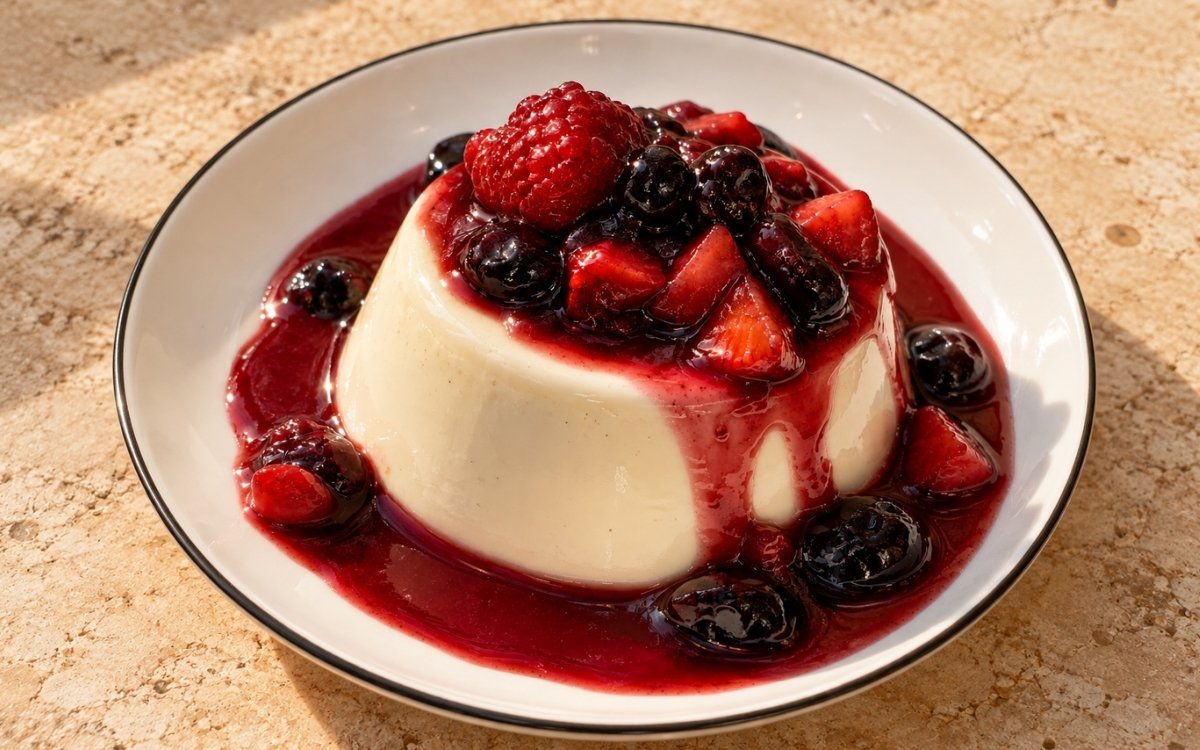
- To unmold, dip each mold briefly in hot water for 3–5 seconds only, then run a thin knife around the edge if needed. Invert onto dessert plates. Spoon berry sauce over and around each panna cotta, then top with the macerated berries. Serve chilled. Do not leave the molds in hot water too long or the panna cotta will begin melting at the edges.
Notes
Bloom the gelatin in cold water before it meets the hot cream so the panna cotta sets smoothly and evenly. Dry gelatin dumped straight into hot liquid tends to clump; hydrating it first means it dissolves evenly once it meets heat.
Heat the cream base gently and watch it so it never reaches a hard boil. That restraint protects the dessert's own clean, delicate dairy flavour, since overheating at this stage can affect both taste and final texture in ways that are hard to correct later.
Keep the unmolding dip short. A longer soak in hot water melts the edges and undoes the texture the long chill built.
Use the full 6g of gelatin for this quantity; it gives the classical set needed for unmolding. For panna cotta served in glasses, the amount can be reduced slightly, since gelatin quantity directly affects the final texture.