Ingredients
Method
Prep the Paneer and Vegetables
- Cut the paneer into large, even cubes, keeping them fairly big so they don't dry out or break during skewering. Cut the peppers into chunks roughly matching the paneer in size, and separate the onions into 2–3 layer petals or chunky wedges. If using wooden skewers, soak them first so they don't scorch too quickly once on the heat.
Toast the Besan
- Heat a small dry pan over low heat and toast the gram flour for 1–2 minutes, stirring constantly, until it smells nutty, without letting it darken much. Set aside to cool slightly. This toasting removes the raw taste from the besan and also helps the marinade cling better to the paneer and vegetables.
Make the Marinade
- Mix the thick yogurt, ginger-garlic paste, lemon juice, mustard oil, Kashmiri chili powder, optional hot chili, turmeric, coriander, cumin, garam masala, chaat masala, crushed kasuri methi, toasted besan, salt, black pepper, and optional ajwain in a bowl until smooth and thick. The marinade needs to stay thick and clingy rather than runny — strain the yogurt first if it's loose, since a watery marinade slides off the paneer and vegetables and pools on the tray instead of coating them. Taste and adjust the salt, acid, or heat before adding the paneer.
Marinate
- Add the paneer, onion petals, and peppers to the marinade, folding gently so the paneer doesn't break. Marinate for at least 30 minutes, ideally 1–2 hours in the fridge. Avoid leaving paneer in a strongly acidic marinade overnight, since it can soften too much and turn slightly crumbly or watery. If the bowl was refrigerated, let it sit at room temperature for about 15 minutes before skewering.
Make the Chutney
- Blend all the chutney ingredients until mostly smooth, adding only enough water to help it blend. The chutney should stay spoonable rather than thin. Taste and adjust the salt and lemon, then chill until serving.
Skewer
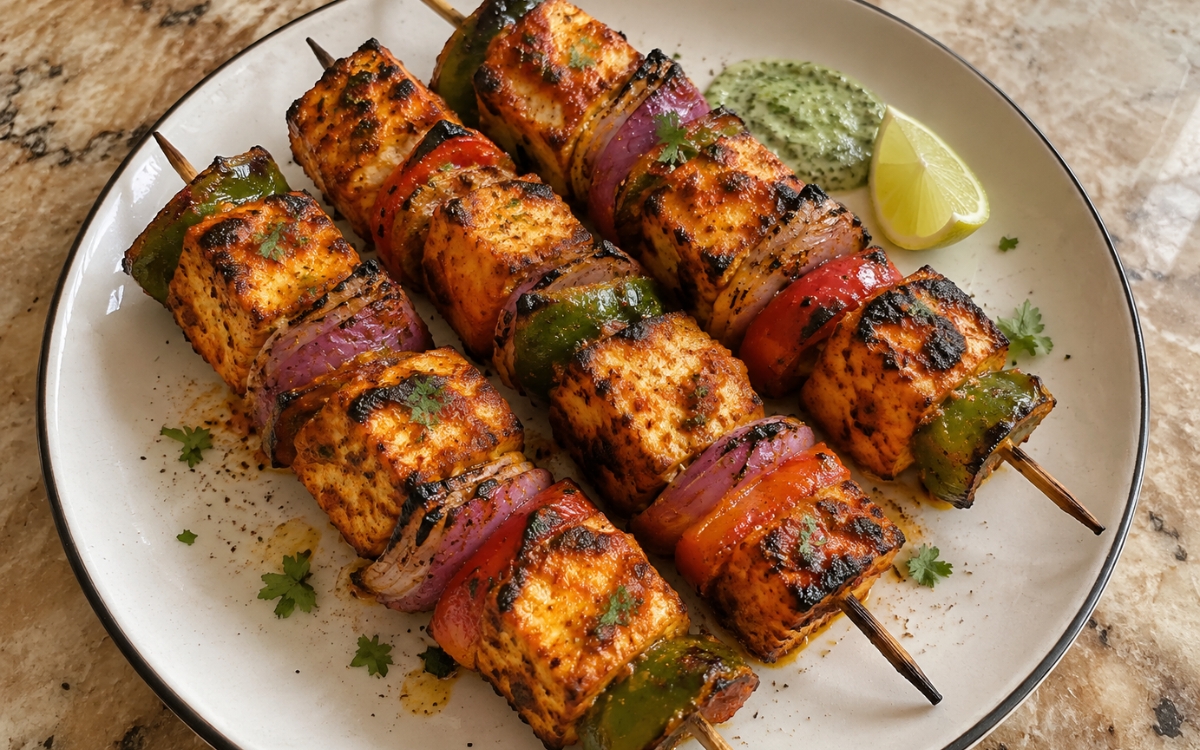
- Thread the skewers, alternating paneer, onion, and peppers, distributing the ingredients evenly across all 12 so each skewer holds a few pieces and is still easy to turn. Avoid packing the pieces too tightly — small gaps let heat circulate and let the edges char properly.
Cook
- For the main oven or broiler method, preheat the oven to 230–240°C, using the broiler or top heat for the last few minutes if possible. Line a tray or place the skewers on a rack set over a tray, lightly brush or spray them with a little oil, and roast for 10–12 minutes. Turn the skewers, brush lightly with oil or a little melted butter or ghee, and roast another 4–6 minutes, until the paneer is heated through, the vegetables are just tender, the marinade has set, and the edges show visible char. Broil for an additional 1–3 minutes at the end if you want stronger blackened spots. Keep a close eye on timing here — paneer turns rubbery if left too long, and the goal is hot, lightly firm paneer with a soft interior rather than chewy cubes. For a grill or barbecue, cook over medium-high heat, turning every few minutes, until charred in spots and heated through, about 8–12 minutes total. For a grill pan or stovetop, cook over medium to medium-high heat with a little oil, turning carefully until all sides show color, working in batches or with shorter skewers if needed. For an air fryer, cook at 200°C for 8–10 minutes, turn, then cook 3–5 minutes more until charred in spots.
Finish
- Brush the hot skewers with a little melted butter or ghee and sprinkle very lightly with chaat masala. Serve immediately with the green chutney, lemon wedges, optional onion rings, and a few cilantro leaves.
Notes
Using thick yogurt from the start, or straining regular yogurt for 30–60 minutes first, is one of the biggest quality points in this dish — a thin marinade simply can't cling to the paneer and vegetables the way a properly thickened one does.
Larger paneer cubes hold moisture through the roasting or grilling process far better than small ones, which dry out quickly and lose the soft interior this dish depends on.
Toasted besan plays a specific role beyond flavor: it helps the marinade bind into a cohesive coating rather than turning wet or pasty once it's on the heat.
Paneer doesn't need the long marination times that meat does, and leaving it too long in this acidic marinade — especially overnight — risks softening it into something crumbly rather than keeping its structure through cooking.