Ingredients
Method
Prep the Paneer
- Cut the paneer into medium-large cubes. If it's store-bought or slightly firm, place it in hot, lightly salted water for 10–15 minutes, which keeps it soft and helps it stay tender once it joins the sauce. Drain just before using. For a slightly more defined restaurant-style look, lightly sear the cubes in 1 teaspoon oil or ghee for 30–45 seconds per side, without browning heavily or crisping them — this dish depends on soft paneer rather than chewy paneer.
Cook the Masala Base
- Heat the 2 tablespoons butter and 1 tablespoon oil in a saucepan or sauté pan over medium heat. Add the bay leaf, cardamom, cloves, and cinnamon, cooking for 20–30 seconds until fragrant. Add the chopped tomatoes, ginger, garlic, cashews, dried Kashmiri chilies if using, Kashmiri chili powder, coriander, turmeric, and 1 teaspoon salt, stirring well, then add 120 ml water. Cook over medium heat for 15–20 minutes, partially covered, stirring occasionally, until the tomatoes fully break down, the cashews soften, the raw tomato smell is gone, and the mixture looks thick and pulpy. Add a small splash of water if it dries out too much while cooking.
Blend the Sauce
- Remove the bay leaf, cinnamon, and as many cardamom pods and cloves as convenient, then blend the cooked tomato mixture until completely smooth. For the smoothest, most classical texture, strain the blended sauce through a fine sieve into a bowl or directly back into the pan, pushing it through well — this straining step is what gives the sauce its polished, restaurant-style finish.
Finish the Makhani Gravy
- Return the smooth sauce to the pan and add the 1½ tablespoons butter along with a splash of water if needed. Simmer on low for 5–7 minutes, stirring often, until the sauce thickens slightly and looks glossy. Add the cream, sugar or honey, garam masala, and crushed kasuri methi, stirring and simmering another 2–3 minutes. Adjust the consistency with a little hot water if needed — the final gravy should be smooth, pourable but not thin, rich and velvety, and glossy with no graininess. If it tastes too tangy, add a little more sugar or cream; if it's too thick, add hot water; if it needs more depth, a touch more butter or kasuri methi; and add any extra salt only in small amounts.
Add the Paneer
- Add the drained paneer cubes to the finished gravy and simmer very gently on low for just 2–4 minutes, only until heated through. Keep this stage brief — overcooking the paneer here makes it firm and rubbery instead of soft.
Finish and Serve
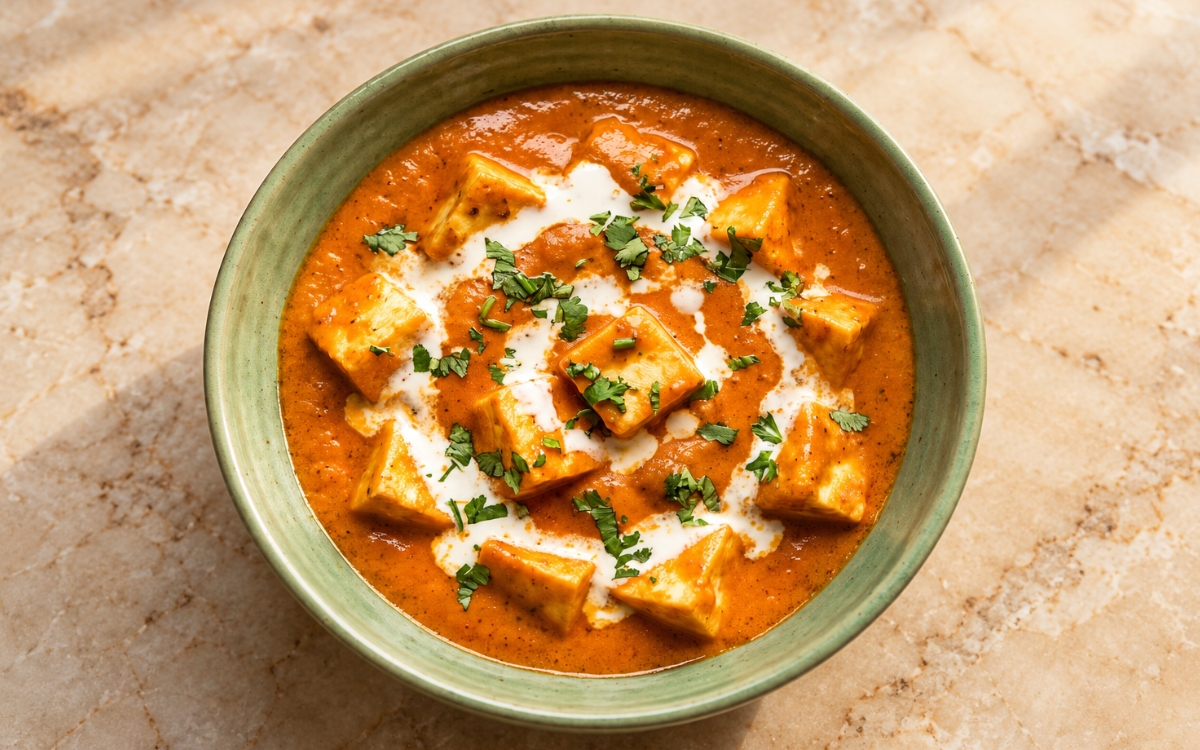
- Turn off the heat and let the curry rest for 2–3 minutes before serving, which lets the fat settle slightly and the flavors round out. Serve hot with a small cream swirl and chopped cilantro, alongside naan, roti, jeera rice, or plain basmati rice.
Notes
This dish depends heavily on the tomato base, so using ripe tomatoes matters more here than in curries with more competing flavors; very sour tomatoes may need a touch more sugar and cream to bring the balance back.
Cashews blended into the sauce contribute body and a mellow richness without the floury or heavy quality a thickener like cornstarch would add, which is part of why they're worth including rather than skipping.
Straining the blended sauce is an extra step, but it's the one most responsible for the smooth, polished texture that separates a classical butter masala from a chunkier, more rustic tomato curry.
Soaking the paneer in hot, lightly salted water before it goes anywhere near the sauce is one of the simplest ways to keep it soft through the final simmer, and skipping that step leaves firmer paneer more likely to turn tough.