Ingredients
Method
Dry and Prepare the Surface
- Pat the cod fillets completely dry on all sides using paper towels. Repeat if necessary — any residual moisture will interfere with searing. Moisture must evaporate before browning can begin; otherwise the fish steams instead of forming a crust . Season evenly with salt and white pepper.
Apply a Light Flour Coating
- Dust each fillet lightly with flour and shake off the excess. The coating should be thin and even — not clumpy. This step creates a dry outer layer that helps the fish brown evenly, prevents sticking, and forms a subtle crust while also insulating the delicate flesh underneath. .
Heat the Pan Properly
- Heat olive oil in a large pan over medium-high heat until it begins to shimmer. The oil should be hot enough that the fish sizzles immediately on contact. Proper preheating is critical — insufficient heat causes sticking and uneven cooking, especially with delicate fish.
Sear Without Movement
- Place the cod presentation-side down and leave it completely undisturbed for about 4 minutes. Do not attempt to move or flip early. Fish releases naturally when a crust forms — forcing it will tear the fillet apart. This stage builds both texture and structure.
Flip and Transition to Butter
- Carefully flip the cod using a thin spatula. Immediately add butter to the pan. Once it melts and begins to foam, add garlic and cook briefly until fragrant. This marks the transition from searing to finishing — from dry heat to fat-based cooking.
Baste to Finish Cooking
- Tilt the pan slightly and spoon the foaming butter over the fish continuously for 2–3 minutes. This technique gently finishes cooking while maintaining moisture and adding flavor. Basting also distributes heat more evenly than direct contact alone, reducing the risk of overcooking one side.
Build the Pan Sauce
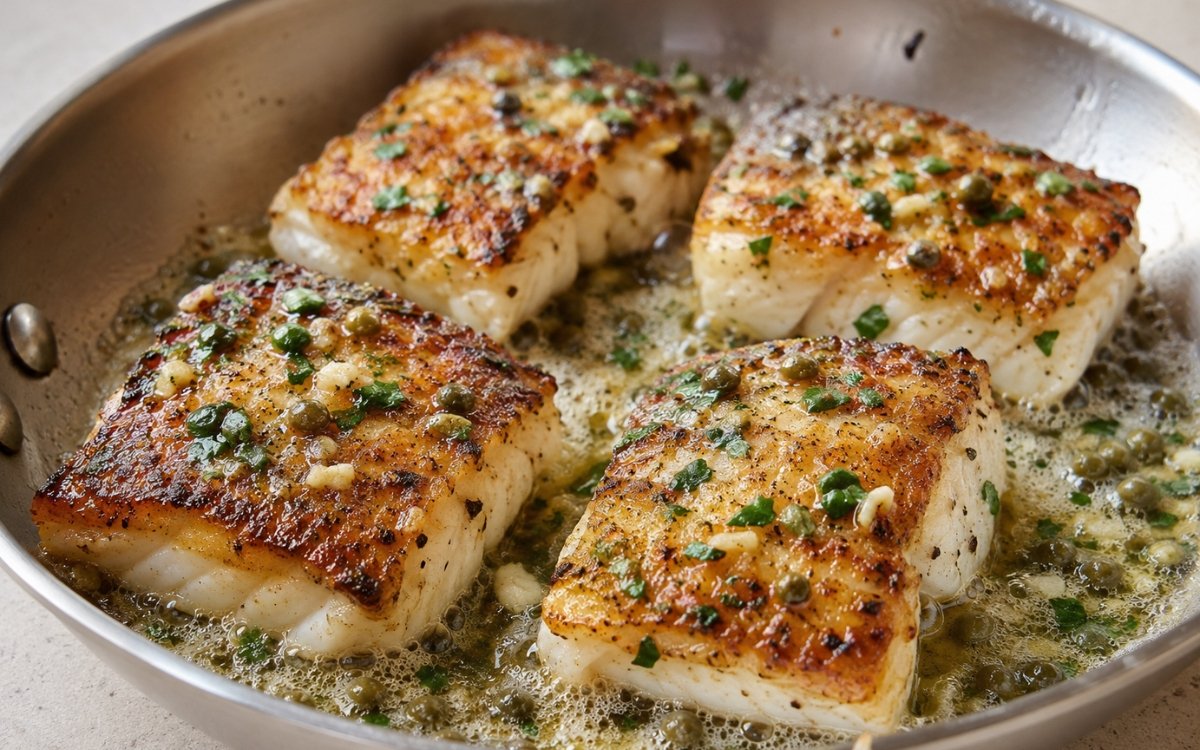
- Remove the fish from the pan. Add lemon juice, parsley, and capers directly into the butter and swirl to combine. The residual heat emulsifies the sauce quickly, creating a light, glossy finish that coats the fish without overpowering it.
Serve Immediately
- Spoon the sauce over the fish and serve immediately. Cod loses its optimal texture quickly — waiting even a few minutes allows steam to soften the crust and degrade structure.
Notes
Thorough drying is even more consequential for cod than for a firmer fish like salmon, since cod's high moisture content and delicate flake structure make it particularly prone to steaming rather than searing if any surface water remains. Repeating the pat-dry process, rather than assuming one pass is enough, is worth the extra time.
The light flour coating specifically protects cod's fragile texture during the sear. Without it, the fish's high moisture content would make direct contact with the hot pan more likely to stick and tear; the thin flour layer creates a barrier that browns evenly while helping the fillet release cleanly once the crust has set.
Serving immediately is not a suggestion for this dish — cod's delicate structure and high moisture content mean the crisp crust softens noticeably within just a few minutes of resting, as residual steam from the fish's own moisture works against the texture that searing just built.