Ingredients
Method
Braise the Beef
- Pat the beef dry and season all over with the salt and black pepper. Heat the oil in a heavy pot or Dutch oven over medium-high heat. Sear the beef for 3–4 minutes per side until well browned. The goal is a deep brown crust, not just light coloring, because that browning becomes part of the final sauce. Transfer the beef to a plate. Lower the heat to medium. Add the sliced onion and both bell peppers and cook for 6–8 minutes, stirring occasionally, until softened and lightly caramelized at the edges. Add the garlic and cook for 30 seconds. Add the chopped tomatoes, tomato paste, cumin, oregano, and bay leaf. Cook for 3–4 minutes, stirring, until the tomato paste darkens slightly and the mixture becomes thick and fragrant. Return the beef to the pot along with any juices. Add the stock and Worcestershire sauce if using. The liquid does not need to fully cover the meat; it should come about halfway up the sides. Bring to a gentle simmer, cover, and cook over very low heat for 2½–3 hours, turning once or twice, until the beef is fork-tender and shreds easily with almost no resistance. The braising liquid should remain at a lazy simmer, never a hard boil. If it reduces too aggressively, add a splash of water. The beef is ready when a fork slips in easily and the fibers separate cleanly. Cooking the onion and peppers in the same pot right after searing the beef, rather than in a clean pan, means those vegetables pick up real flavour from the fond left behind — that residual browned residue gets scraped up and worked directly into the aromatic base as it softens.
Shred and Finish the Beef
- Remove the beef from the pot and let it cool just enough to handle. Shred it finely with two forks or your fingers, discarding any heavy connective tissue. For proper pabellón texture, the beef should be shredded into thin strands rather than chunky pieces. If the sauce in the pot is very loose, simmer it uncovered for a few minutes until lightly thickened. Return the shredded beef to the pot and cook uncovered for 10–15 minutes, stirring occasionally, until the meat absorbs the sauce and becomes moist, cohesive, and deeply flavored. The finished beef should be juicy but not soupy. It should hold together in a mound on the plate, with just enough sauce to coat the strands and keep them glossy. Returning the shredded beef to its own sauce for this final uncovered simmer, rather than serving it straight from shredding, gives the thin strands genuine time to reabsorb concentrated flavour directly from the liquid they were braised in.
Cook the White Rice
- Rinse the rice under cold water until the water runs mostly clear. Combine the rice, water, oil or butter, and salt in a saucepan. Bring to a boil over medium-high heat. Once boiling, stir once, reduce the heat to low, cover tightly, and cook for 15 minutes. Turn off the heat and let it rest, covered, for 10 minutes. Fluff gently with a fork before serving. The rice should be tender and separate, not wet or clumped. That final resting period, still covered off the heat, lets residual steam finish the cooking gently and evenly without the risk of scorching the bottom that continued direct heat would introduce.
Cook the Black Beans
- Heat the oil in a saucepan over medium heat. Add the diced onion and cook for 4–5 minutes until softened. Add the garlic, cumin, and oregano and cook for 30 seconds until fragrant. Add the black beans with their liquid, bay leaf, sugar, vinegar, salt, and a few grinds of black pepper. Bring to a gentle simmer and cook for 15–20 minutes. Stir occasionally and add a splash of water if the beans become too thick. Mash a small portion of the beans against the side of the pan to thicken them slightly, but keep most of them whole. The finished beans should be glossy and spoonable, with a lightly thickened broth around them rather than being dry or fully mashed. Remove the bay leaf before serving. Mashing only a small portion, rather than the whole pot, thickens the surrounding liquid naturally while preserving most of the beans' own texture — a deliberate middle ground between fully smooth and entirely loose.
Fry the Plantains
- Peel the ripe plantains and cut them on a diagonal into long, thick slices about 1.5cm thick. Heat the oil in a large skillet over medium heat. Fry the plantains in batches for 2–3 minutes per side until deeply golden brown with caramelized edges. Transfer to a plate or rack. Lightly season with a tiny pinch of salt if desired. They should be soft and sweet inside with well-browned edges. If they are browning too fast before softening, lower the heat slightly. Genuinely ripe plantains, heavily spotted with black, carry the natural sugar content this caramelisation depends on — that same sugar is what lets the exterior brown deeply while the interior has time to soften into its characteristic sweet, custardy texture.
Plate the Pabellón
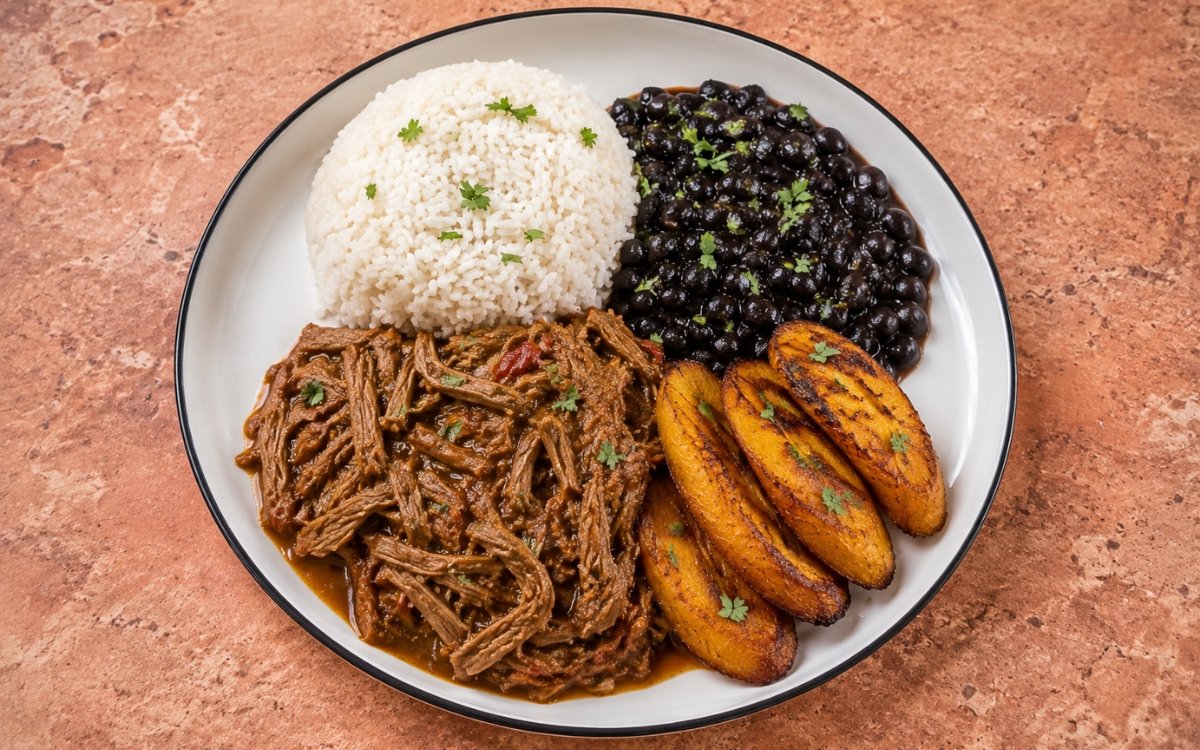
- Spoon the rice onto one section of each plate. Add the black beans beside it, then a generous portion of shredded beef in its own section, and finally the fried plantains. Keep the four components visually separate in the classic pabellón style rather than mixing them together. Finish with a little chopped parsley or cilantro if desired and serve immediately while all components are hot. This deliberate, distinct plating is a genuine part of pabellón's identity — the dish is specifically built around contrast between its four components, and keeping them visibly separate on the plate preserves that intended experience rather than blending everything into one mixed dish.
Notes
Searing the beef to a genuinely deep brown crust, rather than just light colouring, deserves recognition as the step most responsible for this braise's final depth. That browning isn't simply a step to move past quickly — the fond it builds on the pot's surface gets worked directly into the aromatic vegetables cooked afterward, and that concentrated flavour carries all the way through into the finished sauce the shredded beef eventually simmers in.
Keeping the braising liquid at a genuine lazy simmer throughout its multi-hour cook, never letting it reach a hard boil, protects the beef's texture in a way worth respecting despite how long this braise already takes. A harder boil agitates the liquid enough to toughen the meat's connective tissue in a way that works against the tender, easily-shredding result this dish specifically calls for — patience at a gentle simmer is what that tenderness actually depends on.
The decision to shred the beef into thin strands, then return it to its own sauce for a further uncovered simmer, reflects real understanding of what gives pabellón's beef its characteristic texture. That final stage isn't optional — it's what lets the thin strands genuinely absorb concentrated flavour from the reduced braising liquid, producing meat that's moist and cohesive rather than merely tender chunks sitting in a separate sauce.
Keeping every component of the finished plate visually distinct — rice, beans, beef, plantains, each in its own section — is worth understanding as a genuine expression of this dish's whole identity rather than simply a plating preference. Pabellón is specifically built around the contrast between these four different textures and flavours; mixing them together on the plate would lose exactly the experience this classic presentation is designed to deliver.