Ingredients
Method
Prepare the Veal Shanks
- Pat the veal shanks very dry. If there is a tough membrane around the outside edge, snip it in 3–4 places with kitchen scissors to help prevent curling during searing. If the shanks are loose or uneven, tie them once around the circumference with kitchen twine. Season both sides with the salt and pepper. Dredge very lightly in the flour, shaking off all excess. The flour should be a thin dusty coating only, not a heavy crust. Excess flour can burn in the pot and make the sauce muddy. Snipping that outer membrane in a few places gives the shank's own natural tension somewhere controlled to release as it browns — without those cuts, the meat would curl unpredictably and cook unevenly against the pan.
Brown the Meat
- Heat a heavy Dutch oven or braiser over medium to medium-high heat. Add the olive oil and butter. When the butter foam subsides, add the veal shanks and brown well, about 3–4 minutes per side, plus a little color on the outer edge if possible. Work in batches if needed so the pot is not crowded. Transfer the browned shanks to a plate. The shanks should have a deep golden-brown crust. Good browning builds the flavor base for the sauce. Don't rush this browning — the fond it builds on the pot's own surface gets worked directly into the vegetables and liquid still to come, carrying real, concentrated flavour all the way through to the finished sauce.
Build the Soffritto and Deglaze
- Lower the heat to medium. Add the onion, carrot, and celery to the same pot. Cook for 8–10 minutes, stirring regularly, until softened and lightly golden at the edges. Add the sliced garlic and cook for 30 seconds. Stir in the tomato paste and cook for 1–2 minutes until slightly darkened and no longer raw. Pour in the white wine and scrape up all browned bits from the bottom of the pot. Simmer for 3–5 minutes until the wine is reduced by about half and the alcohol smell has cooked off. The vegetables should be softened and sweet, and the wine should no longer smell sharp or raw. That deglazing step lifts every bit of fond left behind by the seared veal directly into the liquid, working real, concentrated flavour back into the base rather than leaving it stuck to the pot.
Braise Gently
- Add the passata or crushed tomatoes and stir. Return the veal shanks to the pot in a single layer, nestling them into the vegetables. Add enough hot stock to come about two-thirds of the way up the sides of the shanks, usually 450–600ml depending on your pot size. Add the thyme and bay leaf. Bring just to a gentle simmer on the stove. Cover with a tight-fitting lid and transfer to a preheated oven at 160°C / 325°F. Braise for 1 hour 45 minutes to 2 hours 15 minutes, turning the shanks once about halfway through. Check occasionally: the liquid should stay at a very gentle simmer, never a hard boil. Add a splash of hot stock if the pot looks dry. The osso buco is ready when the meat is fork-tender, the connective tissue has softened, and the meat is just beginning to relax away from the bone without falling completely apart. Held at a gentle simmer over several hours, the shank's connective tissue breaks down into tenderness; a harder simmer toughens the meat instead.
Finish the Sauce
- Transfer the shanks carefully to a warm plate and remove the twine if used. Discard the thyme and bay leaf. If the sauce is a little thin, place the pot over medium heat and simmer for a few minutes until lightly thickened and glossy. If it seems too thick, loosen with a splash of hot stock. Taste and adjust salt and pepper. The vegetables should be completely soft and integrated into the sauce, but still visible as small rustic pieces. Do not reduce the sauce too aggressively once the shanks are cooked. You want a glossy, spoonable braising sauce, not a heavy paste. That deliberate restraint at this final reduction stage protects the sauce's own intended consistency — pushing it too far would turn a properly glossy, spoonable braise into something considerably heavier and less balanced.
Make the Gremolata and Serve
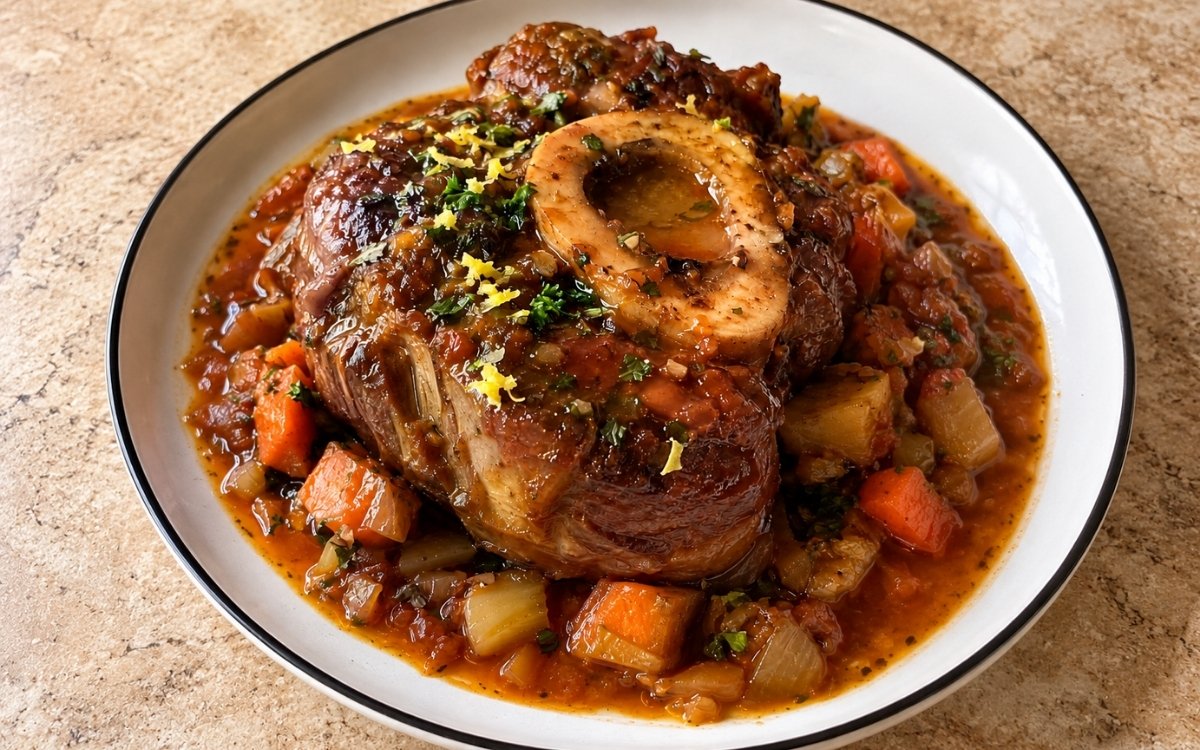
- Mix the chopped parsley and lemon zest. Return the shanks to the sauce briefly to rewarm if needed. Spoon the sauce and vegetables onto plates, set a shank on each plate, and spoon more sauce over the top. Finish with the parsley-lemon gremolata. Serve immediately while hot. Adding that gremolata only at this very last stage, rather than earlier, keeps its lemon zest and parsley bright and aromatic — mixed in any earlier, both would dull considerably by the time the dish actually reaches the table.
Notes
Browning the veal shanks to a deep golden crust before braising is where most of this dish's flavour comes from. That browning isn't simply cosmetic — the fond it builds gets worked directly into the vegetables and deglazing liquid that follow, and that concentrated flavour carries all the way through into the finished sauce the shanks eventually simmer in for hours.
Keep the braise at a gentle simmer for its full time in the oven, never a hard boil. A harder simmer toughens the connective tissue instead of giving meat that is nearly falling off the bone.
Snipping the tough outer membrane around each shank before searing is a small detail that matters. Veal shanks tend to curl as they brown, and those few strategic cuts give the meat's own natural tension somewhere controlled to release, protecting against the uneven cooking an uncontrolled curl would otherwise cause.
Add the fresh gremolata only right before serving. Both lemon zest and fresh parsley lose real brightness and aroma the longer they sit, so adding it at the last moment delivers the sharp, fresh lift this rich, slow-braised dish depends on for balance.