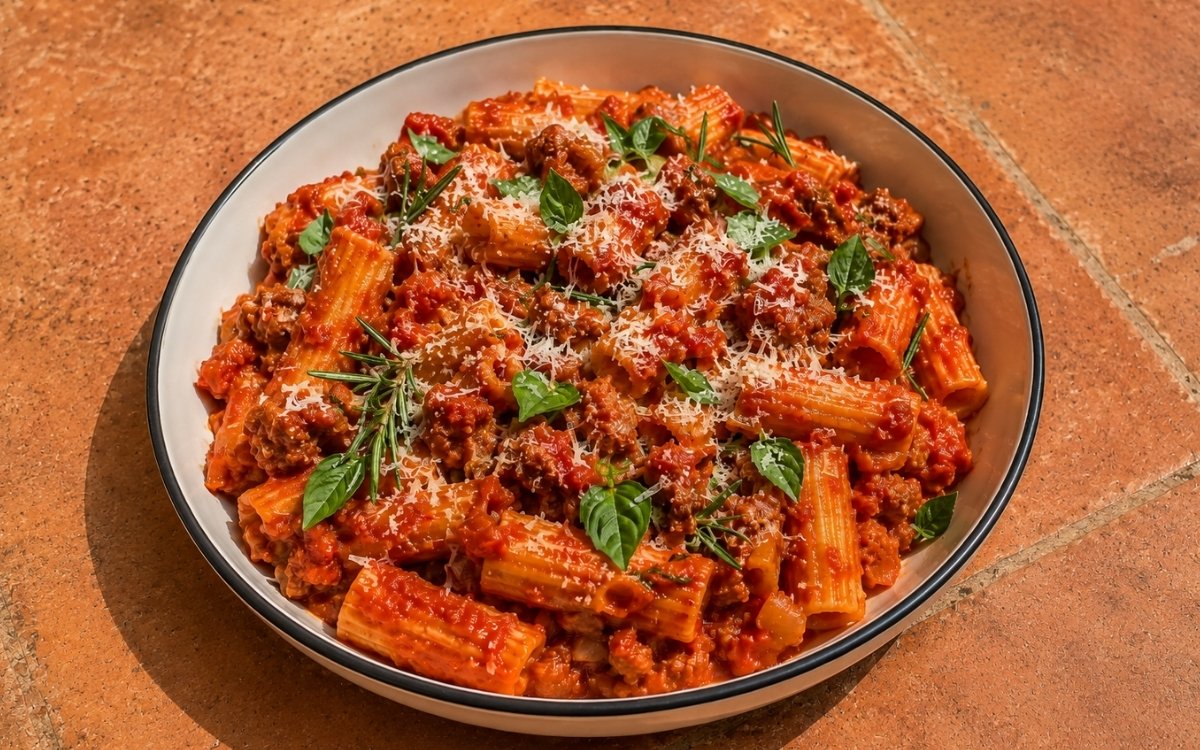
Ingredients
Method
Brown the Sausage
- Heat a large, deep sauté pan or braiser — 12-inch minimum, as the rigatoni and all the liquid will cook in this single vessel — over medium-high heat. Add 20ml of the olive oil and allow to heat until shimmering. Crumble the 400g of Italian sausage with casings removed directly into the pan, breaking it into rough, irregular bite-sized chunks with a wooden spoon rather than fine crumbles — the larger chunks maintain their presence in the finished dish and provide distinct, textural pieces of sausage rather than disappearing into the sauce. Leave undisturbed for 3–4 minutes without stirring — the sustained contact with the hot pan surface is what produces the deep golden-brown sear that contributes the fond and the caramelised meat flavour that defines this recipe's depth. After 3–4 minutes, break the larger pieces into smaller ones and continue cooking for a total of approximately 5 minutes until golden and well-rendered. The sausage must be deeply browned — not simply cooked through — because its caramelised surfaces and the fond they leave on the pan are the primary flavour contribution that the onion, wine, and tomatoes subsequently build on. Transfer the browned sausage with a slotted spoon to a plate, leaving all the rendered sausage fat in the pan. Do not drain this fat — it is the flavoured cooking medium for everything that follows.
Build the Aromatic Base
- Reduce the heat to medium. Add the 120g of finely diced yellow onion to the rendered sausage fat. Cook, stirring occasionally, for approximately 4 minutes until completely softened and translucent — the onion softens readily in the hot, richly flavoured sausage fat, absorbing its savoury character while its own natural sugars begin to develop. Add the 16g of thinly sliced garlic and 3g of red pepper flakes simultaneously. Cook for 1 minute, stirring continuously — the garlic blooms its aromatic compounds into the hot fat in this 60-second window, and the red pepper flakes' fat-soluble capsaicin distributes evenly through the surrounding sausage fat and olive oil. Add the 40g of tomato paste and stir it into the onion-garlic mixture. Press the tomato paste against the hot pan surface and allow it to sit briefly before stirring — 2 minutes of cooking, with intermittent stirring and pressing, converts the raw tomato paste's sharp, slightly acidic character into a brick-red, caramelised, concentrated tomato depth through direct contact with the hot pan. This caramelised tomato paste is the flavour bridge between the sausage's savory richness and the San Marzano tomatoes' fresh acidity — without this caramelisation step the sauce tastes assembled rather than developed.
Deglaze with Wine and Add Tomatoes
- Pour in the 240ml of dry white wine. Immediately scrape the bottom of the pan firmly — the wine dissolves every bit of fond from the sausage sear and the caramelised tomato paste into the developing sauce. Allow the wine to bubble vigorously for approximately 3 minutes, reducing by about half — the raw alcohol edge should completely cook off and the wine should smell of concentrated fruit rather than raw spirit. Add the 800g of hand-crushed San Marzano tomatoes with all their juices — hand-crushing each tomato over the pan produces a varied texture with some identifiable pieces and some sauce, more visually interesting than pre-crushed tomatoes and providing distinct tomato texture in the finished dish. Add the 480ml of chicken stock, the 2 rosemary sprigs, 6g of the salt, and 3g of black pepper. Stir to combine everything into the braising liquid that the pasta will cook in. The liquid volume is calibrated for the amount of pasta — the 480ml of stock, 240ml of wine, and the tomato juice together provide the correct absorption volume for 320g of rigatoni to cook through fully while the sauce simultaneously reduces to the correct coating consistency.
Cook the Pasta Directly in the Sauce
- Add the 320g of uncooked rigatoni directly to the pan, pushing it down into the liquid with a wooden spoon until it is mostly submerged. This is the technique that defines the dish — pasta cooked directly in a flavoured sauce rather than plain boiling water absorbs the sauce's flavour throughout its entire structure, every grain of starch swelling with the tomato-wine-chicken stock-sausage fat cooking liquid rather than with plain water. Simultaneously, the starch released from the pasta during cooking dissolves into the surrounding sauce rather than being drained away — progressively thickening and enriching it with each passing minute. Bring to a vigorous simmer over medium-high heat, then reduce to medium to maintain a steady, active simmer. Cook uncovered, stirring every 2–3 minutes — stirring prevents the pasta from sticking to the bottom of the pan as the liquid reduces and the sauce thickens, and also redistributes the liquid so every piece of pasta cooks evenly rather than the submerged pieces absorbing all the liquid while the top pieces cook more slowly. The total cooking time is 14–16 minutes. As the pasta approaches al dente, the sauce will be noticeably thicker and glossier than when the pasta first went in — the starch release has emulsified the tomato, fat, and stock into a unified, coating sauce. If the liquid reduces too aggressively before the pasta is cooked through, add additional chicken stock in 60ml increments. If the sauce remains too thin when the pasta reaches al dente, increase the heat slightly and stir constantly for 2–3 additional minutes.
Return Sausage and Finish with Pecorino
- When the rigatoni is al dente and the sauce clings to the pasta in a glossy, concentrated coating, remove and discard the rosemary sprigs — they have given their aromatic contribution during the cooking and their woody stem and needles should not appear in the finished dish. Return the browned sausage pieces and every accumulated juice from their resting plate to the pan. The resting juices contain rendered sausage fat and concentrated protein that enrich the sauce at the final stage. Add the remaining 40ml of olive oil — this finishing olive oil, added off the main cooking heat, emulsifies into the starchy tomato sauce and adds a smooth, fruity richness that the olive oil cooked from the beginning of the recipe no longer provides in its raw form. Add the 80g of finely grated Pecorino Romano. Toss vigorously — the Pecorino's salt, fat, and protein combine with the starchy, concentrated tomato sauce to produce a smooth, creamy coating without any added cream. The pasta's own starch is the emulsifier; the Pecorino is the body and flavour. Taste and adjust with the remaining 2g of salt if needed.
Rest and Serve
- Remove from the heat and fold in the 20g of torn fresh basil leaves — the residual heat wilts them gently and releases their volatile aromatic compounds into the sauce's surface without the darker, more concentrated character that cooking basil directly produces. Allow to rest for 2 minutes — the brief rest allows the starchy sauce to settle and thicken very slightly around each piece of rigatoni, improving its cling and making the plated portions more visually cohesive. Serve immediately in shallow bowls. Add additional finely grated Pecorino Romano over each portion. Drizzle a small amount of the best olive oil available over each bowl at serving.
Notes
The one-pan pasta technique — cooking pasta directly in the sauce rather than in separate boiling water — is not simply a convenience technique but a fundamentally different cooking method that produces a different result from the same ingredients cooked by conventional means. When pasta cooks in a flavoured sauce, the starch gelatinises in the flavoured liquid rather than in plain water — every grain of pasta starch absorbs the sauce's aromatic and flavour compounds as it swells. The pasta tastes of the sauce from the inside out rather than from the surface in. Simultaneously, the released starch builds the sauce's body progressively rather than being washed away — the sauce thickens naturally and cohesively rather than requiring pasta water, cream, or roux as thickening agents. The trade-off is that the pasta must be stirred regularly to prevent sticking as the sauce reduces, and the liquid volume must be correctly calibrated for the pasta quantity.
Hot versus sweet Italian sausage is a genuine choice that changes the dish's character significantly. Hot Italian sausage adds its fennel seed and red chili character alongside the red pepper flakes, producing a more assertively spiced result with two layers of heat. Sweet Italian sausage provides the fennel and garlic seasoning of Italian sausage without the chili, allowing the red pepper flakes to be the sole heat source and producing a more controlled, less spice-forward result. Both work — the choice depends on the intended heat level and the preference of the people eating.