Ingredients
Method
Prepare the Tin
- Line the base of a 23cm / 9-inch springform pan with parchment. Lightly grease the sides if desired. A springform pan is important for clean unmoulding. If you want very neat sides, line the inside edge with an acetate strip. That deliberate lining choice, whether parchment alone or an added acetate strip, is what actually protects the finished cheesecake's own clean edges once it's released from the pan.
Make the Crust
- Pulse the Biscoff cookies to fine crumbs. Mix with the melted butter, salt, and cinnamon if using until the texture resembles wet sand. Tip into the pan and press firmly across the base and slightly up the sides if desired. Use the bottom of a glass or measuring cup to compact it evenly. Chill for 20–30 minutes until firm. The crust should feel tightly packed and hold together when pressed. Loose crumbs will make the base crumble when slicing. That firm, deliberate compacting is what actually binds the buttered crumbs into a real, cohesive base — crumbs pressed only loosely would simply crumble apart the moment a slice is cut.
Make the Filling Base
- In a large bowl, beat the cream cheese and mascarpone until completely smooth, with no lumps. Add the icing sugar, Biscoff spread, vanilla, salt, and lemon juice. Beat again until fully combined and silky. The dairy must be at room temperature before mixing. Cold cream cheese will stay lumpy, and overmixing later will thin the filling. That genuine room temperature is what lets both cheeses actually break down smoothly under beating — cold dairy resists blending evenly, and trying to correct that resistance with extended mixing only thins the filling's own texture instead.
Whip the Cream
- In a separate bowl, whip the cold heavy cream to medium-stiff peaks. Fold the whipped cream into the Biscoff cream cheese mixture in 2–3 additions until evenly combined and airy. Stop folding as soon as the mixture is uniform. Do not whisk aggressively or the filling can loosen and lose volume. Texture target: thick, mousse-like, smooth, and able to hold soft shape. That deliberate, staged folding, stopped the moment the mixture turns uniform, protects the real air whipped into the cream from being knocked back out — more aggressive mixing would deflate exactly the volume this technique worked to build.
Fill and Chill
- Spoon the filling over the chilled crust and level the top carefully. Refrigerate for at least 6 hours, preferably 8 hours or overnight, until fully set. Do not add the Biscoff topping before the filling is properly cold and set, or the top can sink or mix into the filling. That extended, genuine chilling time gives the whole filling real, thorough time to firm up completely — anything less risks a filling still soft enough for the topping to sink into it rather than sitting cleanly on top.
Add the Biscoff Topping
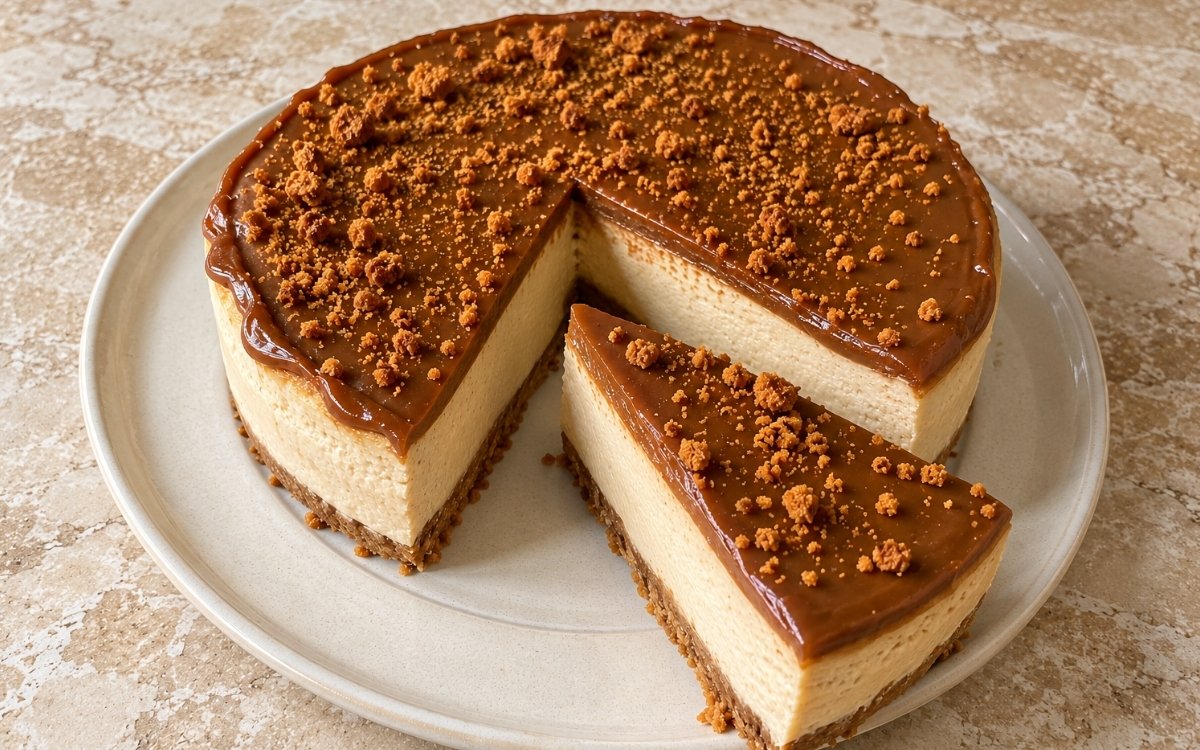
- Gently warm the Biscoff spread until just fluid enough to pour or spread. If needed, stir in 1–2 tbsp milk or cream to loosen slightly. Pour over the chilled cheesecake and spread into an even glossy layer. Scatter the crushed Biscoff cookies over the top. Return to the fridge for 20–30 minutes so the topping firms slightly before slicing. The topping should be spreadable and glossy, not hot. If too warm, it can melt the surface of the cheesecake. That deliberate warming, only to fluid rather than genuinely hot, protects the filling's own set surface directly beneath it — spread while still too warm, the topping would begin melting that surface on contact.
Unmould and Slice
- Release the cheesecake from the springform pan. Transfer to a cake plate. For clean slices, use a large sharp knife dipped in hot water and wiped dry between cuts. That hot, wiped knife technique lets each cut through the layered cheesecake come out clean, rather than dragging and smearing the soft filling and glossy topping with each successive slice.
Notes
Using genuinely room-temperature cream cheese and mascarpone deserves recognition as the technique most directly responsible for whether this filling achieves real, silky smoothness. The recipe's own explicit warning that "cold cream cheese will stay lumpy, and overmixing later will thin the filling" reflects a real, common failure point — that softness is what lets both cheeses actually break down evenly under beating.
Folding the whipped cream into the base gently, in staged additions, deserves the same attention this technique receives throughout this collection's other mousse-like, no-bake fillings. The recipe's own explicit warning against whisking "aggressively" reflects real understanding that this filling's whole airy, mousse-like texture depends entirely on protecting the air already whipped into the cream.
Waiting until the filling is fully, genuinely set before adding the Biscoff topping deserves genuine respect as a real, necessary sequencing choice. The recipe's own explicit warning that an early topping "can sink or mix into the filling" reflects exactly the risk this extended chilling period is specifically built to protect against.
Warming the Biscoff spread only until fluid, never genuinely hot, before pouring it over the chilled cheesecake deserves attention as the detail responsible for protecting the filling's own set surface. The recipe's own explicit warning that spread poured too warm "can melt the surface of the cheesecake" reflects a real, direct risk this careful temperature control avoids.