Ingredients
Method
Prepare the Mozzarella
- Drain the mozzarella very well. Tear or cut it into small bite-size pieces and place it on paper towels or in a colander set over a bowl for at least 30–60 minutes. If using very wet mozzarella, especially buffalo mozzarella, drain it longer. The cheese must be well drained before topping. Wet mozzarella releases too much liquid in the oven and can flood the center, preventing the crust from setting properly. That extended draining time removes moisture the cheese would otherwise release directly onto the dough during its genuinely brief bake — moisture the crust's short cooking window simply doesn't have time to cook off on its own.
Make the Sauce
- Crush the tomatoes by hand in a bowl or pulse briefly just until broken down into a rustic sauce. Stir in the salt. Do not cook the sauce. Do not add sugar, garlic, onion, oregano, or herbs if you want a classical Margherita profile. The sauce should taste clean, bright, and lightly seasoned. The texture matters: it should be loose enough to spread easily, but not watery. If there is excessive thin tomato liquid in the can, hold some of it back. Leaving the sauce entirely raw, rather than simmering it first, is what protects its genuinely bright, fresh tomato character — the brief oven time still cooks it fully once the pizza bakes, so nothing about the sauce's freshness is actually lost.
Bring the Dough to Room Temperature
- Take the dough balls out of the refrigerator 2–3 hours before baking. Keep them covered so the surface does not dry out. The dough is ready when it feels soft, relaxed, and slightly puffy. A properly tempered dough stretches much more easily and keeps the airy rim. Cold dough resists stretching and tends to snap back or tear. That tempering window lets the cold, tightened gluten network genuinely relax and warm through — dough shaped straight from the fridge simply doesn't have the same give, fighting the stretch at every attempt.
Preheat the Oven and Baking Surface
- Place a pizza stone or pizza steel in the oven and preheat at the highest temperature your oven can reach, ideally 275–300°C, for at least 45–60 minutes. If your oven has a broiler or grill element, turning it on for the final 10–15 minutes of preheating helps build stronger top heat. For a dedicated pizza oven, preheat to approximately 430–485°C. High heat is critical. Without a fully saturated baking surface and strong top heat, you will not get the rapid oven spring, blistering, and soft-charred crust associated with Neapolitan-style pizza. That extended preheat ensures the stone or steel itself, not just the surrounding air, has genuinely reached its target temperature throughout — a surface only warmed on top would still be catching up internally when the dough first makes contact.
Shape the First Pizza
- Dust the work surface lightly with flour. Place one dough ball on the surface and dust the top lightly. Press from the center outward with your fingertips, pushing air toward the edge while leaving a 2–3cm rim untouched. Pick up the dough and stretch it gently by hand until you have a round pizza about 25–28cm across with a thin center and a visibly thicker airy rim. Do not use a rolling pin. A rolling pin crushes the gas structure and flattens the cornicione. If the dough resists or shrinks back strongly, let it rest for 10–15 minutes and try again. Deliberately pushing air toward the untouched rim as you press from the center is what concentrates the dough's own fermentation gas exactly where the puffed, blistered cornicione needs it most.
Top the Pizza Lightly
- Transfer the shaped dough to a lightly floured peel. Spread about 80g tomato sauce over the center in a thin layer, leaving the rim uncovered. Add about 100–125g drained mozzarella evenly over the sauce. Add 3–5 basil leaves and drizzle lightly with about 5ml olive oil. Do not overload the pizza. A true Margherita is lightly topped. Too much sauce or cheese makes the center heavy and wet and prevents proper bake-through. That restrained topping weight matters directly given the pizza's genuinely brief bake — a heavier hand with sauce or cheese would leave the center wet and underbaked by the time the crust itself is properly done.
Bake
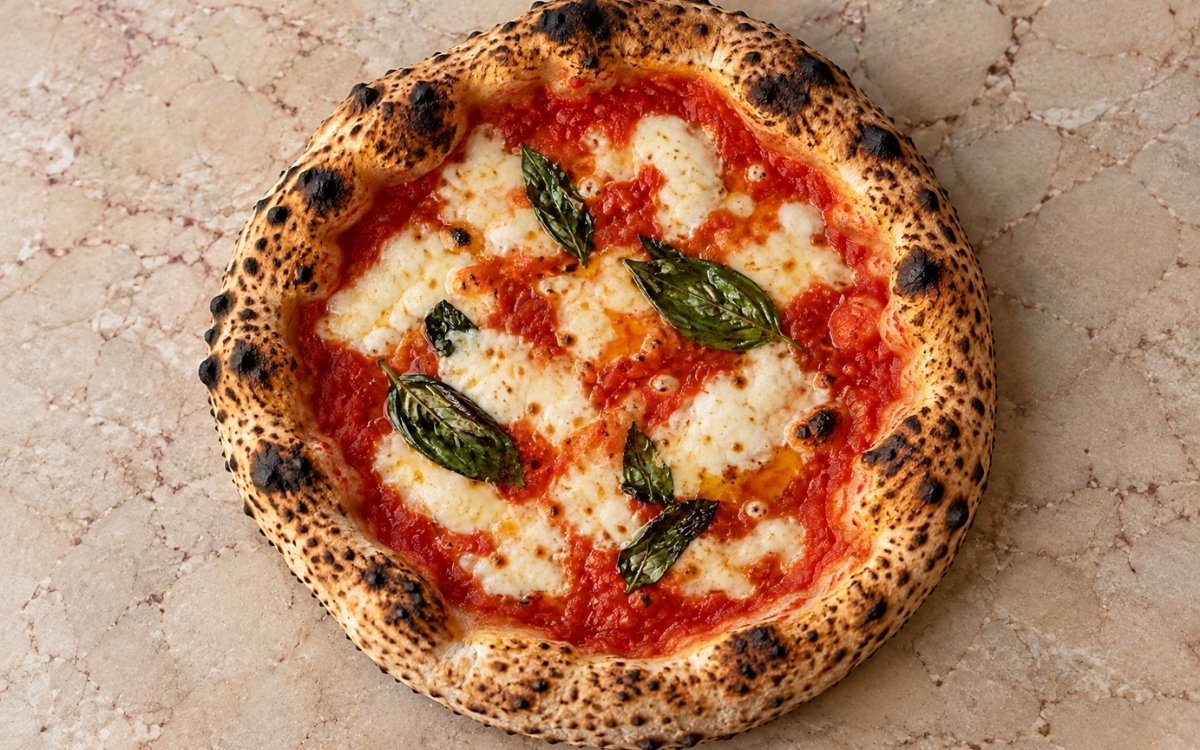
- Launch the pizza onto the preheated stone or steel. In a home oven, bake for about 6–10 minutes, depending on heat level and baking surface. Rotate once if needed for even coloring. If the crust is set but the top needs more color, finish briefly under the broiler for 30–90 seconds, watching closely. In a very hot pizza oven, bake for about 60–90 seconds, turning every 20–30 seconds so the crust chars evenly without burning one side. The pizza is ready when the rim is puffed and airy, the crust has dark leopard-like blistering and some charred spots, the center is cooked but still soft and supple, the cheese is melted and gently bubbling, and the sauce looks concentrated, not watery. Turning the pizza regularly in a very hot oven accounts for how unevenly concentrated that heat often is across the chamber — without it, one side chars considerably faster than the other in a bake this short.
Finish and Repeat
- Remove the pizza and let it sit for about 1 minute so the molten cheese and sauce settle slightly. If desired, add 1–2 more fresh basil leaves and a tiny final drizzle of olive oil. Repeat with the remaining dough balls, keeping the unshaped dough covered while each pizza is baked. That brief rest lets the still-molten cheese and sauce firm up just slightly, protecting the first slice from sliding straight off the moment it's cut.
Serve
- Serve immediately while the crust is still light, airy, and tender. This pizza's whole appeal depends on that genuinely fresh-from-the-oven texture — the crust's own crispness and the cheese's melted softness both change noticeably within minutes of coming out.
Notes
Draining the mozzarella for a genuine 30 to 60 minutes before it ever meets the dough deserves real recognition as the technique most responsible for whether this pizza's center actually cooks through. Wet mozzarella releases considerable liquid once it hits the oven's heat, and that moisture floods directly onto the dough beneath it — given how brief a Neapolitan bake actually is, there simply isn't time for the crust to cook off that extra liquid on its own.
Leaving the tomato sauce entirely uncooked, seasoned with nothing beyond salt, deserves the same respect this technique receives throughout classical Neapolitan pizza-making. That raw sauce still finishes cooking fully once the pizza bakes, meaning nothing about doneness is sacrificed — what's protected instead is the sauce's own genuinely bright, fresh tomato character, which a stovetop simmer would round and soften.
Topping the pizza only lightly, resisting the instinct to add more sauce or cheese, deserves genuine attention given how directly it affects the finished bake. A true Margherita's brief time in a very hot oven is calibrated around a light topping — a heavier hand would leave the center wet and underbaked well before the crust itself finishes developing its proper char and structure.
Shaping the dough entirely by hand, specifically pushing air toward the untouched rim while pressing the center, deserves recognition as the deliberate technique responsible for the pizza's whole defining cornicione. That gas, concentrated right at the edge rather than flattened evenly across the base, is exactly what puffs and blisters into the airy, charred rim a proper Neapolitan pizza is known for.