Ingredients
Method
Make the Refried Beans
- Heat the oil or lard in a skillet over medium heat. Add the onion and cook for 4–5 minutes until softened. Add the garlic and cook for 30 seconds. Add the pinto beans and 180ml reserved bean liquid. Mash with a potato masher or the back of a spoon until mostly smooth but still a little rustic. Simmer 5–8 minutes, stirring often, until thick, creamy, and spreadable. Add a splash more bean liquid if needed. Season with salt and black pepper. The beans should be thick enough to sit on the bread without running, but still soft and creamy enough to spread easily. Using the reserved bean liquid to loosen the mash, rather than plain water, keeps genuine bean flavour concentrated in the finished spread rather than diluting it with something neutral.
Make the Pico de Gallo
- Combine the tomatoes, onion, jalapeño, cilantro, lime juice, and salt in a bowl. Toss well and let sit 10 minutes. Before using, lightly drain off excess liquid if the mixture is very juicy. The pico should stay fresh and bright, but not water down the cheese and bread. That brief 10-minute rest lets the salt draw out some of the tomato's own moisture, which is exactly what the subsequent light draining step then removes before it ever has a chance to soak into the finished, assembled mollete.
Toast the Bolillos
- Heat the oven to 200°C, or use a broiler/grill setting at the end. Lay the split bolillos cut side up on a baking tray. Lightly spread the cut sides with softened butter if using. Toast for 4–6 minutes until lightly crisp and just beginning to color at the edges. This first toast is important so the bread stays crisp under the beans. This preliminary toast builds real structural resistance into the bread before any moisture-carrying topping is added — bread that goes straight from soft to loaded with beans and cheese has no such protection and softens considerably faster.
Assemble the Molletes
- Spread each toasted bolillo half with a generous layer of warm refried beans. Use enough to cover fully, but not so much that it piles too thickly. Top each half evenly with the shredded cheese. Spreading the beans directly onto the already-toasted, slightly cooled bread, rather than piling them onto hot bread straight from the oven, keeps the beans from thinning out prematurely against still-warm crumb.
Bake Until Melted
- Return the tray to the oven and bake for 5–7 minutes until the cheese is fully melted. If needed, switch to broil for 1–2 minutes at the end so the top becomes bubbling and lightly spotted golden. The cheese should be melted all the way through and the bread edges crisp, but the bottom should not burn. Switching to broil only at the very end, after the cheese has already had time to melt through in the regular oven heat, is what builds that final bubbling, spotted-golden surface without risking the rest of the mollete drying out under prolonged direct top heat.
Finish and Serve
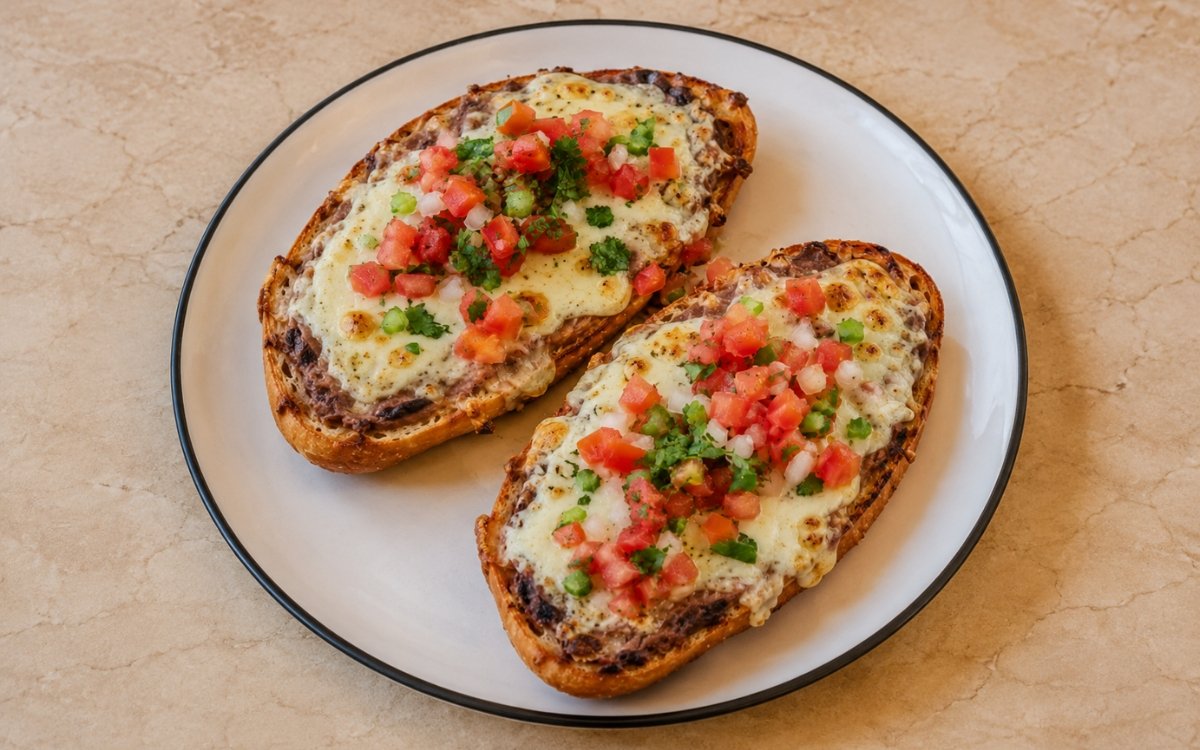
- Top each mollete with a generous spoonful of pico de gallo. If using, scatter lightly with queso fresco. Serve immediately while hot, with optional pickled jalapeños or salsa on the side. Adding the pico only after the cheese has finished baking, rather than before, protects its fresh, raw character from ever being exposed to that heat — it's meant to stay a cool, bright contrast against the hot, melted cheese beneath it.
Notes
Toasting the bolillos before any topping goes on deserves recognition as the single step most responsible for whether the finished mollete stays properly crisp or turns soft and soggy. Bread that skips this preliminary toast and goes straight from raw to fully loaded has no real structural head start against the beans' moisture — the brief initial toast specified here builds that protective resistance in before the bread ever has to work against anything wet.
Mashing the beans to a genuinely thick, spreadable consistency, rather than something looser, protects that same toasted bread from a different angle. Beans left too loose would soak directly into the bread's surface almost immediately regardless of how well it was toasted beforehand — the specific thick consistency called for here is what lets the beans sit as a proper spread rather than a liquid working its way through the crumb.
Draining the pico de gallo lightly before it tops the finished, cheese-melted mollete is worth respecting as a genuine final safeguard rather than an optional step. Even with the beans and cheese doing their own work to protect the bread, an overly juicy pico added right at the very end would still introduce fresh moisture at the last possible moment — that light drain is what keeps the whole assembly's carefully protected crispness intact all the way to serving.
Reserving pico de gallo for after baking, rather than adding it before the mollete goes back in the oven, protects its fresh character in a way worth appreciating. Pico's appeal depends specifically on staying raw, bright, and cool — exposing it to the oven's heat alongside the melting cheese would soften and warm it in a way that loses exactly the fresh contrast it's meant to provide against the hot, melted cheese beneath.