Ingredients
Method
Toast and Soak the Chiles
- Heat a dry skillet or comal over medium-low heat. Toast the chilhuacle negro, mulato, pasilla, ancho, and guajillo chiles in batches for just a few seconds per side until fragrant and pliable. Press them lightly with a spatula as they toast. Do not let them fully blacken or scorch hard. Mole negro is dark, but burnt chiles will make the sauce aggressively bitter instead of pleasantly deep. Transfer the toasted chiles to a bowl and cover with hot water. Soak for 20 minutes until fully softened. The chiles should smell rich, fruity, and smoky. After soaking, they should be flexible and soft all the way through, with no leathery centers. This distinction between genuine darkness and actual scorching is worth holding onto through the whole recipe — mole negro's whole identity depends on real depth of colour and flavour, but that depth has to be built through controlled toasting rather than pushed past the point where the chiles' own compounds turn acrid.
Char the Aromatics
- While the chiles soak, roast the tomatoes, tomatillos, onion, and unpeeled garlic on a dry skillet, comal, or under a broiler until deeply blistered and charred in spots. The onion should develop strong dark edges, the tomatoes and tomatillos should collapse and release juices, and the garlic should soften inside the skins. Peel the garlic once cool enough to handle. The aromatics should have real dark color and smoky depth, but still taste sweet underneath. They should not be acrid or ashy. Roasting the garlic unpeeled protects the clove from direct scorching while still letting real heat build flavour through the skin — that same skin acts as a buffer, letting the garlic inside soften and sweeten rather than burning the way an exposed, peeled clove would under identical heat.
Fry the Plantain, Nuts, Seeds, Bread, and Tortilla
- Heat about 60ml of the lard or oil in a heavy pan over medium heat. Fry the plantain slices until deeply golden brown on both sides. Remove. Fry the raisins until puffed, about 20–30 seconds. Remove. Fry the almonds, peanuts, and pumpkin seeds separately, just until fragrant and lightly golden. Remove each as soon as ready. Fry the sesame seeds briefly until golden and nutty. Remove immediately. Fry the torn bread until golden brown and crisp. Fry the tortillas until dark golden and crisp. For mole negro, let portions of the tortillas go darker than you would for most recipes — not black-charred all over, but well toasted and very dark in spots. This helps push the sauce toward its classical near-black color. If using avocado leaf, toast it lightly in the dry pan for a few seconds until aromatic. Every component should smell more intense and nutty after frying. Nothing should taste raw. The tortillas in particular should have a deep toast and slight bitterness, but not a burnt ash flavor. Frying each ingredient individually and removing it the moment it's ready, rather than combining everything in one batch, is what lets components as different as delicate sesame seeds and dense plantain coins each reach their own specific ideal point without one overcooking while waiting for another.
Toast the Spices
- In a mostly dry pan over low heat, toast the cinnamon, cloves, peppercorns, allspice, cumin, coriander, anise, oregano, and thyme for 30–60 seconds until highly fragrant. Transfer immediately so they do not overcook in the residual heat. The spices should release a warm sweet aroma quickly. If they start smoking harshly, they have gone too far. Moving the spices out of the pan the instant they're toasted, rather than leaving them to cool where they are, matters because a hot pan retains enough residual heat to keep actively cooking them even with the burner off — that continued cooking can push already-perfectly-toasted spices past their point without any further deliberate heat applied.
Blend the First Mole Paste
- Drain the soaked chiles. In a blender, combine the softened chiles, roasted tomatoes, tomatillos, onion, and garlic, fried plantain, raisins, almonds, peanuts, pumpkin seeds, sesame seeds, fried bread, fried tortillas, toasted avocado leaf if using, and toasted spices. Add 500–700ml warm stock to help the blender move. Blend until as smooth as possible. Work in batches if needed. Pass the puree through a fine sieve into a bowl, pressing firmly to extract a smooth paste. This step is important for the classical silky finish. The paste should already be very dark brown, thick, and smooth. You should not feel large seed fragments or chile skin pieces when rubbed between your fingers. Straining after blending catches whatever fibrous material — chile skins, seed hulls, sesame husks — the blender's blades couldn't fully break down, which is precisely what produces the genuinely silky, restaurant-level texture this sauce is meant to have.
Fry the Mole Paste
- Heat the remaining 30ml lard or oil in a heavy pot or Dutch oven over medium heat. Carefully add the strained mole paste. It may sputter, so pour slowly and stir immediately. Fry the paste for 12–15 minutes, stirring often and scraping the bottom and corners. This stage is essential. The paste will darken further, thicken, and take on a glossy heavy look. The raw edge will disappear and the aroma will become rounder and deeper. The color should shift toward a very dark mahogany-brown, almost black in the thicker ridges. The paste should leave slow heavy tracks when stirred and smell integrated rather than sharp. This frying stage is the point where every individually toasted, roasted, or fried component actually becomes one unified sauce — without it, the blended paste, however carefully every element was prepared, would still taste distinctly raw and disconnected.
Simmer into a Sauce
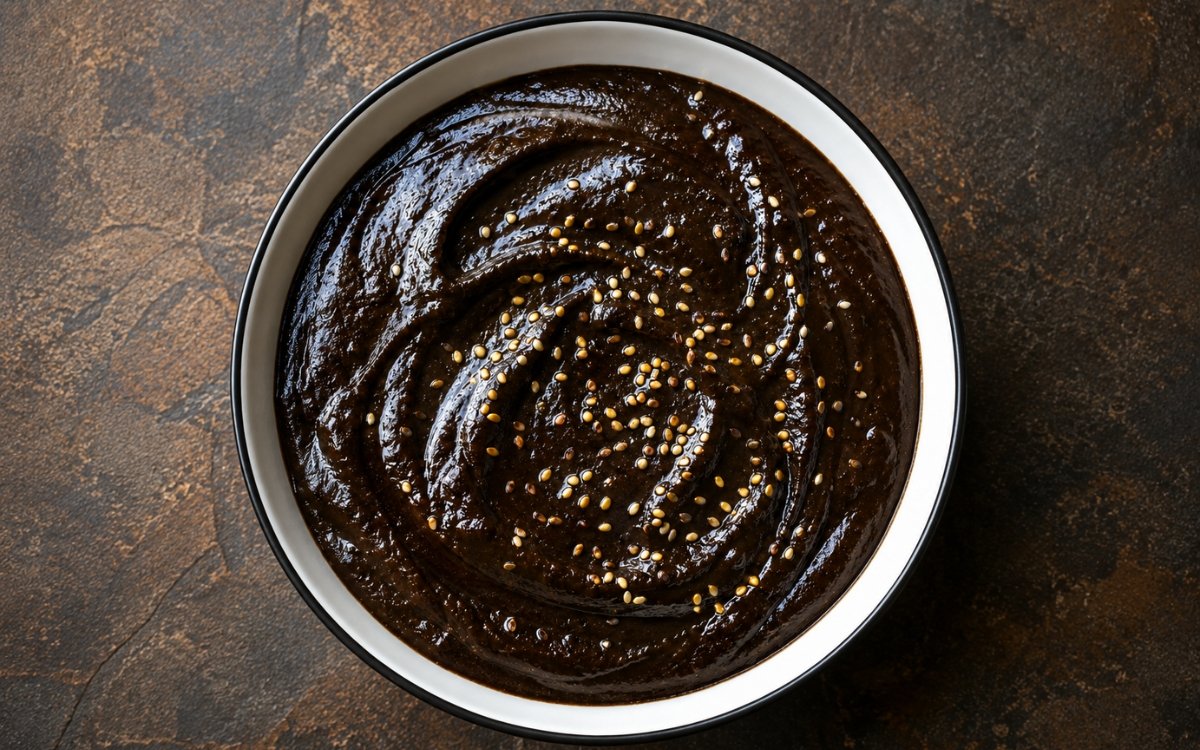
- Whisk in enough warm stock, a little at a time, to create a thick sauce. Start with about 700ml additional stock, then add more as needed during simmering. The final consistency should be thick enough to coat the back of a spoon heavily, but still fluid enough to spoon over meat. Add the chopped Mexican chocolate, 15g piloncillo or dark brown sugar to start, and 12g salt. Simmer over very low heat for 25–30 minutes, stirring frequently to prevent sticking. If it becomes too thick, add more warm stock in small amounts. Taste and adjust: more salt if it tastes flat, a little more piloncillo if the bitterness is too assertive, a splash more stock if the texture feels pasty or too dense. The finished mole negro should be glossy, smooth, and nearly black. The flavor should be powerful but balanced — smoky, savory, warm-spiced, lightly sweet, and pleasantly bitter without tasting burnt. Stirring frequently throughout this final simmer, especially along the base and corners, protects a sauce this thick and dense from scorching in exactly the spots that see the least natural movement — a real risk given how much depth and darkness has already been carefully built into every layer up to this point.
Finish and Serve
- Serve the sauce hot over turkey, chicken, pork, or enchiladas, or use it as a base for plated Oaxacan-style dishes. Just before serving, scatter a light pinch of toasted sesame seeds over the top. If holding before service, keep it warm over the lowest heat and stir occasionally. Mole thickens as it sits, so loosen with a little hot stock or water as needed.
Notes
The line between mole negro's genuine, characteristic darkness and actual scorching is worth understanding as the single most important distinction running through this entire recipe. Nearly every component — the chiles, the tortillas, the aromatics — is pushed noticeably darker here than it would be for a lighter mole, and that's entirely intentional and necessary for the sauce's classical near-black colour. But there's a real, meaningful difference between deep, controlled toasting and letting any of these components actually burn, and that difference is what separates a properly balanced, intensely flavoured mole negro from one that simply tastes bitter and scorched.
Frying each nut, seed, and fruit component individually, removing each the moment it reaches its own ideal point, deserves the same careful attention it receives throughout this collection's other layered sauces. Plantain, raisins, almonds, peanuts, pumpkin seeds, and sesame seeds all differ meaningfully in size, density, and fat content, meaning they simply don't reach their peak flavour and colour at the same rate — treating them as a single batch would force some to overcook while waiting for others to catch up.
The instruction to let the tortillas go darker than usual for this specific mole, while still stopping short of anything resembling charcoal, reflects a genuine technique adjustment specific to mole negro's particular colour target. A tortilla toasted to the point that would be appropriate for a lighter mole simply wouldn't contribute enough of the deep, near-black tone this sauce depends on — the darker toast called for here is a deliberate, calibrated part of achieving that specific classical appearance.
Straining the blended base, and later frying that strained paste in fat before it's diluted with stock, both deserve recognition as the two techniques most responsible for transforming a collection of carefully prepared individual ingredients into an actual, cohesive mole. Straining removes what the blender alone couldn't fully break down; frying concentrates and rounds every separately built flavour into something genuinely integrated, rather than a sauce that merely contains many good ingredients without truly combining them.