Ingredients
Method
Build the Lemon Honey Syrup
- Add the 120g of white sugar, 1 tbsp of honey, 180ml of water, and the wide-strip lemon zest to a small saucepan. The combination of white sugar and honey is the specific dual-sweetener approach for this preparation — white sugar's clean, neutral sweetness provides the primary sweetness without any competing aromatic character; honey's aromatic floral warmth provides a secondary register of sweetness that is specifically more rounded and more complementary to lemon's acidity than white sugar alone. The specific proportions — predominantly white sugar with a single tablespoon of honey — are calibrated to produce a base that is primarily clean and sharp in the French brasserie tradition, with the honey as a background depth note rather than a prominent character. The wide-strip lemon zest is the same technique from the cherry lime rickey and the Negroni mocktail — wide strips providing sufficient aromatic surface area for extraction during the simmer while allowing complete, easy removal during straining rather than requiring the fine-mesh sieve work that grated zest demands. Place over medium heat and stir continuously until the sugar has completely dissolved. Bring just to a gentle simmer — watch the pan closely and remove from the heat the moment the first bubbles appear at the surface. The brief heat exposure is sufficient to dissolve both sugar and honey into the water and begin the lemon zest's aromatic extraction; aggressive boiling would drive off the zest's most volatile aromatic compounds and produce a slightly flat, cooked-citrus syrup.
Steep the Lemon Zest Off Heat
- Remove from heat immediately at the first simmer and allow the syrup to steep covered for 10–15 minutes with the lemon zest strips still in the liquid. The off-heat steep extracts the zest's remaining aromatic oils at the declining temperature — the same principle applied throughout this collection's covered off-heat steeping steps. After 10–15 minutes, strain out and discard the lemon zest. Allow the syrup to cool completely to room temperature.
Add Lemon Juice and Cold-Infuse the Mint
- Once the syrup is cold, stir in the 140ml of fresh lemon juice. The lemon juice is added after cooling for the same reason applied to every acid addition in this collection — fresh lemon juice's volatile aromatic compounds evaporate rapidly at elevated temperature. Added to a cold syrup, the lemon juice retains its full bright, aromatic, specifically vivid character that makes the finished spritzer taste of fresh lemon rather than lemonade concentrate. Clap the 12–16 fresh mint leaves lightly between your palms and add to the cold lemon base. Cover and refrigerate for 20–30 minutes. The 30-minute maximum is the same careful limit applied to mint in every preparation in this collection where the primary fruit is delicate — mint's character extracted at cold temperature as a clean background freshness enhances the lemon's brightness in the way that a French brasserie might add a sprig to a glass of citron pressé as an aromatic suggestion rather than a flavour component. Beyond 30 minutes the mint's character becomes more specifically herbal and less specifically fresh against the lemon's acidity.
Add Verjus and Adjust
- After the 20–30 minute cold infusion, remove and discard the mint leaves. Stir in 40ml of white verjus. The white verjus is the specific addition that shifts this preparation from a well-made homemade lemonade into a specifically more sophisticated, more grown-up preparation. White verjus — the pressed, acidified juice of unripe white grapes — has a tartaric-acid based acidity that is specifically different from lemon juice's citric acid: it is rounder, more wine-adjacent, slightly more complex at the finish, and specifically complementary to lemon in a way that makes the combined acid profile more interesting than lemon juice alone. The 40ml starting quantity provides a noticeably more layered acidity; up to 60ml produces a sharper, more specifically aperitif-appropriate result. Taste the combined base. It should be assertively sweet-tart, specifically bright, minty in the background, and more concentrated than the intended final drink — it will be diluted by ice and 125–175ml of club soda per glass. If the balance needs adjustment: more lemon juice for additional brightness; more verjus for a sharper, more wine-adjacent complexity; a small additional amount of honey if the tartness is too aggressive.
Assemble and Serve
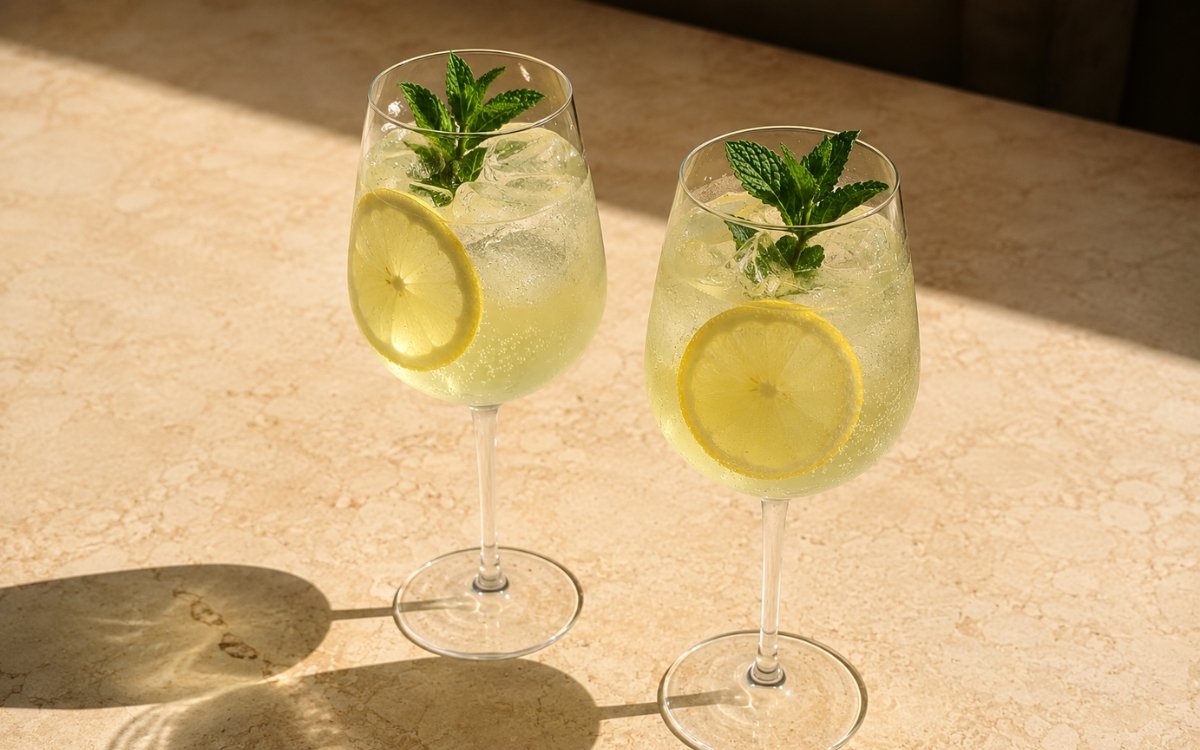
- Fill four large wine glasses generously with ice cubes. The wine glass format is specifically the French aperitif reference in this preparation — citron pressé in French brasseries is frequently served in a wine glass rather than a tall glass, the wide bowl showing the pale, clear lemon colour and the condensation on the cold glass providing the specific visual appeal of a properly cold drink. Add 80–90ml of the lemon mint base to each glass. Top with 125–175ml of chilled club soda, adjusting the ratio to the preferred intensity — 125ml for the sharper, more citrus-forward, aperitif-appropriate version; 175ml for the lighter, more refreshing terrace-drink version. Stir gently once. Slide a thin lemon wheel into each glass against the ice so the yellow circle is visible through the pale drink. Place a mint sprig directly on the ice with the leaves standing above the rim — the mint's aroma rising from the cold glass providing the first impression before the drink is tasted. Serve immediately.
Notes
White verjus is the ingredient that most specifically distinguishes this French-style preparation from a standard mint lemonade. In French culinary tradition, verjus — verjuice — has been used as an acidifier and flavour component since at least the medieval period, appearing in both cooking and drink contexts. The specific tartaric acid composition of verjus produces a rounder, more wine-adjacent acidity that is specifically more at home in an aperitif context than citric acid alone — French brasserie drinks culture favours a more complex acidic register than the clean, bright acidity of citrus juice alone provides.
The dual lemon approach in this recipe — zest in the syrup and juice added cold — is the same technique applied in the pear ginger sparkler and apricot vanilla sparkler: the zest's fat-soluble aromatic compounds integrated into the sugar's matrix during the cooking period, and the juice's volatile water-soluble aromatic compounds preserved by the cold addition.