Ingredients
Method
Make the Meyer Lemon Peel-Infused Simple Syrup
- Combine the 180ml of water and 150g of white sugar in a small saucepan over medium heat. Stir until completely dissolved and clear. Remove from the heat immediately. Add the zest of 2 Meyer lemons — the coloured outer layer with minimal white pith, either finely grated or cut as strips with a vegetable peeler. Cover and steep for 8–10 minutes. The 8–10 minute window applies here for the same rate-of-extraction reasoning as orange and lime peel preparations, with an additional specific consideration for Meyer lemon's unique peel character. Meyer lemon's aromatic peel contains its primary flavour advantage over conventional lemon — the floral terpene compounds including higher proportions of geraniol, linalool, and various floral-citrus esters that are responsible for Meyer lemon's specific warm, aromatic, floral character. These compounds extract quickly and pleasantly into the warm syrup within 8–10 minutes; Meyer lemon's peel also contains its own complement of bitter limonoid compounds which, at 8–10 minutes, are still below an unpleasant threshold. The infusion window is the same technically but specifically more aromatics-forward in what it captures: the floral volatile compounds that make Meyer lemon distinctively itself. Strain the zest completely and cool.
Prepare the Meyer Lemon Pulp
- Section the 3 Meyer lemons, removing all seeds and tough membranes while keeping the juice-containing segment material. Meyer lemon's pith removal is specifically important for a different reason than lime's — not because Meyer lemon's pith is aggressively harsh at a low pH (Meyer lemon's pH is higher and less acidic than lime's, meaning the pith's bitter compounds are less aggressively expressed), but because the preparation's entire appeal is the delicate, floral, soft citrus character that Meyer lemon's pith-free segments provide. Any pith inclusion introduces a note of conventional citrus bitterness that specifically interrupts the smooth, elegantly soft character the fruit provides. Add the clean pulp to the pitcher. Mash very gently — more lightly than the lime or blood orange preparations — just until juice is released from the segments without significantly breaking down their structure. Meyer lemon's softer flesh breaks down more readily than the firmer citrus varieties; the goal is light juice release and intact-ish segment pieces rather than any significant pulp breakdown.
Build the Meyer Lemon Base
- Add the 240ml of fresh Meyer lemon juice, 100ml of the cooled peel-infused syrup, 750ml of ice-cold water, and the pinch of fine sea salt to the pitcher. Stir thoroughly. The starting syrup quantity of 100ml is specifically lower than the 120ml starting point of all other citrus lemonade preparations in this collection. This reflects Meyer lemon's natural sweetness — the fruit's naturally higher fructose and glucose content means it requires less added sweetening to reach a pleasant balance point than conventional lemon, lime, or any of the more acidic citrus preparations. Adding 120ml of syrup to a Meyer lemon base produces a specifically sweet, slightly cloying result that masks the floral aromatic character rather than letting it express. Taste carefully and with specific attention to what Meyer lemon lemonade should taste like compared to conventional lemonade: the characteristic floral softness should be the primary impression — a gentle, specifically aromatic citrus brightness rather than the sharp, vivid tartness of lemon or the assertive edge of lime. If the flavour seems genuinely soft to the point of flatness, a small additional amount of Meyer lemon juice (not syrup, not conventional lemon juice) adds the needed brightness without disrupting the specific Meyer lemon character. If sweetness is insufficient for the specific batch of Meyer lemons — which can vary in natural sugar content — add syrup in 10ml increments up to 150ml maximum, tasting between each addition.
Chill and Serve
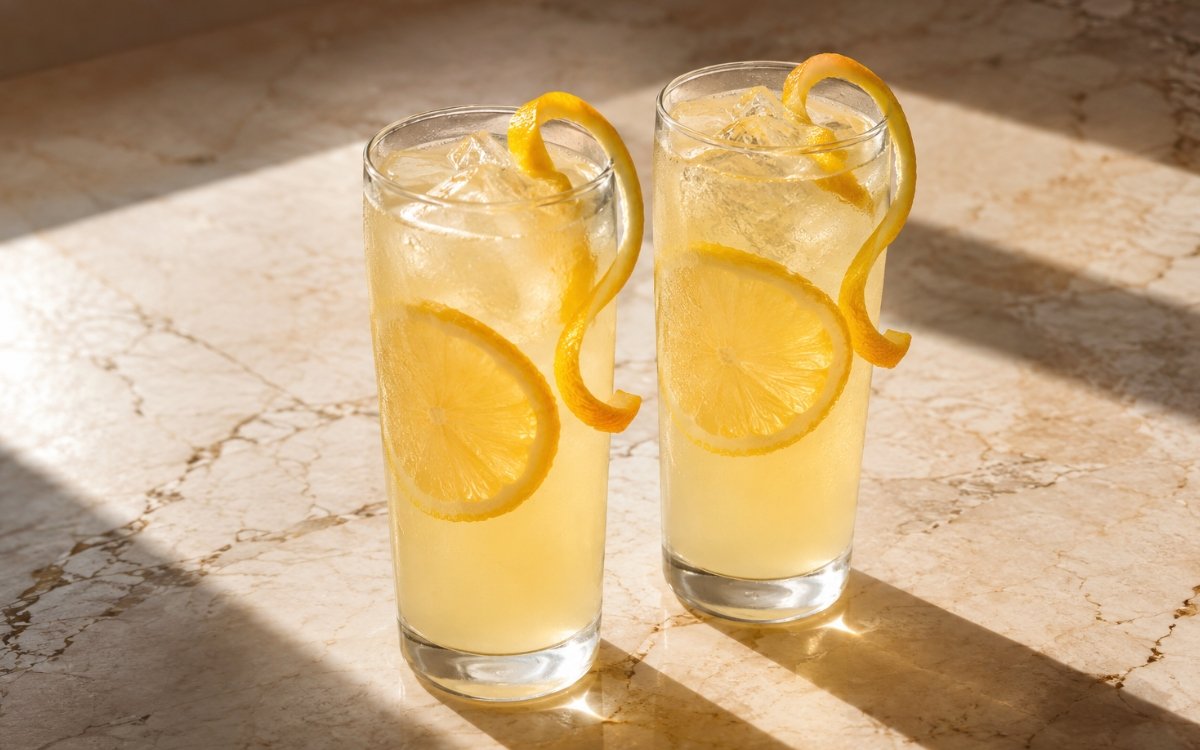
- Refrigerate for 1–2 hours. The chill specifically benefits this preparation: Meyer lemon's floral aromatic character is at its most vivid at cold temperature, and the peel-infused syrup's floral-citrus oil depth integrates with the juice during the refrigerator rest in a way that makes the chilled version specifically more aromatic and more cohesive than the immediate-combination result. Fill glasses with ice. Pour the chilled Meyer lemon lemonade over the ice, including some of the mashed pulp in each glass. Garnish with a Meyer lemon slice and a peel twist. Serve immediately.
Notes
- Meyer lemons are available seasonally in the Northern Hemisphere from approximately November through March — the peak season when the fruit is at its most aromatic, most specifically golden, and most specifically flavourful. Outside of peak season they are significantly more expensive, less aromatic, and sometimes replaced with conventional lemon in recipes where the distinction matters less. In this preparation, the distinction matters specifically and completely — the floral, soft, low-acid character is the entire basis of the drink's appeal, and conventional lemon would produce a different, more aggressively tart preparation. If Meyer lemons are unavailable or out of season, the closest approximation is 200ml of conventional lemon juice combined with 40ml of fresh orange juice — the orange's sweetness and floral character partially replicating the Meyer lemon's hybrid character. The result is an acceptable but specifically different preparation.