Ingredients
Method
Roast and Peel the Poblanos
- Roast the 6 whole poblano peppers directly over a gas flame, under a broiler set to high, or on a very hot cast-iron skillet lightly brushed with the 1 tbsp of oil, turning frequently for 8–12 minutes until the skins are blistered and blackened across most of their surface. Transfer the hot peppers to a bowl, cover with a plate or lid, and let them steam for 10 minutes. Peel away the loose skins with your fingers or a paper towel without rinsing, then remove the stems, seeds, and large membranes and slice lengthwise into strips 1–1.5cm wide. The peppers should be soft and pliable with occasional dark charred patches, never disintegrated. That steaming rest and dry peeling is what loosens the skins while keeping the smoky flavour that running water would wash away.
Caramelize the Onions
- Heat the 2 tbsp of butter and 1 tbsp of oil in a large, wide skillet over medium heat until the butter foams. Add the sliced onions, spread them evenly across the pan, and cook for 8–10 minutes, stirring occasionally, until soft and translucent with lightly golden, caramelized edges. Stir in the minced garlic and cook for 30–45 seconds, just until fragrant. The onions should be sweet and lightly browned in places while still keeping distinct strips rather than turning jam-like. That proper browning before the cream arrives is what builds sweetness, because once dairy enters the pan the onions soften further but develop no meaningful colour.
Add the Poblanos and Corn
- Add the roasted poblano strips to the onions, toss gently, and cook over medium heat for 2–3 minutes to combine the flavours. Add the 250g of corn, ¾ tsp of salt, ¼ tsp of black pepper, and the optional oregano, then cook for 3–4 minutes, stirring occasionally, until the corn is heated through and lightly glossy. If using frozen corn, thaw and drain it before it goes in. The mixture should show dark green strips, translucent onions, and bright yellow kernels, with no watery liquid collecting at the bottom of the skillet. That evaporation of excess moisture is what keeps the crema from being diluted into a thin sauce.
Build the Cream Sauce
- Reduce the heat to medium-low, pour in the 250ml of Mexican crema, and add about 50ml of the milk, stirring gently to coat the vegetables. Let the mixture heat at a very gentle simmer for 2–3 minutes, then add the remaining milk a little at a time, up to 30–50ml more, only if needed until the sauce flows slowly between the vegetables. Taste and adjust the salt. The sauce should be pale ivory, glossy, and thick enough to cling to the strips, with a little creamy pooling around them. A thick or tangy crema takes the extra milk happily, which softens its acidity. That restrained heat is what keeps the crema smooth, because a hard boil makes it separate.
Melt the Cheese
- Reduce the heat to low, scatter the 200g of shredded or torn cheese evenly across the skillet, and cover with a lid for 1–2 minutes until it softens. Remove the lid and fold the mixture gently once or twice, leaving visible pockets of melted cheese among the poblanos and corn. If the sauce has thickened too much, loosen it with a small splash of warm milk, then take the pan off the heat as soon as the cheese has melted. The cheese should form soft pockets and light stretchy strands without disappearing into the sauce. That brief, gentle melt is what stops the sauce turning greasy and the cheese turning rubbery.
Finish and Serve
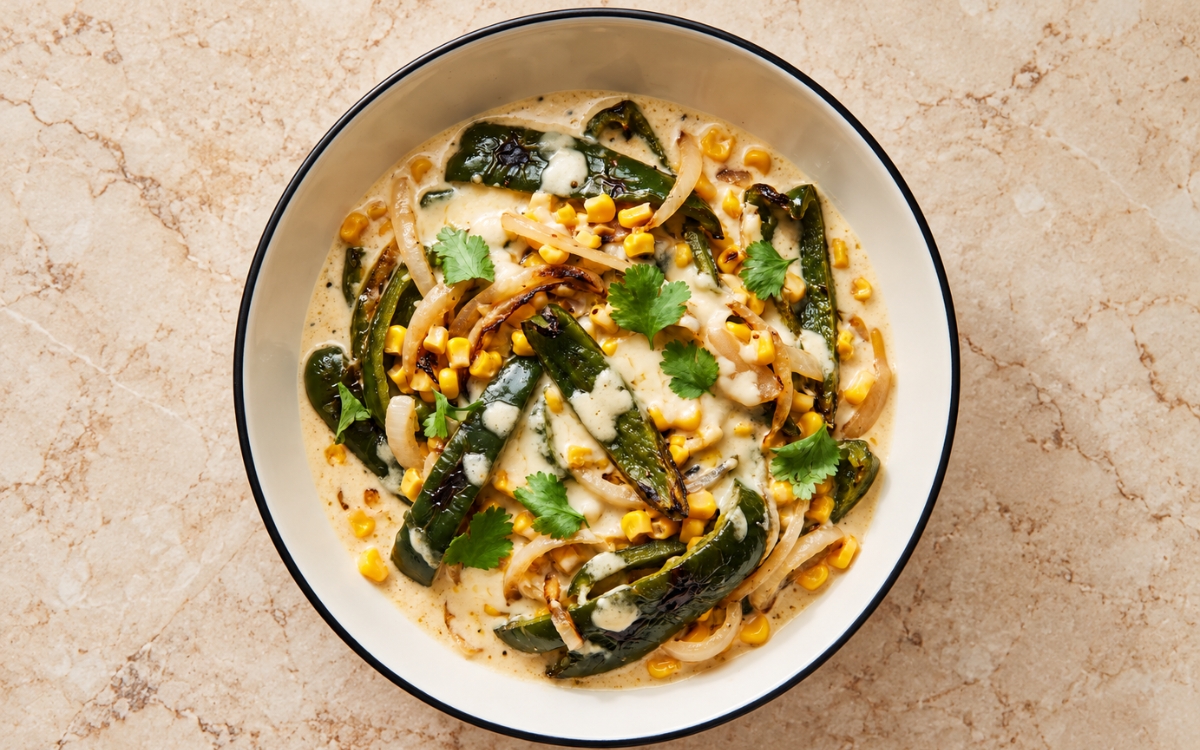
- Divide the rajas con crema among 4 warm serving bowls, arranging the poblano strips so their roasted surfaces stay visible. Spoon a little of the cream sauce over the vegetables and let it settle naturally between the peppers, corn, and onions. Garnish lightly with the 2 tbsp of cilantro leaves and serve immediately while the cheese is soft and melted. Warm corn tortillas, rice and beans, or a quesadilla are the traditional partners for the bowl. That immediate serve is what keeps the cheese stretchy and the sauce glossy, because the dish tightens and dulls as it cools.
Notes
Roasting the poblanos over direct flame deserves genuine recognition as the technique most directly responsible for whether this dish tastes like true rajas or simply sautéed green pepper in cream. Charring the skin develops a smoky, earthy flavour that raw strips never reach, while the covered steam rest loosens the blistered skins so they peel away without any rinsing.
Removing excess moisture before the dairy goes in deserves the same attention this technique receives throughout this collection’s other cream-based skillet dishes. Thawed, drained corn and properly evaporated vegetables keep the crema thick enough to coat the strips, whereas a wet pan dilutes it into a thin soup that boiling cannot rescue without splitting the sauce.
The gentle heat under the crema deserves genuine respect as the detail most directly responsible for a silky, unbroken sauce. Mexican crema separates when boiled hard, and the 80–100ml of milk loosens a thick or tangy brand just enough to flow, so if you substitute sour cream, warm it more gently still and stop the moment it turns hot.
The choice and timing of the cheese deserves attention as a genuine, checkable cue rather than a loose approximation. Oaxaca, Chihuahua, and asadero melt into soft pockets with light stretchy strands, and lifting the lid after 1–2 minutes to find cheese that is softened but not vanished tells you to stop, whereas queso fresco never melts and prolonged heat turns any cheese greasy.