Ingredients
Method
Prep the Vegetables
- Cut every vegetable before the pan goes on the heat, because the dish moves quickly once cooking starts. Slice the zucchini into half-moons of 8–10mm and keep the pieces as uniform as you can so they cook at the same rate and stay intact. Cut fresh corn kernels from the cob, or thaw frozen corn and pat it dry with a clean towel. Tear or shred the cheese and keep it ready by the stove for the final stage. That uniform cutting is what lets the zucchini finish cooking at the same moment instead of leaving some pieces mushy and others raw.
Build the Aromatic Base
- Heat a wide skillet or sauté pan over medium to medium-high heat, then add the 2 tbsp of oil or lard. Add the diced onion and the poblano strips and cook for 4–5 minutes, stirring occasionally, until the onion turns translucent and the poblano begins to soften and lose its raw edge. Stir in the chopped garlic and cook for just 30 seconds, until fragrant but not coloured. That short, hot head start is what builds sweetness in the onion and softens the poblano before the wetter vegetables arrive.
Cook the Zucchini and Corn
- Add the zucchini and corn to the pan and season with ¾ tsp kosher salt, ¼ tsp black pepper, and the ¼ tsp dried oregano if using. Cook for 5–7 minutes, stirring gently but not constantly, until the zucchini is tender-crisp and lightly glossy. The pieces should soften but still hold their shape, never collapsing into mush. If the pan dries out before the vegetables are tender, add 2–4 tbsp of water or light stock, just enough to steam them lightly rather than make the dish soupy. That lively heat is what sautés the squash instead of letting it boil in its own liquid.
Add the Tomatoes
- Stir in the diced Roma tomatoes and cook for 2–4 minutes more, until they soften and release their juices into a light natural sauce that coats the vegetables. Stop as soon as the tomato pieces have just begun to relax, while a few still hold their shape. If the pan looks watery, raise the heat briefly and cook uncovered until the liquid reduces to a glaze. That brief tomato stage is what gives the dish its juice without letting the tomatoes disappear and the zucchini overcook.
Melt the Cheese
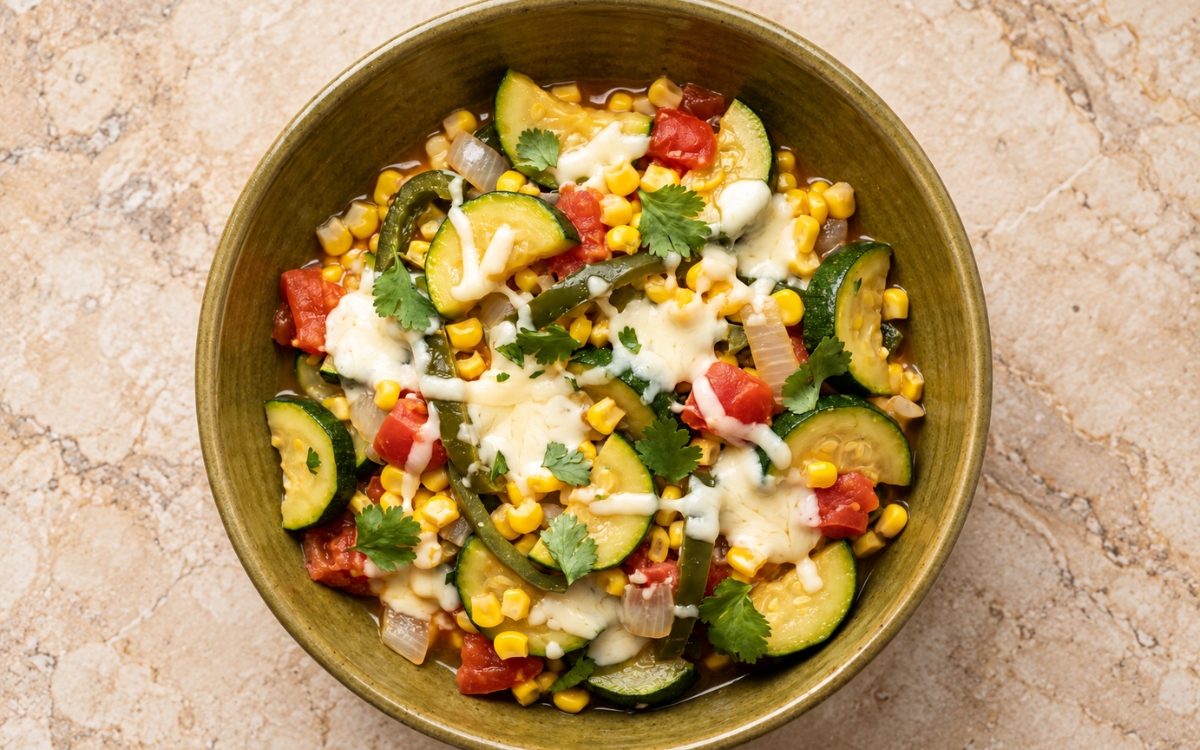
- Lower the heat to medium-low and scatter the 180–220g of torn cheese over the vegetables in several separate spots rather than as one solid layer. Cover the pan and cook for 1–2 minutes, just until the cheese softens and melts into pockets with a little stretch. Lift the lid and check: the cheese should be melted while the vegetables still look defined and not collapsed. That gentle, covered melt is what turns the cheese soft and stretchy without making it greasy or burying the vegetables.
Finish and Serve
- Remove the pan from the heat and fold in the 2 tbsp of chopped cilantro with just a few turns, so the cheese stays in streaks and pockets. Taste the vegetables and adjust the salt if needed, remembering that Oaxaca and asadero cheeses already add some salt. Spoon into warm bowls or onto a platter, scatter a little extra cilantro over the top, and serve immediately while hot and melty. That quick hot serve is what keeps the cheese stretchy and the zucchini tender-crisp rather than rubbery and soft.
Notes
The texture of the zucchini deserves genuine recognition as the technique most directly responsible for whether this dish reads as proper calabacitas or a stewed squash mixture. Lively heat and a roomy pan let moisture evaporate as it releases, so the half-moons brown lightly and stay tender-crisp, whereas a crowded pan traps steam and turns them limp and watery.
The timing of the tomatoes deserves the same attention this technique receives throughout this collection’s other sautéed vegetable dishes. Added after the squash has mostly cooked, they only need a few minutes to soften into a light sauce, but added at the start their liquid floods the pan and the zucchini boils instead of sautéing.
The choice of poblano deserves genuine respect as the detail most directly responsible for the traditional flavour of the dish. Its mild, earthy, faintly smoky character is what a classic calabacitas is built around, and although Anaheim can stand in, it gives a milder and slightly more grassy result.
The type of cheese deserves attention as a genuine, checkable choice rather than a matter of whatever is in the fridge. Oaxaca or asadero melts into soft, stretchy pockets with a clean milky flavour, while queso fresco holds its shape and stays crumbly, so it cannot give the same melt as a main cheese.