Ingredients
Method
Make the French Roll Dough
- In a mixing bowl, combine the warm water, sugar, and active dry yeast. Let stand for 5 to 10 minutes until foamy. Add the flour, salt, and olive oil. Mix until a shaggy dough forms, then knead for about 8 to 10 minutes until smooth and elastic. Place the dough in a lightly oiled bowl, cover, and let rise for 60 to 75 minutes, or until doubled. The dough should feel soft and slightly tacky, not dry. Start with 290ml water and add the last 10ml only if needed. Letting the yeast mixture sit until genuinely foamy before anything else is added confirms the yeast is actually active — proceeding with dead or sluggish yeast would leave the whole dough underrisen regardless of how carefully everything else is handled.
Shape and Bake the Rolls
- Turn the dough out onto a lightly floured surface and divide into 4 equal pieces. Shape each piece into a long roll about 18 to 20cm long. Place on a parchment-lined tray, cover loosely, and let rise again for 35 to 45 minutes. Preheat the oven to 220°C. Slash each roll once lengthwise or with a few shallow diagonal cuts. Bake for 18 to 22 minutes until golden brown and lightly crusty. Cool enough to handle. The rolls should be sturdy and crusty outside, but not hard. You want them able to hold sauce without collapsing. Slashing the dough before baking gives the roll a controlled, deliberate place to expand as it bakes, rather than letting it split unpredictably wherever internal steam happens to find the weakest point.
Make the Panade
- In a small bowl, combine the breadcrumbs and milk. Let stand for 5 minutes until fully hydrated. The panade keeps the meatballs tender and juicy. It is one of the main controls that stops them from turning dense. That fully hydrated bread structure works its way through the meat mixture, physically interrupting the protein strands from binding into as tight a network as ground beef alone would form — the direct mechanism behind why panade-enriched meatballs stay noticeably more tender.
Mix the Meatballs
- In a large bowl, combine the ground beef, egg, garlic, grated onion, parsley, salt, black pepper, dried oregano, Parmesan if using, and prepared panade. Mix gently just until combined. Shape into 16 to 20 meatballs, depending on how large you want them. For a sub, medium meatballs work best. Do not overmix. Stop as soon as everything is evenly combined. Overmixing makes the meatballs firmer and less juicy. Ground meat's proteins bind together more tightly the more they're handled, and stopping the mixing the moment everything is evenly distributed is what keeps that binding from tightening into a denser, tougher finished texture.
Brown the Meatballs
- Heat about 12g oil in a large skillet over medium heat. Brown the meatballs in batches for 5 to 7 minutes total, turning so they color on several sides. They do not need to cook through fully yet. Transfer to a plate. Brown for color and flavor, not full doneness. They will finish in the sauce, which keeps them tender. That deliberate partial cook leaves genuine headroom for the meatballs to finish gently in the simmering sauce later — treating this browning stage as their complete cooking time would leave nothing left except overcooking by the time the sauce is ready.
Make the Marinara
- In the same pan or in a saucepan, heat the olive oil over medium heat. Add the garlic and cook for about 30 seconds until fragrant but not browned. Add the crushed tomatoes or passata, sugar, salt, black pepper, oregano, and chili flakes if using. Simmer for 10 to 15 minutes until thickened. Add the browned meatballs to the sauce and simmer gently for another 15 to 20 minutes, partially covered, until cooked through and tender. If using basil, stir in a few leaves near the end. The sauce should be thick, not watery. It needs to cling to the meatballs and sit inside the roll without soaking everything instantly. Building the sauce in the same pan the meatballs were browned in, rather than a clean one, works real fond directly into the marinara — that browned residue carries genuine flavour the sauce would otherwise miss.
Prepare the Rolls
- Split the baked rolls lengthwise, but not all the way through. If you want extra structure, lightly toast the inside of the rolls under the broiler or in the oven for 2 to 3 minutes. A lightly toasted interior helps protect the bread from the marinara and keeps the sandwich from going soggy too fast. That brief toast builds real, if modest, structural resistance into the bread before it ever meets the thick, wet sauce and meatballs about to fill it.
Assemble the Meatball Subs
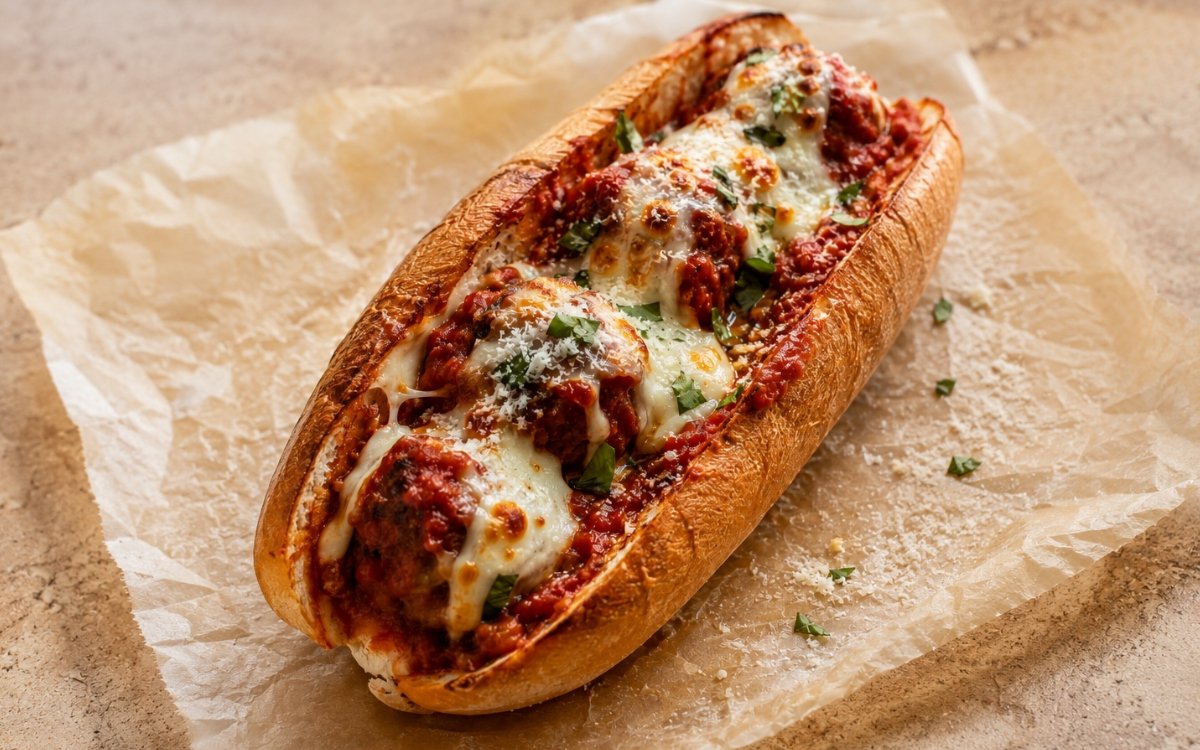
- Spoon a little marinara into each roll. Add 4 to 5 meatballs per sandwich, depending on size, then spoon over extra sauce. Top with mozzarella and provolone. Sprinkle with Parmesan. Place the assembled subs on a tray and broil or bake briefly until the cheese is melted, bubbling, and lightly browned in spots. Finish with chopped or torn fresh basil. Broil just until the cheese melts and bubbles. The goal is melted and lightly blistered cheese, not dried-out meatballs. That brief, watched broil is calibrated specifically to melt and blister the cheese quickly, before the meatballs beneath — already fully cooked in the sauce — have any real chance to dry out under the direct heat.
Notes
Building the meatballs with a proper panade deserves genuine respect as the technique responsible for their tender, juicy final texture. That hydrated bread structure physically works its way through the meat, interrupting the protein network from binding as tightly as ground beef alone would form — skipping this step, or using dry breadcrumbs without the milk soak, would produce a noticeably denser, less tender meatball regardless of how carefully everything else is handled.
Browning the meatballs only for colour, deliberately leaving them not fully cooked through, reflects the same two-stage protein cooking principle used throughout this collection's other braised or sauce-finished meat dishes. That initial browning builds real flavour and appearance quickly, leaving genuine headroom for the meatballs to finish gently in the simmering marinara — treating the browning stage as their complete cook would leave no margin for that final, tenderizing simmer.
Lightly toasting the roll's interior before assembly deserves attention as a small but genuinely consequential structural choice. A meatball sub's bread faces real, sustained contact with thick, wet sauce, and that brief toast builds enough resistance into the crumb to meaningfully delay the sogginess that would otherwise set in quickly once the sandwich is assembled.
The recipe's own explicit instruction to broil only until the cheese melts and bubbles, not longer, deserves genuine attention given how fully cooked the meatballs already are by this final stage. Since they finished cooking properly in the simmering sauce, any extended time under the broiler works only against them, drying out meat that was otherwise protected and tender.