Ingredients
Method
Soak the Chillies and Prep the Aromatics
- Put the 8 stemmed dried red chillies in a heatproof bowl, shaking out the seeds first if you prefer a milder broth, then cover them with hot water and soak for 15 minutes, until soft and pliable. Meanwhile, roughly chop the 4 shallots, peel the 5 garlic cloves, and slice the 25g ginger, 25g galangal and 20g fresh turmeric. Peel the 2 lemongrass stalks down to the pale, tender core and slice it thinly, discarding the tough outer layers, which stay fibrous however long they blend. Wrap the 1 tsp belacan in a small square of foil and toast it in a dry pan over medium heat for about 1 minute per side, until it smells strongly roasted. That brief toast is what mellows the shrimp paste's raw pungency into a deep, rounded savouriness.
Season the Chicken
- Pat the 600g chicken thighs dry with paper towels, then toss them with the 1 tsp fine salt, ½ tsp white pepper, 1 tsp light soy sauce and 1 tsp neutral oil until every surface is lightly coated. Leave them to sit for 15 minutes while you blend the paste, and no longer. This is a light seasoning step rather than a heavy marinade, so the surface should look lightly glossed, never wet or saturated. Drying the thighs first matters, since surface moisture dilutes the seasoning and later stops the meat from browning in the pan. That short, light seasoning is what flavours the chicken without curing it or competing with the broth.
Blend the Laksa Paste
- Drain the soaked chillies well. Add them to a blender with the shallots, garlic, ginger, galangal, lemongrass, turmeric (or 1½ tsp ground turmeric), the 3 candlenuts or 2 tbsp cashews and the toasted belacan. Blend to a thick, mostly smooth paste, scraping down the sides often and adding the 2 tbsp neutral oil a little at a time only if the blades stall. Keep going in short bursts for 2–3 minutes, until no visible strands of lemongrass or galangal remain. If the paste still looks grainy, scrape it down and blend once more. That smooth texture is what lets the paste fry evenly and gives the finished broth a genuinely silky rather than rough body.
Sear the Chicken
- Heat the 1 tbsp neutral oil in a large frying pan over medium-high heat until it shimmers. Lay in the seasoned thighs smooth side down and sear for 3–4 minutes without moving them, until light golden-brown patches form, then turn and sear for 2–3 minutes on the second side. The chicken should look lightly browned and still feel springy, not firm or dry, and it does not need to be cooked through yet. Transfer it to a board and rest for 5 minutes while the paste starts frying, then slice into thick strips. That brief, hot sear is what builds savoury browned flavour on the surface while leaving the inside juicy for its final minutes in the broth.
Fry the Laksa Paste
- Heat the 2 tbsp neutral oil in a large soup pot over medium heat. Add all of the laksa paste and fry for 8–10 minutes, stirring often and scraping the base so nothing catches, until the paste darkens slightly, smells sweet and aromatic, and the oil begins to separate at the edges. The raw garlic-and-shallot smell should be completely gone, and the mixture should look glossy and concentrated. If it starts to stick or colour too quickly, lower the heat and stir in a spoonful of the measured water. That full, patient fry is what cooks out the paste's raw edge and gives the broth its genuinely deep, rounded flavour.
Simmer the Broth
- Pour in the 750ml chicken stock, 400ml coconut milk and 250ml water, then add the 2 kaffir lime leaves, 1 tbsp fish sauce, 1½ tsp sugar and 1 tsp salt. Stir well, scraping the fried paste up from the base, and bring to a gentle simmer over medium heat, which takes about 5 minutes. Simmer uncovered for 12–15 minutes, stirring occasionally so the coconut fat does not collect unevenly at the edges, and never let it reach a hard boil. The broth should turn a rich orange colour and smell rounded, fragrant and slightly sweet-savoury. That gentle, uncovered simmer is what genuinely melds the paste into the liquid while keeping the coconut milk smooth.
Cook the Noodles
- While the broth simmers, bring a large pot of water to the boil. Cook the 250–300g dried rice noodles according to the package timing, usually 3–8 minutes depending on thickness, until just tender but still springy. Drain them and rinse very briefly only if they seem to be carrying on cooking or turning sticky; you should have about 600g cooked noodles. If using ready-cooked or fresh laksa noodles instead, loosen them, pour boiling water over them to warm through, then drain well. Cooking them during the simmer keeps the time line tight without leaving them waiting long. That just-tender drain is what keeps the noodles springy, since they keep softening once the hot broth goes over.
Make the Optional Chilli Oil
- If using the optional chilli oil finish, warm the 2 tbsp neutral oil in a small pan over low heat for about 1 minute, until it is hot but nowhere near smoking. Stir in the 1 tsp chilli flakes or chilli paste and keep stirring for 20–30 seconds, until the oil turns a clear, vivid red and smells toasty. Take the pan off the heat straight away and tip the oil into a small bowl so the residual heat does not keep cooking the chilli. If the flakes darken towards brown or smell acrid, discard them and start again. That low, brief bloom is what draws out the chilli's colour without turning it bitter.
Finish the Broth and Chicken
- Fish out the kaffir lime leaves, then taste the broth and adjust it, adding more fish sauce or salt a little at a time if it needs seasoning. If it tastes too intense, loosen it with a splash of extra hot water; if it seems thin, simmer for a few more minutes. Slide the sliced chicken into the gently simmering broth for 2–3 minutes, or a minute longer if needed, until it reaches 74°C at the thickest strip, then lift it out with a slotted spoon. If the broth looks slightly split, lower the heat and whisk gently. The finished broth should be rich but still fluid enough to pour freely. That final taste-led adjustment is what absorbs the natural variation in stock, fish sauce and coconut milk from brand to brand.
Assemble the Bowls
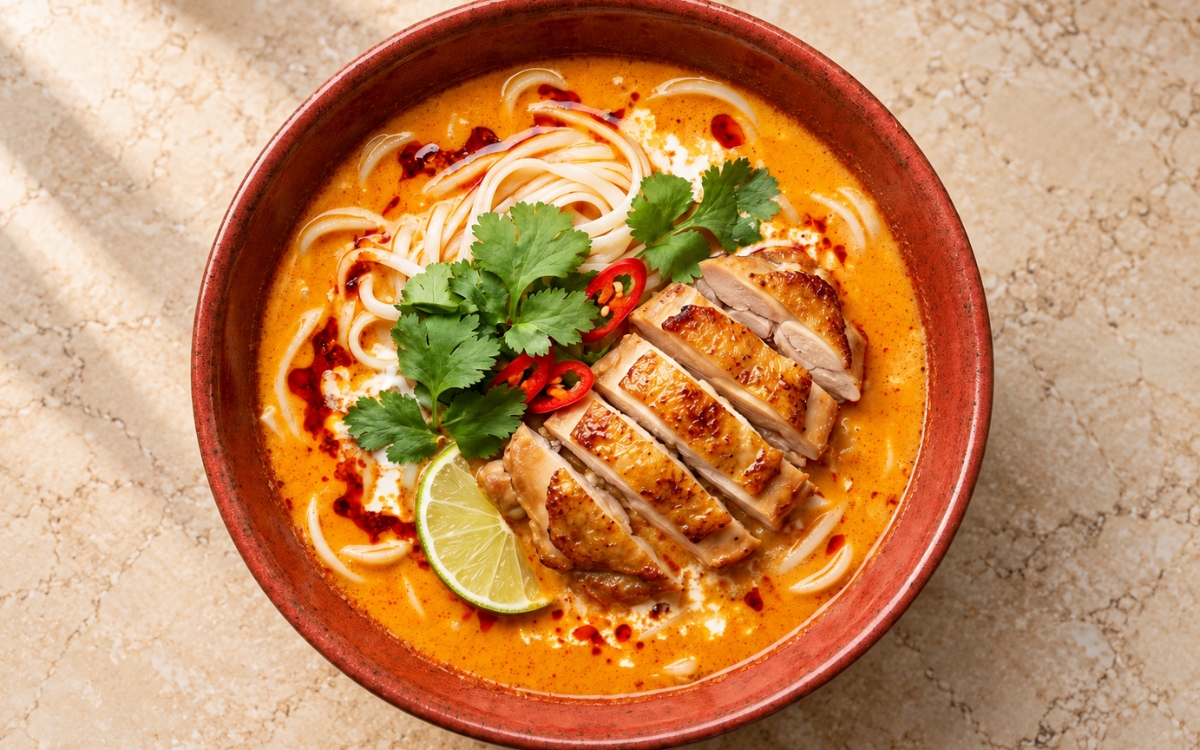
- Divide the noodles among 4 deep bowls, about 150g each. Ladle the hot laksa broth over and around the noodles, giving each bowl a generous share, then arrange the chicken strips on top so they stay clearly visible. Scatter over the cilantro leaves and sliced red chilli, and tuck 2 lime wedges into each bowl. Finish with a light drizzle of the chilli oil and the extra coconut milk, if using. Each bowl should show abundant noodles in a vivid orange broth, with the chicken and fresh garnish bright on top. Serve immediately. That last-minute garnish is what keeps the herbs and chilli genuinely fresh and vivid against the rich, hot broth.
Notes
Frying the laksa paste deserves genuine recognition as the technique most directly responsible for whether this broth tastes deep and rounded or raw and flat. The recipe's own warning that "If the paste is undercooked, the broth will taste raw and flat" reflects simple chemistry — the aromatic compounds in chilli, shallot, galangal and turmeric bloom fully only in hot oil, so the paste needs its full 8–10 minutes before any liquid goes in.
The smoothness of the paste deserves the same attention this technique receives throughout this collection's other Southeast Asian curries, because texture decides how evenly the paste fries. The recipe's own note that "A coarse paste will taste raw longer and give a rougher broth texture" explains the long blend — lemongrass and galangal are fibrous, so only the pale, tender lemongrass core goes in, and the blender keeps running until no visible strands remain.
The gentle simmer deserves genuine respect as the detail most directly responsible for a smooth, glossy broth. The recipe's own instruction to "Keep the broth at a gentle simmer, not a hard boil, so the coconut milk stays smooth" is exactly why the heat stays low for the full 12–15 minutes — a rolling boil breaks the coconut milk's emulsion, so the fat separates into a greasy, curdled-looking layer on the surface.
The broth's final consistency deserves attention as a genuine, checkable readiness cue rather than a loose approximation. The recipe's own guidance that the broth "should be rich but still fluid enough to pour freely around the noodles" gives a clear target — laksa is a soup rather than a thick curry, so loosen it with a splash of hot water or reduce it for a few minutes until it flows easily from the ladle.