Ingredients
Method
Prepare the Kofta Mixture
- Mash or finely grate the cooled, dried potatoes and combine with the grated paneer, cornstarch, salt, pepper, garam masala, and chili if using. Work the mixture until it holds together smoothly without feeling wet or sticky. Dry potatoes and well-drained paneer keep this dough firm; any extra moisture left in either one tends to surface as steam once the koftas hit hot oil, and that's usually what causes them to crack open.
Shape and Fill the Koftas
- Divide the mixture into 6 equal portions. Flatten each piece in your palm, place a small pinch of the cashew-raisin filling in the center, then fold the dough around it and roll into a smooth, even ball. Press gently to seal any seams, since a loose seam is a weak point where oil can seep in during frying.
Fry Until Golden
- Heat oil to medium-deep and fry one kofta first to check the color and timing. It should turn a deep golden brown in 5 to 6 minutes without darkening further. Fry the rest in batches, turning gently for even color, then drain on paper towels. Very high heat browns the surface too quickly while the center stays underdone, so a steady medium heat gives a more even result.
Build the Gravy Base
- Warm the ghee or oil and bloom the bay leaf, cardamom, cinnamon, and cloves until fragrant. Add the onion and cook until lightly golden, then stir in the ginger and garlic. Add the tomatoes, cashews, and ground spices, and cook for 15 to 20 minutes, stirring occasionally, until the mixture turns thick and jammy. This extended simmer concentrates the tomatoes down into a base with enough body to carry the gravy's final texture.
Blend and Strain
- Cool the gravy base slightly, then blend it smooth with the water. Pass it through a sieve, pressing firmly to push the liquid through while leaving the fibrous tomato skins and whole spice fragments behind. Straining takes a few extra minutes but turns an otherwise grainy sauce into one with a glossy, restaurant-style finish.
Finish the Gravy
- Return the strained gravy to the pan and stir in the butter, cream, sugar, garam masala, and crushed kasuri methi. Simmer for 5 to 7 minutes, adjusting the consistency with a little water if it's too thick, and season with salt to taste.
Assemble and Serve
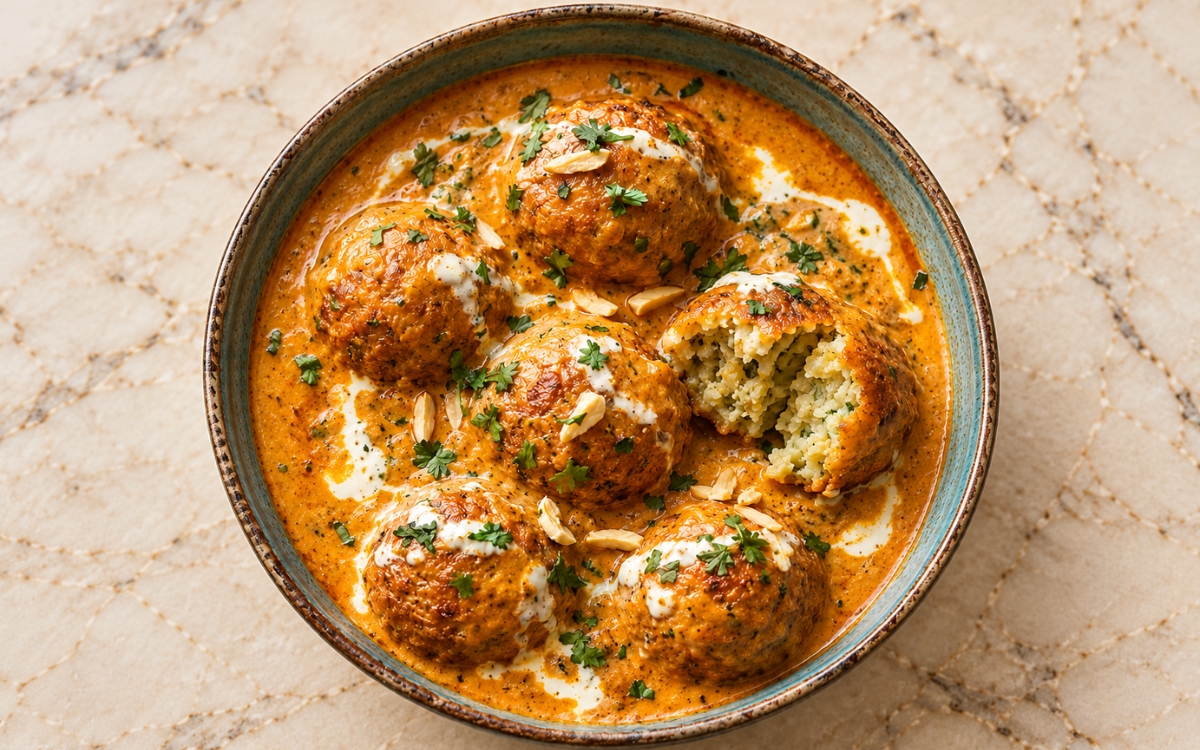
- Keep the koftas separate from the gravy until just before serving. Spoon the warm gravy over the koftas in individual bowls, or ladle the koftas into the gravy right before bringing the dish to the table. Garnish with extra cream, cilantro, and slivered almonds or cashews if desired. A kofta left sitting in the gravy for an extended period will start absorbing liquid and softening at the edges, so combine them close to serving time unless a softer texture is wanted.
Notes
Potato moisture is the single biggest variable in this recipe. Potatoes boiled just before use, or ones that haven't cooled and dried fully, carry extra water that shows up as cracked, oil-splattered koftas the moment they hit the pan, so giving them time to cool and air-dry matters more than any other step in the mixture.
Paneer brands vary quite a bit in moisture content. Store-bought blocks tend to be drier and easier to work with, while fresh homemade paneer often needs to be pressed and patted down with a towel before grating, otherwise the extra liquid behaves the same way loose potato moisture does.
The straining step is easy to skip when short on time, but it changes the finished texture noticeably. A gravy left unstrained still tastes fine but carries small bits of tomato skin and whole spice that a smooth, cream-based sauce like this one isn't really built to hold.
Holding the koftas separately from the gravy until serving isn't only about preventing sogginess, it also keeps portioning easier for leftovers, since dry koftas and a jar of gravy both reheat more predictably than a dish that's already been combined and left to sit.