Ingredients
Method
Prepare the Machaca
- If the machaca is very dry, very salty, or in long coarse strands, place it in a bowl and cover with hot water for 5–10 minutes just to soften slightly. Drain well and squeeze out excess moisture. If needed, chop or pull apart any long strands so it mixes evenly through the eggs. The machaca should be rehydrated enough to be tender, but not wet. If it goes into the pan soaked, it will steam instead of fry. Squeezing out the excess moisture after that brief soak is just as important as the soak itself — the softening comes from the brief hot-water contact, but any liquid left clinging to the beef afterward would still create the same steaming problem the soak was meant to avoid.
Beat the Eggs
- Crack the eggs into a bowl and beat until fully combined. Add a few grinds of black pepper. Do not heavily salt yet, because the machaca usually brings a lot of salt already. Set aside so the eggs are ready to go once the vegetable base is cooked. Holding off on salt at this stage, rather than seasoning by habit, avoids compounding whatever salt level the machaca itself carries — that decision genuinely needs to wait until the beef's own seasoning has been tasted.
Build the Base
- Heat the oil or lard in a large skillet over medium heat. Add the onion and cook for 3–4 minutes until softened and lightly translucent. Add the green chile and cook 1 minute more. Add the garlic, if using, and cook for about 20 seconds. Add the diced tomato and cook for 3–5 minutes, stirring occasionally, until the tomato softens and most of its excess moisture cooks off. This is important: the mixture should be moist but not watery, otherwise the eggs will turn loose and the scramble will not hold together properly. This staged build — onion softened first, chile added briefly after, tomato only once those earlier aromatics are already established — lets each component reach its own right point before the next joins, rather than everything cooking together at a single, less controlled pace.
Cook the Machaca
- Add the prepared machaca to the skillet and cook for 2–3 minutes, stirring often, so it warms through, mixes with the vegetables, and lightly fries in the fat. Taste a small piece at this point. If it is already well seasoned and salty, do not add salt later. If the pan looks dry, add 15–30ml water only as needed to loosen the mixture slightly, then let that evaporate. This tasting checkpoint is the single most reliable way to gauge how much, if any, additional salt the finished dish will need — machaca's own salt level varies enough from batch to batch that guessing without tasting risks over- or under-seasoning the whole plate.
Scramble the Eggs
- Reduce the heat to medium-low. Pour in the beaten eggs and let them sit for a few seconds, then gently fold and stir with a spatula. Cook slowly until the eggs are softly set and creamy, 2–4 minutes depending on pan size and heat. Stop cooking while they still look slightly glossy, because residual heat will finish them. Do not overcook. Machaca con huevo should be tender and moist, not dry and crumbly. Gentle folding rather than constant vigorous stirring is what produces larger, softer curds that hold moisture better — aggressive stirring breaks the eggs into smaller pieces that dry out considerably faster under the same heat.
Warm the Sides and Serve
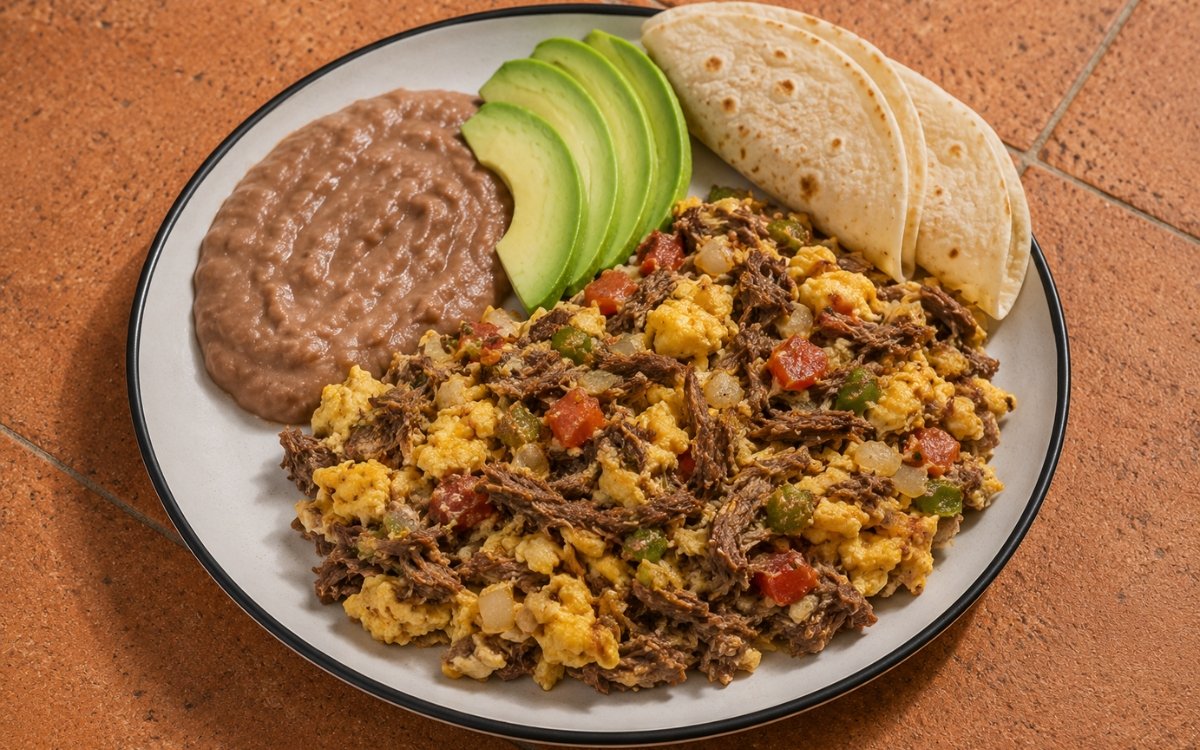
- Warm the refried beans separately. Warm the flour tortillas on a dry skillet or directly over a flame for a few seconds per side until soft and pliable. Slice the avocados. Divide the machaca con huevo among 4 plates. Serve each portion with refried beans, avocado slices, and warm flour tortillas on the side. Offer salsa and lime wedges if desired. Slicing the avocado only right before serving, rather than in advance, protects it from browning and keeps it looking and tasting genuinely fresh on the finished plate.
Notes
Rehydrating the machaca just enough, then thoroughly draining and squeezing it, deserves genuine attention as the step most responsible for whether this dish's final texture comes out right. Machaca that's too dry and tough needs that brief soak to become properly tender; machaca left wet afterward, though, works directly against the light frying this recipe depends on to build flavour, since any lingering moisture converts to steam the instant it hits the hot pan.
Tasting the machaca specifically before deciding on any additional salt is worth treating as a genuine, non-skippable checkpoint rather than an optional suggestion. Dried, salted beef varies considerably in intensity depending on how it was cured and dried, and guessing at seasoning without that direct taste risks pushing the finished dish toward being noticeably oversalted, a mistake that's difficult to correct once the eggs are already folded in.
Cooking the tomato mixture until its excess moisture has genuinely evaporated, before the machaca and eggs are added, follows the same underlying logic used throughout this collection's other Mexican egg dishes. Eggs poured into a still-wet vegetable base end up cooking partly by trapped steam rather than direct contact with the pan, producing a noticeably looser, less cohesive scramble than the tender result this recipe specifically aims for.
Folding the eggs gently, and pulling them from the heat while they still look slightly underdone, reflects real technique attention worth respecting rather than skipping in the interest of speed. Residual heat continues cooking eggs even off the burner, and both the gentle folding and early pull are specifically what protect the finished dish's tender, moist texture from turning dry and crumbly.