Ingredients
Method
Prepare the Lobster
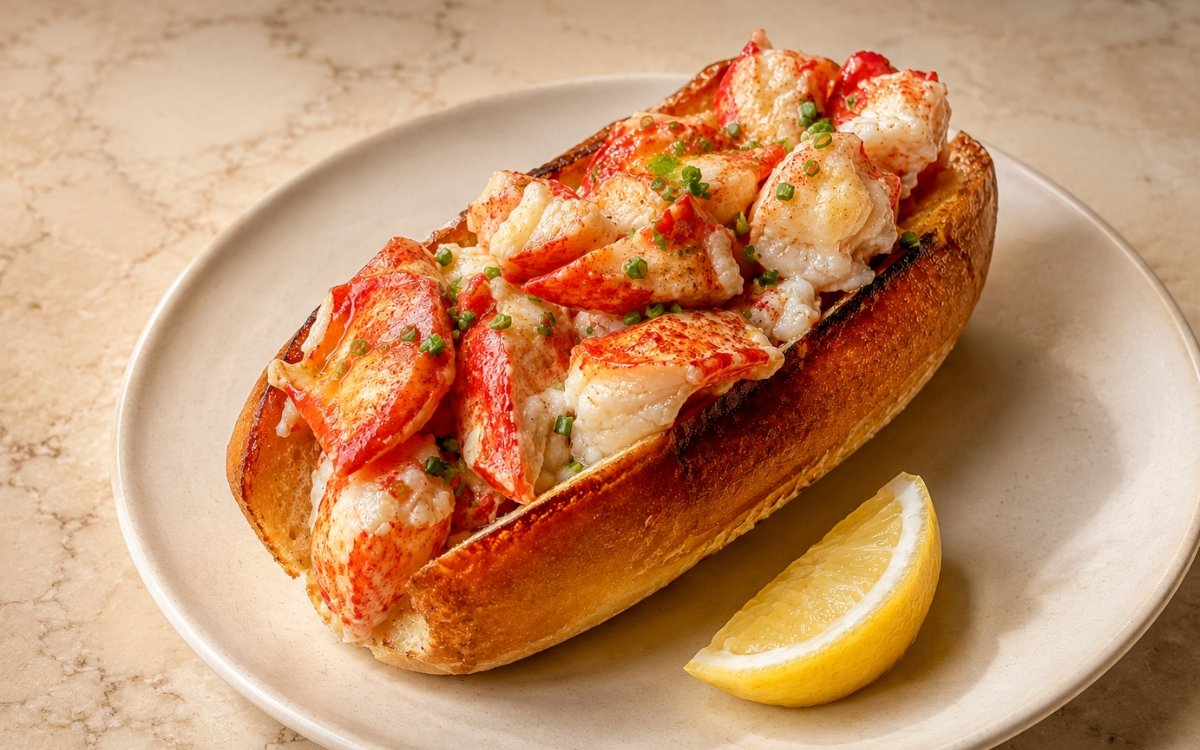
- If starting with whole cooked lobsters, remove the meat carefully and check thoroughly for shell fragments. Keep the meat in large pieces — the goal is chunky, generous lobster pieces, not shredded meat and not tiny dice. If any tail pieces are very large, cut them once or twice into large bite-size chunks. Leave claw and knuckle meat as intact as possible where practical. Keeping the meat in genuinely large, distinct pieces rather than breaking it down further is a deliberate choice specific to this style — the roll's entire appeal rests on being able to see and bite into real, substantial pieces of lobster rather than a uniformly cut filling.
Warm the Lobster in Butter
- In a wide skillet or saucepan over low heat, melt the 85g butter gently. Do not brown it. Add the lobster meat and fold very carefully to coat. Warm for 1–2 minutes only, just until the lobster is heated through. Add the lemon juice, salt, and a little black pepper. The butter should lightly glaze the meat and pool slightly at the bottom of the pan, but the lobster should not be simmering hard or cooking aggressively. Overheating will tighten the meat and make it rubbery. Because the lobster is already fully cooked, this stage is entirely about reheating gently rather than cooking further — any real heat beyond a light warm-through pushes the proteins to contract and tighten, which is exactly what turns already-tender lobster meat rubbery and tough.
Griddle the Buns
- Heat a griddle or skillet over medium heat. Melt the 30g butter. Place the split-top brioche buns on their sides and toast the outer sides until deep golden and lightly crisp. Then briefly warm the inner cut side if desired, but the signature look is the golden butter-griddled sides. The buns should be warm, structured, and buttery, with visible browning, but not dry or brittle. Griddling the flat outer sides rather than the open top is what gives a split-top bun its specific New England look and texture — those sides pick up real colour and a crisp, buttery crust while the interior of the bun stays soft enough to cradle the filling.
Assemble the Rolls
- Open each bun and fill generously with one-quarter of the warm buttered lobster mixture. Spoon a little of the warm butter from the pan over each portion if needed, but do not soak the bun to the point it turns soggy. Finish each roll with a light sprinkle of chopped chives. A light spoonful of the pan's residual butter adds extra glossiness and flavour without overwhelming the bun — restraint here matters, since this style depends on the bun staying structured rather than saturated.
Serve
- Serve immediately with a lemon wedge alongside each sandwich. The lobster should be warm and glossy, the bun buttery and toasted, and the overall finish simple and clean. Serving without delay keeps the lobster at its ideal warm, glossy temperature and the bun at its crispest — both qualities fade within a short window once assembled.
Notes
The distinction between Connecticut-style and other regional lobster rolls comes down almost entirely to temperature and dressing, and it's worth understanding clearly since the two approaches produce genuinely different results. Connecticut style keeps the lobster warm and dresses it in melted butter; other styles serve the lobster cold, bound with mayonnaise. Neither is more correct than the other, but they aren't interchangeable — swapping mayonnaise in for butter here, or serving the lobster cold, produces a different sandwich entirely rather than a minor variation.
Keeping the lobster warming stage brief and gentle is worth taking as seriously as the recipe suggests, since lobster meat's texture is genuinely fragile once it's already cooked. The meat has already reached its ideal tenderness during its initial cooking; this reheating stage exists purely to bring it back up to a pleasant warm temperature and coat it in butter, and any real additional heat beyond that risks overcooking meat that has no more cooking left to do without turning tough.
Griddling the bun's flat sides rather than its open top is specific to the split-top New England bun style, and it's part of what gives this roll its recognisable look. These buns are shaped with flat sides precisely for this purpose — laying them on their sides against a hot, buttered griddle produces the deep golden, crisp crust that's a signature visual element of the finished roll, distinct from a standard toasted bun.
The restraint shown throughout this recipe — simple butter rather than a dressed sauce, chunky rather than finely cut lobster, minimal garnish of just chives and lemon — reflects a consistent philosophy rather than a lack of ambition. When the central ingredient is genuinely good lobster meat, the point of a Connecticut-style roll is to let that meat be the obvious star, with everything else in a clearly supporting role.