Ingredients
Method
Prepare the Pico de Gallo
- Dice the tomatoes, sweet onion, red onion, and jalapeño very evenly, then combine in a bowl with the lime juice, lime zest, olive oil, salt, and black pepper. Let it sit for 10–15 minutes, then taste and adjust seasoning. Before using on the nachos, lightly drain off excess liquid. This matters. Watery pico will flood the chips and kill the whole tray. Dicing every component to a genuinely even size isn't just visual — uniform pieces mean the pico's flavour is consistent bite to bite, and the short rest afterward lets the salt draw out excess tomato liquid before it ever reaches the hot tray.
Prepare the Guacamole
- Mash the avocados in a bowl until partly smooth but still chunky. Fold in the red onion, jalapeño, garlic, lime juice, cilantro, cumin, salt, black pepper, and green Tabasco if using. Keep it thick and spoonable, not loose or fully smooth. The guacamole should sit in visible green mounds on top of the nachos, not spread like a sauce. Mashing only partly, rather than to a completely smooth purée, is what gives the guacamole enough body to hold its shape as a distinct mound once spooned onto the hot tray, rather than sinking in and disappearing among the other toppings.
Cook the Seasoned Ground Beef
- Heat a large skillet over medium-high heat. Add the ground beef and cook, breaking it up, for 4–5 minutes until it starts browning properly. Add the diced onion and continue cooking until the beef develops dark brown edges and the onion softens, about 4 more minutes. Add the garlic, salt, cumin, chili powder, smoked paprika, oregano, black pepper, and tomato paste. Cook for 1–2 minutes, stirring constantly, until fragrant and the tomato paste darkens slightly. If the mixture looks too dry while the seasonings bloom, add 30ml water only as needed. Finish with lime juice. The beef should be hot, fragrant, and slightly crisp in places, not wet or saucy. If there is excess grease pooling in the pan, spoon some off. Greasy beef will slide over the chips and make the tray heavy and soggy. Browning the beef hard before adding the onion, rather than combining everything at once, is what produces the dark, crisp edges specified here — beef added to a pan already crowded with onion releases moisture and steams rather than developing real colour.
Preheat the Oven
- Preheat the oven to 220°C / 425°F or set the broiler on high. Use a large sheet pan, ovenproof platter, or skillet so the chips can sit in a broad, mostly single layer. A broad, shallow layer rather than a deep pile is what allows the oven's heat to reach and melt cheese across the whole tray evenly — a deep, crowded pile traps heat unevenly and leaves chips at the bottom soggy while the top barely warms through.
Assemble the Hot Nacho Base
- Spread the tortilla chips out in an even generous layer. Scatter the shredded Mexican cheese blend over the chips so it reaches across most of the surface, but still leaves some golden chips visible. Scatter the hot seasoned ground beef evenly over the cheese. This order matters here: nachos, cheese, then ground beef. Putting the beef directly on bare chips everywhere can weigh them down too fast, while the cheese helps lock the base together. The melting cheese layer functions almost structurally here, fusing to the chips beneath it as it melts and giving the heavier beef scattered on top something stable to sit on rather than direct, weighty contact with the chips themselves.
Melt the Cheese
- Bake or broil for 3–6 minutes, just until the cheese is fully melted and bubbling. Watch closely. You want melted cheese and hot chips, not burned chip tips or dried-out beef. This is a short, high-heat stage specifically for melting rather than cooking anything further — both the beef and the chips are already fully prepared, so the oven's only job here is bringing the cheese to a fully melted, bubbling state as quickly as possible.
Finish the Nachos
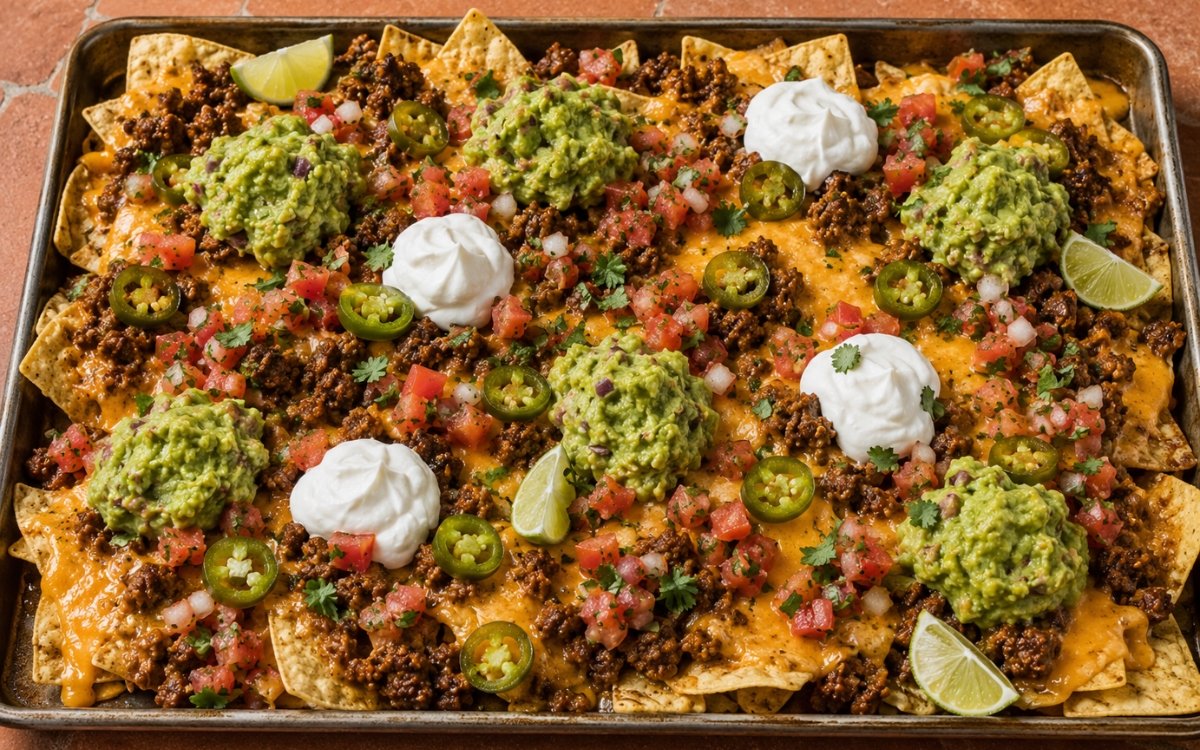
- Remove from the oven and immediately scatter the drained pico de gallo over the top. Add visible spoonfuls of guacamole across the tray. Add one spoonful of sour cream per serving, spaced clearly so the white mounds stay visible. Finish with thin jalapeño slices scattered over everything. Add a little cilantro if wanted and serve with lime wedges if using. Adding every cold topping only after the tray leaves the oven, rather than baking any of them, is what keeps the pico, guacamole, and sour cream tasting genuinely fresh and looking visually distinct against the hot, melted cheese beneath them.
Serve
- Serve immediately while the chips are still crisp, the cheese is hot and melted, and the cold toppings stay fresh and distinct. Loaded nachos have essentially no holding window once fully assembled — the chips begin softening under the combined weight and moisture of every topping within minutes, so serving without delay is what preserves the crisp-hot-cool contrast the whole tray is built around.
Notes
The layering sequence in this recipe — chips, then cheese, then beef, then every cold topping added only after baking — deserves to be followed closely rather than treated as a loose suggestion. Each step in that order exists to solve a specific structural problem: the cheese binds the chip base together as it melts, the beef sits on top of that melted layer rather than weighing down bare chips directly, and the cold toppings are held back from the oven entirely so they stay fresh and don't wilt, break, or lose their distinct colour and texture.
Draining the pico de gallo is one of the more consequential small steps in the entire recipe, disproportionate to how little time it takes. Tomatoes release a meaningful amount of liquid once diced and salted, and that liquid, left undrained, doesn't stay contained to the pico itself once it's scattered across a hot tray of chips — it spreads and soaks into everything nearby, softening chips well beyond just the ones directly underneath the pico.
Using sturdy tortilla chips rather than thinner, more delicate restaurant-style chips is a foundational choice that everything else in this recipe depends on. Thin chips simply don't have the structural strength to support a full layer of melted cheese, hot beef, and multiple cold toppings without collapsing partway through assembly, let alone holding up through the short time it takes to actually eat the tray.
This is a dish built with almost zero patience for delay once it's fully assembled. Every component up through the cheese-melting stage can be prepared with some flexibility in timing, but the moment the cold toppings go on, the clock starts on how long the tray will stay genuinely crisp. Serving immediately isn't just a suggestion for best results here — it's close to a hard requirement given how quickly loaded nachos degrade once complete.