Ingredients
Method
Make the Peel-Infused Simple Syrup
- Combine the 180ml of water and 150g of white sugar in a small saucepan. Stir over medium heat until the sugar is completely dissolved and the liquid is clear. Remove from the heat immediately. Add the zest of 3 limes — the fine zest rather than the wide-strip peel approach used in the blood orange and grapefruit preparations. Lime zest's concentration of aromatic oils is higher per gram than either orange or grapefruit peel in the coloured outer layer, meaning the finer grated zest provides good aromatic surface area without requiring wide strips. Cover and steep for 8–10 minutes. The 8–10 minute maximum is the strictest peel-infusion limit in this collection. Lime peel contains limonin, naringin, and various coumarin compounds alongside its pleasant volatile terpenes — the bitter compounds' extraction rate is accelerated by the higher acidity of the lime zest's cellular environment relative to orange or grapefruit peel. At 8 minutes the aromatic volatile oils are well and specifically extracted; the pleasant lime character is at its most vivid. At 10 minutes it is at the absolute maximum for the pleasant-only result. At 12 minutes the bitterness is detectable; beyond that it progressively dominates. Always strain within the 10-minute point for the first-time preparation; experienced batches can extend to 12 minutes only if the lime zest is demonstrably very fresh and fragrant. Strain the zest completely and allow to cool.
Prepare the Lime Pulp
- Section the 3 limes, removing all seeds and every piece of white pith from the pulp. The emphasis on pith removal is more specific and more important here than in any other preparation in this collection. Lime's pith contains a high concentration of limonin — the primary bitter compound in citrus pith — that at lime's high natural citric acid pH (approximately 2–2.5) tastes specifically more aggressively harsh than the same compound in lemon or orange pith at their higher pH values. Any white pith included in the mashed lime pulp will contribute a specifically hard, persistent bitterness that is categorically different from the pleasant, light, natural citrus bitterness the preparation intends. Remove every piece. Add the clean pulp to the pitcher and mash gently — sufficient pressure to release juice from the segment pieces and begin breaking them down, without producing a uniform purée. The lime segments' membrane structure is more specifically firm than blood orange's or lemon's, and the gentle mash produces a lighter-textured, more clearly segment-structured result in the glass.
Build the Limenade Base
- Add the 240ml of fresh lime juice, 120ml of the cooled peel-infused syrup, 750ml of ice-cold water, and the pinch of fine sea salt to the pitcher with the mashed pulp. Stir thoroughly. Taste carefully. Lime's natural acidity means the starting base is the most assertively tart of any lemonade preparation in this collection — specifically more aggressive than lemon's equivalent at the same juice quantity. This is expected and correct: the balance-point between the lime's sharpness and the syrup's sweetness is specifically higher on the acid scale than any other preparation, and the finished drink should be sharp and bold rather than smoothly balanced. If the acidity feels genuinely aggressive rather than pleasantly sharp, add additional simple syrup in 10ml increments up to 150ml total. If the lime's character seems flat or muted, add a small additional amount of fresh lime juice rather than adding water. Adjust the water quantity for concentration. The salt at sub-threshold concentration is specifically important in this preparation — lime's combined citric-and-malic acid profile at this concentration makes the flavour more specifically vivid when salt is present.
Chill and Serve
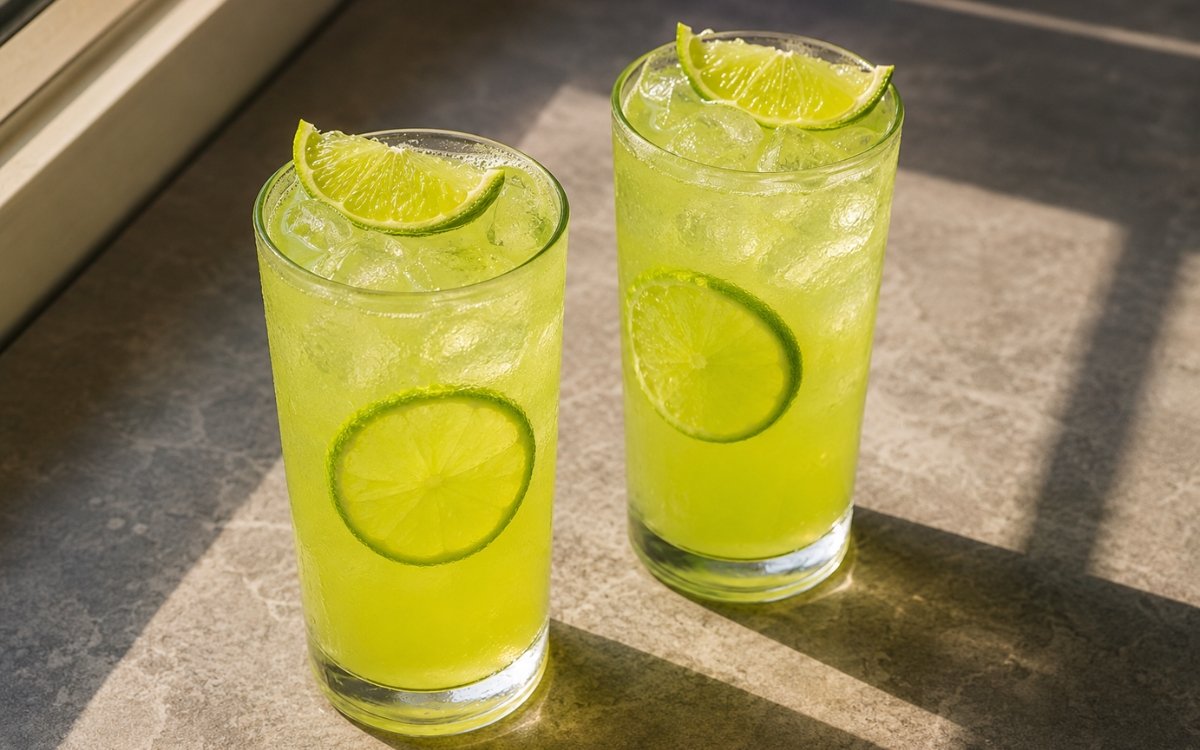
- Refrigerate for 1–2 hours until completely cold and integrated. Fill glasses with ice. Pour the chilled limenade over the ice. Garnish with a lime slices. Serve very cold — lime's acidity is specifically most refreshing and most specifically pleasant at the coldest temperature.
Notes
- The preparation's character — sharp, assertive, specifically lime-forward, unapologetically acidic — is specifically different from the gentler, more broadly accessible classic lemon lemonade. This is a preparation for people who want their citrus to announce itself. The sugar quantity of 150g in the syrup is higher than the classic still lemonade's 100g not because the preparation is sweeter but because lime's higher acid concentration requires more sweetness to reach the balance point — the overall result is still specifically tart-forward. Persian limes — the standard seedless variety in most supermarkets — produce a good, consistent, bold result. Mexican or Key limes — smaller, more fragrant, with a specifically more aromatic, more floral lime character — produce a more intensely aromatic but more labour-intensive result (more limes required for the same juice volume). Both work well; the Key lime version is specifically more aromatic and more vivid but requires significantly more fruit.