Ingredients
Method
Prep the Lemongrass
- Trim off the dry tops and root ends of the lemongrass. Use the lower tender part of the stalks, about 12 to 15cm from each. Lightly bruise them with the back of a knife, then cut into 5cm pieces. This helps release the citrusy oils without needing a long aggressive boil. That light bruising physically ruptures the stalk's outer fibres just enough to expose the aromatic oils held within, letting a subsequent gentle simmer draw them out far more efficiently than an unbruised stalk boiled hard ever would.
Make the Lemongrass Infusion
- Bring 700ml water just to a light simmer. Add the lemongrass, turn the heat to low, and keep it at a very gentle simmer for 3 to 4 minutes only. Remove from the heat, cover, and let steep for 10 minutes. Strain into a bowl or pitcher while still warm. Add the sugar and stir until dissolved. Keeping this simmer genuinely gentle and brief, rather than extended or hard-boiling, protects lemongrass's own bright, citrusy character from turning toward the flatter, more muted flavour extended aggressive heat would produce.
Extract the Lime Oils Safely
- Add the lime zest strips to the warm lemongrass syrup and let them sit for 10 minutes, then remove and discard. This gives clean lime aroma without bitterness. Only use the green part of the peel — no white pith. Steeping the zest in the already-warm syrup, rather than adding it earlier during active heat, extracts its aromatic oils gently while avoiding any risk of scorching the peel against direct heat.
Brew the Green Tea Properly
- Heat 800ml water to 75–80°C. Add the green tea and steep for 2 minutes if using loose tea, or 2 to 2½ minutes if using bags. Strain immediately. Do not oversteep. Let the tea cool for 10 to 15 minutes. Green tea's tannins extract considerably faster and more harshly at higher temperatures, and continuing to steep even at the correct temperature draws out increasingly bitter compounds the longer it sits — the specific temperature and brief steep window together protect the tea's own delicate character from both directions.
Combine
- In a large pitcher, combine the sweetened lemongrass-lime base, the brewed green tea, the fresh lime juice, and the optional pinch of salt. Add 350 to 450ml cold water, or enough to bring the total volume to about 2 liters. Stir and taste. Adjust if needed: more lime juice for a sharper cooler; more sugar if you want it softer; more cold water if you want it lighter. Adding the fresh lime juice at this stage, once the tea has already cooled and the lemongrass syrup has already cooled to only warm, is what protects that juice's own sharp, vivid acidity from being dulled by any real residual heat still present earlier in the process.
Chill and Serve
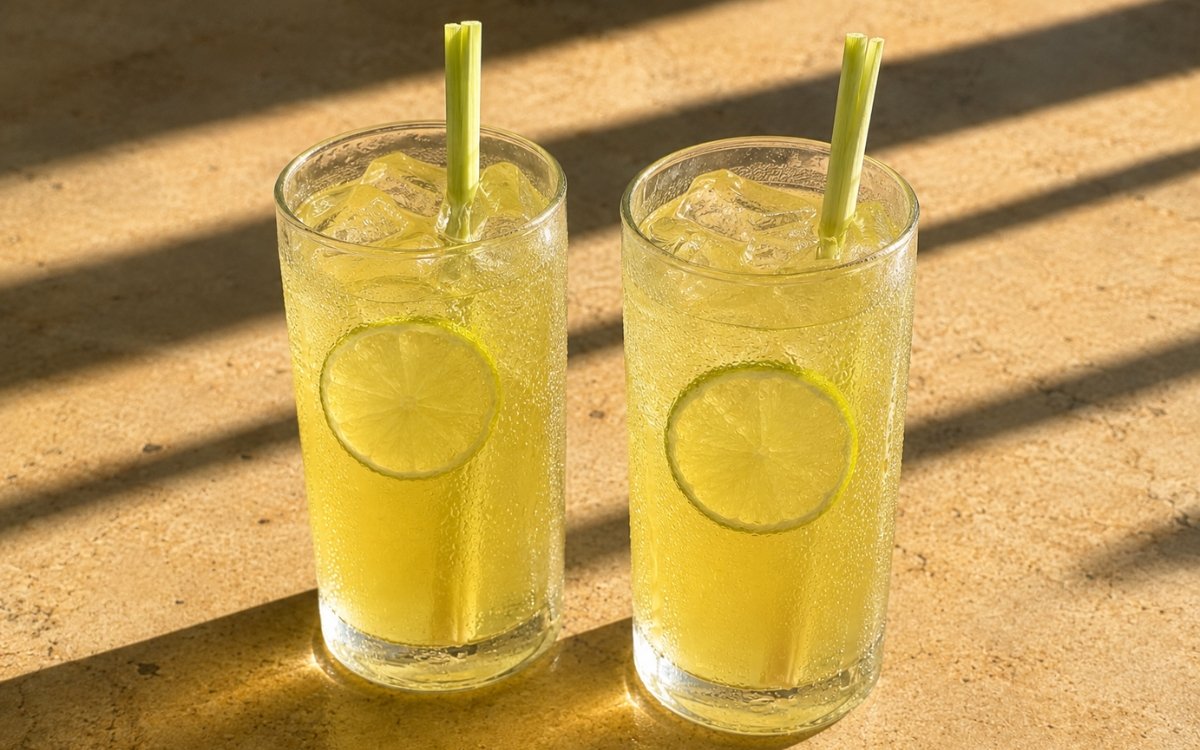
- Refrigerate until fully cold, about 1 hour. Fill tall glasses with ice. Add a thin lime wheel inside each glass and a short lemongrass stalk standing in the drink. Pour over the chilled cooler and serve immediately. Standing a trimmed lemongrass stalk directly in the glass, rather than simply floating a slice, gives the drink a genuine visual and aromatic presence that reinforces its core identity right at serving.
Notes
Lightly bruising the lemongrass before it ever meets any heat deserves recognition as the technique responsible for this base's clean, genuinely aromatic character. That bruising physically ruptures the stalk's tough outer fibres, exposing the aromatic oils held within far more efficiently than an intact stalk would release under the same amount of heat — this is what allows the brief, gentle simmer that follows to actually work, rather than needing a longer, harsher boil to compensate for skipping this step.
Keeping the lemongrass simmer genuinely brief and gentle, rather than extended or hard-boiling, follows the same underlying logic that protects delicate aromatics throughout this collection. Lemongrass's bright, citrusy character is genuinely vulnerable to prolonged or aggressive heat — pushing the cook further than specified here would flatten that same brightness into something duller and less distinct.
The specific, controlled temperature and brief steep time given for the green tea deserve the same careful attention this collection applies to every green tea recipe. Green tea's tannins extract considerably faster and more harshly than black tea's at any given temperature, and both boiling water and oversteeping independently risk pushing the tea toward bitterness — the specific 75–80°C range and 2 to 2½ minute window work together to avoid both failure points at once.
Adding the fresh lime juice only cold, at the very final combining stage, deserves genuine respect as a deliberate sequencing choice rather than a minor detail. Lime's own bright, sharp acidity is meaningfully sensitive to heat, and adding it any earlier, while the lemongrass syrup or tea still carried real warmth, would dull some of that vivid freshness before it ever had the chance to register fully in the finished cooler.