Ingredients
Method
Make the Lemon Curd
- Whisk together the eggs, egg yolks, sugar, lemon juice, lemon zest, and salt in a heatproof bowl or saucepan until smooth. Cook over low heat directly in a heavy saucepan, or over a double boiler, stirring constantly with a spatula, until the curd thickens enough to coat the spatula and reaches about 82–84°C — don't let it boil, or the eggs may scramble. Remove from the heat and immediately whisk in the butter a few pieces at a time until fully emulsified and glossy, straining through a fine sieve if a perfectly smooth texture matters to you. Press plastic wrap directly onto the surface and cool until no longer warm, then chill until thick enough to spread without running.
Mix and Rest the Crepe Batter
- Whisk together the flour, sugar, salt, poppy seeds, and lemon zest in a bowl. In a separate bowl or measuring jug, whisk the eggs, milk, water, melted butter, and vanilla, then gradually whisk that wet mixture into the dry ingredients until smooth, with no flour pockets remaining, straining if needed for an extra-smooth batter. Cover and rest the batter for 30 minutes — this hydrates the flour and relaxes the gluten, which is what lets the crepes cook thin and tender rather than tough. After resting, the batter should be fluid like light cream; whisk in 1 to 2 tablespoons of milk if it's thickened too much.
Make the Whipped Ricotta Filling
- Drain the ricotta well if it looks wet, then combine it with the powdered sugar, vanilla, and lemon zest in a bowl and beat or whisk until smooth. Whip the cold heavy cream to medium peaks in a separate bowl, then fold it gently into the ricotta mixture until smooth, light, and fluffy. Chill until needed — the filling should end up airy but still hold its shape.
Make the Raspberry Mash
- Place the raspberries, sugar, and lemon juice in a small saucepan over medium-low heat and cook for 3 to 5 minutes, stirring and lightly crushing the berries, until they break down into a thick, spoonable mash. Cook just until slightly thickened — it should still look fresh and bright, not jammy and over-reduced. Cool before using.
Cook the Crepes
- Heat a 20–22 cm nonstick skillet or crepe pan over medium heat, lightly grease it with butter or oil, and wipe away any excess. Whisk the batter once more, then pour in about 55–60 ml per crepe, immediately swirling the pan to coat the base in a thin, even layer. Cook the first side for about 45 to 60 seconds, until the surface looks set, the edges begin to dry, and the underside shows light golden spots, then flip and cook the second side for just 10 to 20 seconds. Transfer to a plate and continue with the remaining batter, lightly greasing the pan only as needed, stacking the crepes as they cook. You should end up with 8 crepes total.
Fill and Fold
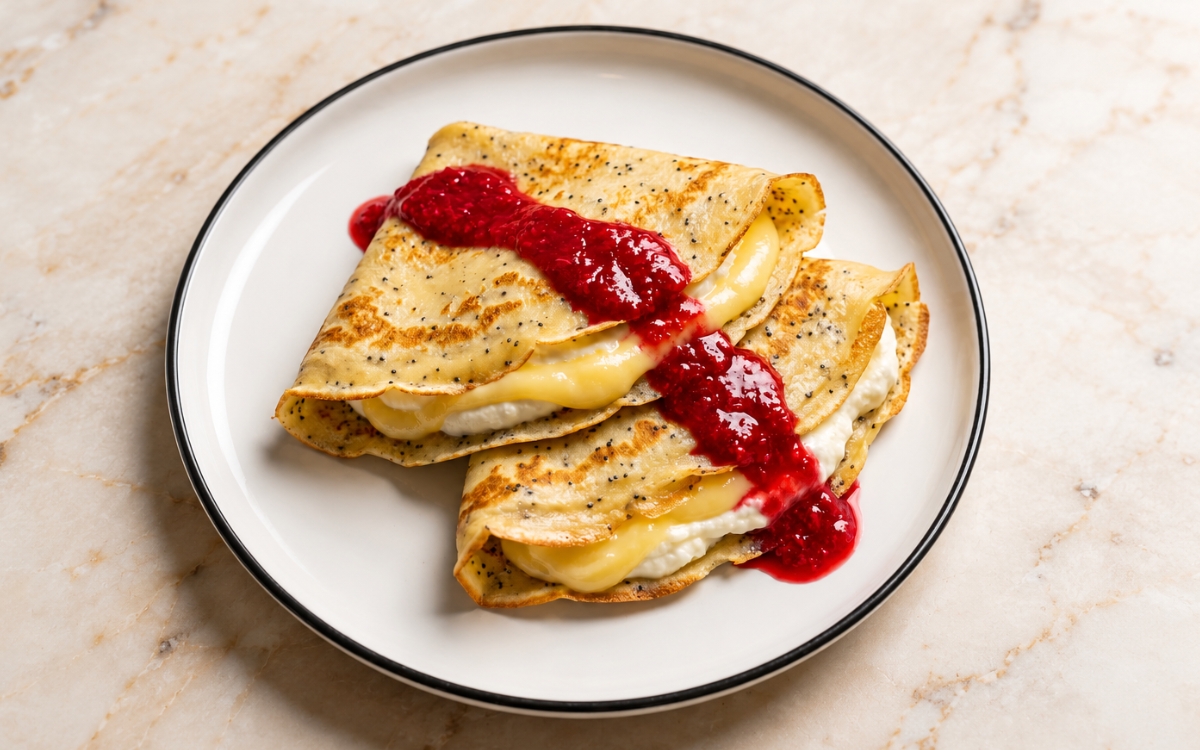
- Lay out the crepes and spread each with about 1 tablespoon of lemon curd and a generous spoonful of whipped ricotta, keeping the filling mostly in the center and leaving a small border so it doesn't squeeze out too heavily. Fold each crepe into a rolled or folded rectangle shape, depending on your presentation preference, keeping the filling generous enough that some stays visible at the open edges.
Finish and Serve
- Arrange 2 crepes per serving and spoon raspberry mash in a vivid streak over the top of each portion. Serve immediately, or chill briefly if you want the filling slightly firmer.
Notes
Resting the crepe batter for the full 30 minutes isn't a step worth skipping even when you're short on time. Unrested batter tends to produce crepes that tear more easily and cook up slightly tougher, since the flour hasn't had the chance to fully hydrate or the gluten time to relax.
Draining the ricotta well before using it protects the whole assembly from two directions at once. Excess moisture makes the whipped filling loose and harder to hold its shape, and that same moisture can soak into the delicate crepes themselves if the filling sits for any length of time before serving.
Cooling the lemon curd completely before it touches the whipped ricotta is worth treating as a firm rule rather than a suggestion. A curd that's even slightly warm will soften the airy ricotta filling on contact, undoing the light, fluffy texture the whipping step was meant to create.
Cooking the crepes lightly, with the second side getting only 10 to 20 seconds, keeps them pale gold rather than crisp. These are meant to stay soft and foldable, and a browner, crisper crepe would crack rather than fold cleanly around the filling.