Ingredients
Method
Make the Lemon Sugar Base
- Rub the granulated sugar and lemon zest together with your fingertips in a large bowl until the sugar feels slightly damp and smells strongly of lemon; this releases the lemon oils directly into the sugar for a more even citrus flavor. Add the softened butter and beat until smooth and creamy, 2 to 3 minutes, until pale and lightly fluffy without needing to be fully whipped. Beat in the egg and egg yolk until fully incorporated, scraping the bowl well, then add the lemon juice and vanilla and mix until smooth. The mixture may look slightly curdled at first; keep mixing and it comes together once the dry ingredients are added.
Mix the Dry Ingredients
- Whisk together the flour, cornstarch, baking powder, baking soda, salt, and poppy seeds in a separate bowl. Add this to the wet mixture and mix on low speed or fold with a spatula just until no dry flour remains, without overmixing. The finished dough should be soft and sticky but thick enough to hold its shape.
Chill the Dough
- Cover and chill the dough for 1 hour. This lets the dough firm up enough to roll cleanly, helps the cookies spread evenly, and gives the crinkle tops a better chance to form in the oven. If the dough still feels very soft after an hour, chill it for another 15 to 20 minutes.
Portion and Coat
- Heat the oven to 175°C conventional or 160°C fan and line two baking trays with parchment. Scoop the dough into 24 equal portions, about 28 to 30 g each, and roll into balls. Roll each ball first in granulated sugar, then coat generously in powdered sugar, aiming for a thick, opaque layer for the best crackled finish. Arrange on the trays with space between them, about 6 to 8 per tray. If the dough warms up and turns sticky while rolling, refrigerate it briefly before continuing, since soft dough flattens too much and loses its definition.
Bake
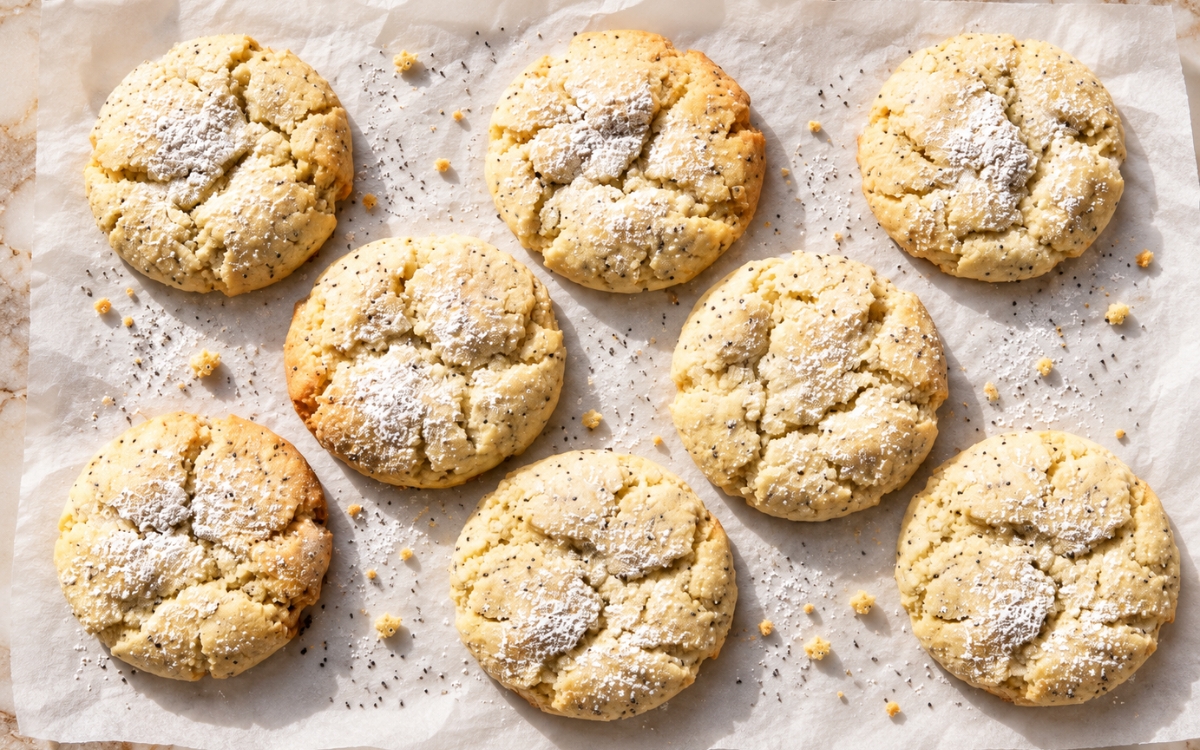
- Bake one tray at a time for 10 to 12 minutes, until the tops are puffed and crackled, the edges are lightly golden, and the centers look just set but still soft. Don't overbake; for soft crinkle cookies, the centers should still feel tender when they come out, since they continue setting on the tray. Dough that's gone especially cold, or a cooler oven, may need up to 13 minutes.
Cool
- Let the cookies cool on the baking tray for 5 to 7 minutes before transferring to a wire rack. The cookies are delicate while hot, and this brief rest lets the bottoms set without drying out the centers.
Notes
Rubbing the zest into the sugar rather than adding it later is one of the more important steps for flavor here; it releases the lemon oils straight into the sugar, giving a stronger and more even citrus flavor throughout the dough.
Cornstarch works alongside the flour to keep the cookies soft and tender, supporting the slightly thicker crinkle texture these cookies are meant to have.
The double sugar coating does two separate jobs: the granulated sugar underneath gives the powdered sugar something to grip, and the powdered sugar on top is what cracks into the classic white crinkle pattern as the cookies bake and spread.
Keeping the dough cold all the way to the oven matters more here than in most drop cookies, since dough that warms up while rolling flattens faster and loses the clean crackle the coating is meant to produce.