Ingredients
Method
Heat Stock and Oil
- In a medium saucepan (2L), combine the 450ml vegetable stock and 30ml olive oil (reserving the remaining 15ml for later). Add the 6g salt and bring to a rolling boil over high heat, letting it reach a genuine, sustained boil rather than just a light simmer; couscous needs truly hot liquid for even hydration, and liquid that's only warm or gently simmering won't provide enough heat to properly cook the tiny pearls through their brief resting period.
Add Couscous
- Remove the pot from heat and immediately stir in the 300g couscous. Stir just once, thoroughly enough to moisten every grain evenly across the pot, but resist the urge to keep stirring beyond that single pass — overstirring at this stage is one of the most common ways couscous ends up clumpy, since the starch on the surface of the grains becomes sticky and binds neighboring pearls together the more they're agitated while wet. Cover the pot tightly with a well-fitting lid and let it stand, completely off the heat, for 5 minutes. The couscous will absorb all the liquid entirely on its own during this resting period — no additional simmering or heat is needed at any point.
Fluff Couscous
- Remove the lid and fluff the couscous thoroughly with a fork, breaking up any clumps and separating the grains from one another. Work specifically from the edges of the pot toward the center as you fluff — the couscous around the edges tends to be slightly drier than the center, having had marginally more direct contact with the hot pan surface, and starting there helps you catch and address any unevenness before it becomes a larger clumped mass. Use a lifting motion with the fork, gently turning the grains up and over rather than pressing or mashing them down, since pressing would compact the couscous back into the same dense clumps you're trying to break apart.
Add Citrus and Herbs
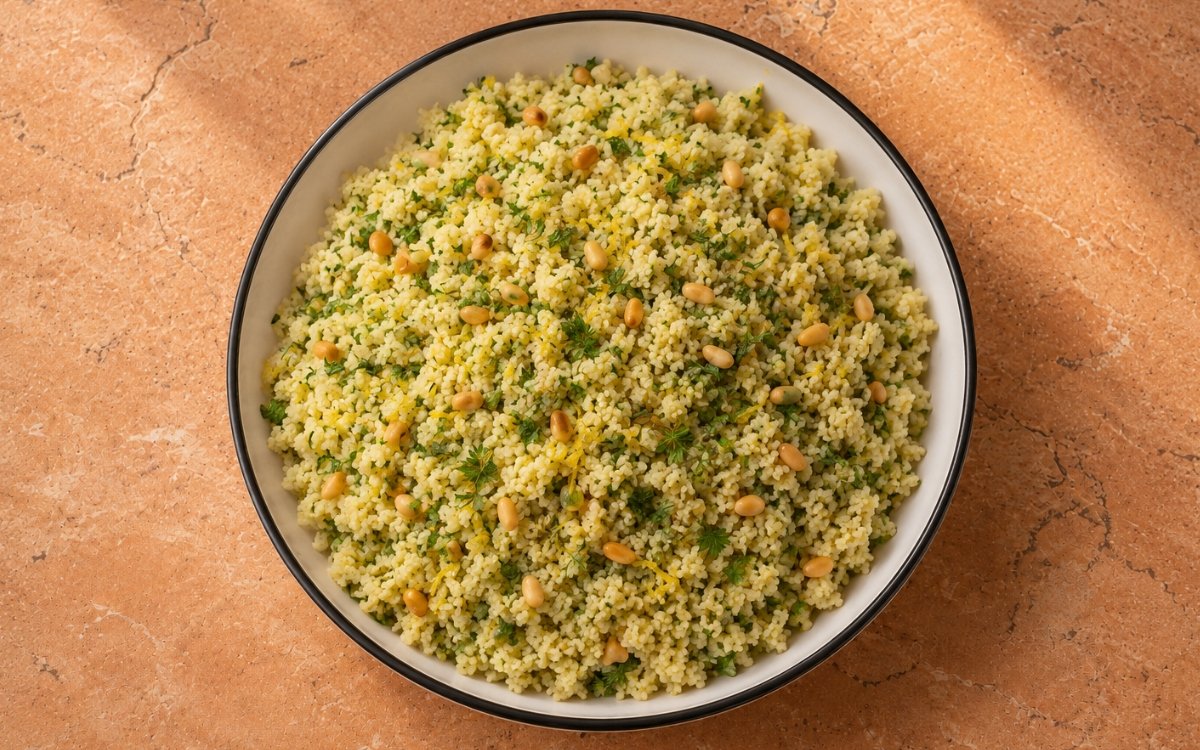
- Drizzle the remaining 15ml olive oil and the 30ml lemon juice over the fluffed couscous. Add the 5g lemon zest, 20g parsley, 10g mint, 8g dill, and 2g black pepper, then toss everything gently with a fork until the herbs are evenly distributed throughout the grains rather than clustered in one area of the bowl. If the couscous looks a little tight or dense at this stage, continue fluffing a bit longer with the fork before considering any extra liquid — often what looks like dryness is simply grains that haven't been fully separated yet, and additional fluffing resolves it without needing more liquid at all.
Finish and Serve
- Taste and adjust the salt and pepper if needed, since the exact amount of seasoning that comes through can vary slightly depending on how much liquid the couscous absorbed and how thoroughly it was fluffed. Transfer to a serving bowl and top with the 30g toasted pine nuts if using. Serve warm or at room temperature, since couscous holds its texture well either way.
Notes
Instant couscous's cooking mechanism is genuinely different from any grain-based side dish elsewhere in this collection. Rather than the gradual, extended absorption process rice depends on, couscous is essentially pre-steamed during manufacturing and only needs enough boiling-hot liquid and residual steam, trapped under a tight lid, to fully rehydrate within just a few minutes — there's no active simmering step involved at all once the liquid meets the grains.
The single-stir rule when adding the couscous to the hot liquid is worth taking seriously. Couscous's surface starch becomes noticeably sticky the moment it contacts hot liquid, and repeated stirring at that early stage actively works those starchy surfaces against each other, binding pearls together into clumps that are considerably harder to separate later during fluffing than they would have been to prevent from forming in the first place.
Adding the lemon juice, zest, and fresh herbs only after the couscous has been fully fluffed and separated protects their bright, fresh character. Folding acidic lemon juice or delicate herbs into couscous that's still hot and actively steaming, or into grains that haven't yet been separated, risks both a duller flavor and a less even distribution throughout the finished dish.