Ingredients
Method
Make the Lavender-Infused Simple Syrup
- Combine the 180ml of water and 150g of white sugar in a small saucepan over medium heat. Stir continuously until the sugar is completely dissolved and the liquid is clear. Remove from the heat immediately. Add the 1½ tsp of dried culinary-grade lavender buds. Cover the saucepan. Allow to steep for 6–8 minutes. The 6–8 minute window is shorter than lavender infusions in other preparations in this collection — specifically shorter than the 15–25 minutes used in the Blueberry Lavender Lemonade preparation — and the difference is explained by the medium. In this preparation the lavender is added to a concentrated warm simple syrup (dissolved sugar and water at post-simmer temperature, approximately 85–90°C when removed from heat). The higher initial temperature and the higher dissolved solids concentration in a simple syrup versus plain water produce significantly faster extraction of the lavender's aromatic compounds. At 6 minutes in this warm simple syrup the pleasant linalool and linalyl acetate compounds are extracted at meaningful concentration. At 8 minutes they are at the maximum of the pleasant range. The camphor and eucalyptol compounds responsible for the soapy register extract faster in warm, concentrated sugar solution than in cooler or more dilute mediums — the 6–8 minute window is the specifically calibrated limit for this specific preparation. Always taste the syrup at 6 minutes before deciding whether to continue to 8 minutes. Some dried lavender batches are more potent than others — a very fragrant, recently dried batch may produce a fully developed pleasant character at 5–6 minutes. An older, less fragrant batch may benefit from the full 8 minutes. Strain through a fine-mesh sieve and discard the lavender buds completely. Allow to cool.
Prepare the Lemon Pulp
- Segment 2–3 lemons, removing all seeds and tough membranes while keeping clean citrus pulp. Remove all white pith. Add the clean pulp to the large pitcher and mash gently until juice is released and light citrus texture forms.
Build the Lemonade Base
- Add the 240ml of fresh lemon juice, 120ml of the cooled lavender syrup, 750ml of ice-cold water, and the pinch of fine sea salt to the pitcher. Stir thoroughly. Taste with careful attention to the lavender-to-lemon balance. The correctly made lavender lemonade should have lemon as the clear, unmistakable primary flavour — bright, tart, specifically citrus — with a floral warmth in the background that is recognisably lavender but not specifically prominent as lavender. The tasting check is: does this taste primarily of lemon? If yes, and there is a pleasant floral depth behind it — correct. Does it taste primarily of lavender, or does it have a soapy quality at any point? If yes — over-lavender, which can only be corrected by dilution. The instruction not to correct over-lavender with more lemon is specifically important: additional lemon juice cannot reduce the lavender concentration, it can only change the acid-to-lavender ratio without reducing the lavender's absolute presence. The lavender will still be perceived as too dominant regardless of additional lemon. Only dilution — more cold water to bring the lavender concentration below the perceptible-as-dominant threshold — reduces the lavender's perceived intensity. If the lavender character is pleasant and well-integrated but the overall balance needs slightly more floral presence, add syrup in 10ml increments up to 150ml total. If the lemonade tastes well-balanced but needs additional brightness, add a small amount of fresh lemon juice.
Chill and Serve
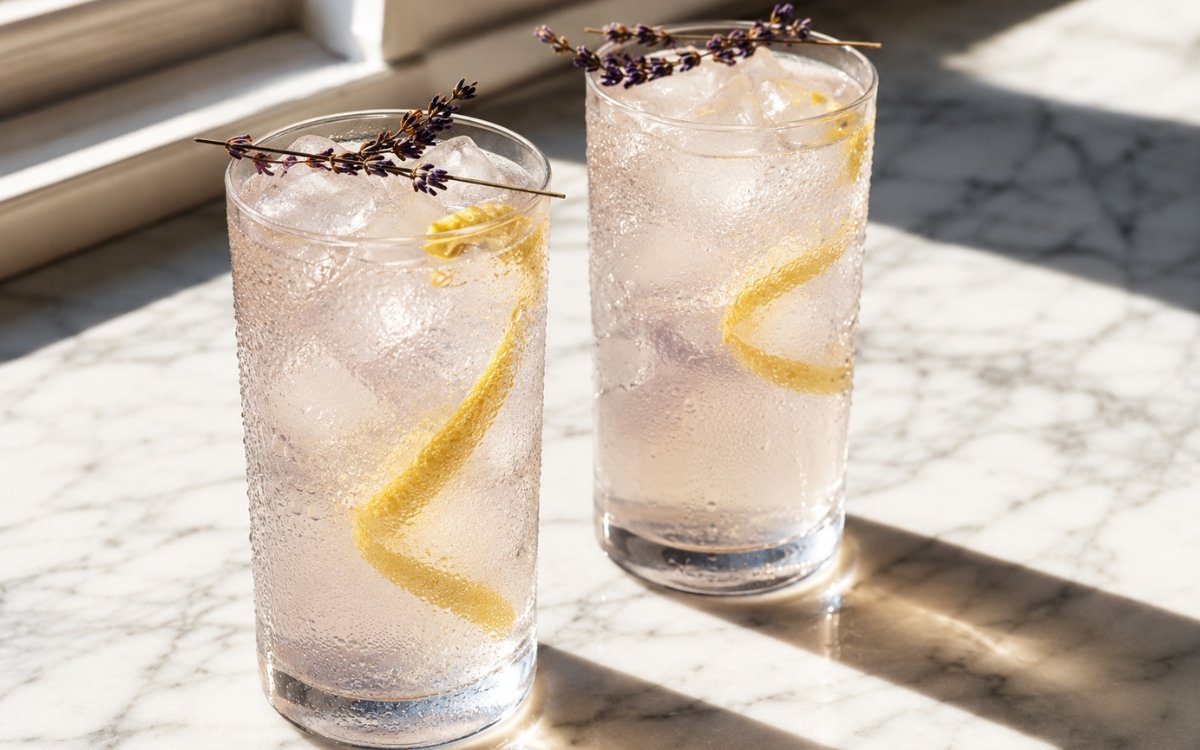
- Refrigerate for 1–2 hours. The lavender's floral aromatic integration specifically improves during the cold rest — the volatile aromatic compounds distribute through the cold liquid in a specifically more cohesive way than in the immediately combined room-temperature mixture. The chilled version will taste specifically more harmonious than the immediately combined version. Fill glasses with ice. Pour the chilled lavender lemonade over the ice. Garnish with a lemon slice and, if available, a single very small sprig of fresh lavender placed on the ice above the rim — the fresh sprig providing a visual aromatic reference rather than any meaningful additional flavour. The garnish lavender should be a tiny single sprig rather than a generous cluster; more than one sprig visually suggests lavender as a dominant ingredient, which conflicts with the preparation's specifically citrus-first philosophy. Serve immediately.
Notes
The chemistry of lavender over-extraction is specifically linear — meaning it does not plateau at a pleasant level and then remain stable; it continues extracting progressively more of the unpleasant compounds as the infusion time extends. This is different from the behaviour of, for example, thyme, which reaches a peak pleasant concentration before developing more slowly toward harshness. Lavender's camphor extraction curve is relatively steep once it begins, which is why the preparation is more sensitive to exact timing than most.
Culinary-grade lavender is specifically required — not decorative, not potpourri, not dried lavender from non-food sources. Culinary-grade lavender buds are typically from Lavandula angustifolia (English lavender) rather than the more camphor-dominant Lavandula latifolia (Spanish lavender) or the hybrid Lavandula × intermedia (Lavandin). Lavandula angustifolia specifically has a higher linalool-to-camphor ratio, producing a cleaner, sweeter floral character with less of the medicinal register that makes over-extracted lavender specifically unpleasant.