Ingredients
Method
Brew the Green Tea
- Heat 1200ml water to 78 to 82°C. Add the green tea and the pinch of salt, then steep for 2½ to 3 minutes. Strain immediately and let cool. Do not use boiling water and do not oversteep, or the tea will become dull, grassy, or bitter. Green tea's tannins extract considerably faster and more harshly at higher temperatures, and continuing to steep even at the correct temperature draws out increasingly bitter compounds the longer it sits — the specific temperature and brief window together protect the tea's clean character from both directions.
Make the Lavender Honey Infusion
- In a small saucepan combine the honey and 300ml water. Warm over low heat just until the honey dissolves fully. Do not simmer hard or boil. Remove from the heat. Let the mixture cool for 5 minutes, then add the dried lavender buds and lemon zest. Cover and let infuse for 20 to 30 minutes at warm room temperature, or refrigerate for a gentler 30 to 45 minute infusion. This method keeps the lavender floral and clean instead of sharp, perfumed, or soapy. Waiting a full 5 minutes before the lavender and zest are added, rather than dropping them in immediately off the heat, gives the mixture genuine time to move away from any active cooking temperature — lavender's own aromatic compounds can tip from pleasantly floral to soapy surprisingly fast under too much heat, and that short cooling buffer protects against exactly that outcome.
Strain the Infusion
- Strain the lavender honey mixture through a fine sieve. Press very lightly, then discard the lavender and zest. You should have a smooth floral honey base with no gritty solids. Pressing only lightly, rather than forcing the liquid through firmly, protects the finished syrup from picking up any harsher, more concentrated flavour that a firmer press against the lavender buds could release.
Combine and Balance
- In a large pitcher combine the cooled green tea with the strained lavender honey infusion. Add 420 to 500ml cold water to taste and stir well. If you want a slightly brighter finish, stir in the 30ml fresh lemon juice. The final yield should be about 2 liters. Taste and adjust: it should be delicately floral, lightly sweet, softly tea-forward, and refreshing, not heavy or perfumy. This tasting checkpoint matters directly given how much lavender's own intensity and honey's sweetness can both vary — building in that adjustment stage accounts for that natural variability rather than assuming a fixed recipe always lands at the same balance.
Chill
- Refrigerate until fully cold, at least 1 hour. That resting period lets green tea's clean base, honey's sweetness, and lavender's floral note fully integrate together, producing a more unified flavour than serving the drink immediately after mixing.
Serve
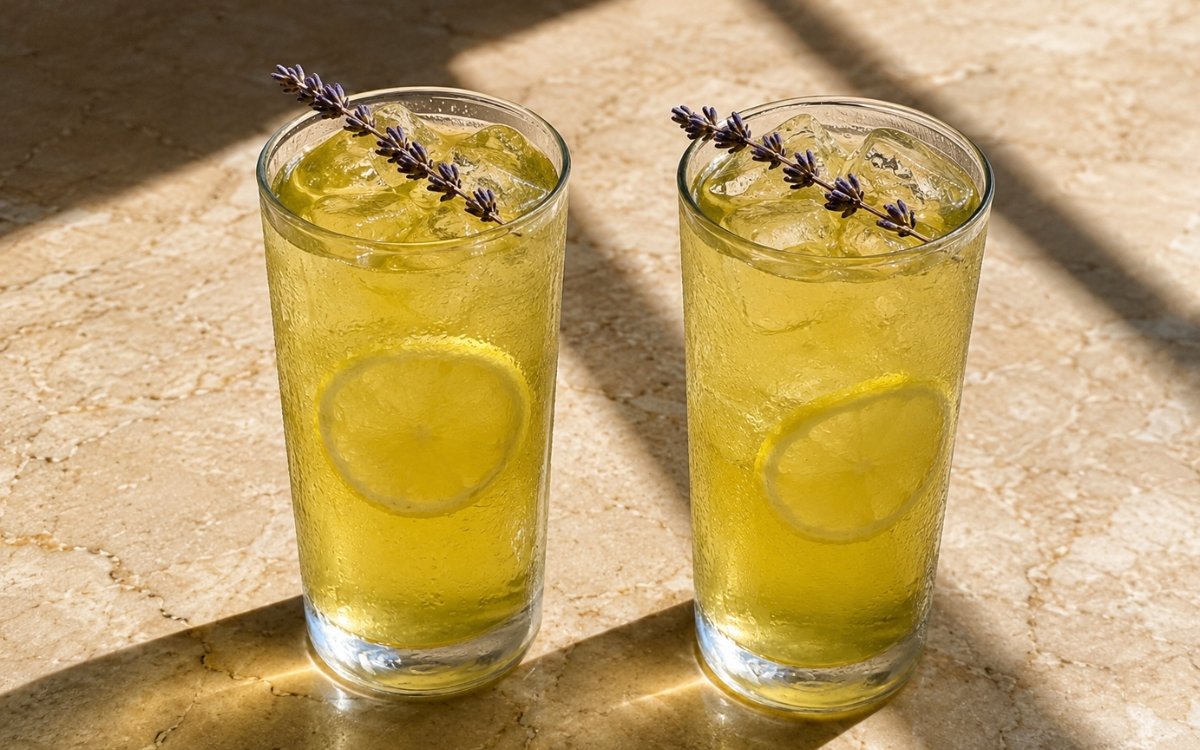
- Fill tall glasses with ice. Place 1 thin lemon wheel inside each glass and rest 1 small dried lavender sprig across the ice. Pour in the chilled tea and serve immediately. Resting a small dried lavender sprig across the ice, rather than adding it directly into the tea, keeps that garnish purely visual and aromatic at the surface without introducing any further lavender flavour into the already-balanced drink.
Notes
Brewing the green tea within that specific 78–82°C window deserves genuine respect as the single detail most responsible for whether this tea tastes properly clean or dull and bitter. Green tea's compounds extract considerably faster and more aggressively at higher temperatures than black tea's do — both the controlled temperature and the brief steep window work together to extract genuine flavour while staying well clear of that harsher territory.
Letting the honey syrup cool for a full 5 minutes before the lavender and lemon zest are ever added deserves recognition as the technique responsible for this tea's specifically clean, non-soapy floral character. Lavender's aromatic compounds are genuinely prone to tipping from pleasantly floral toward something closer to soap under too much heat, and that short, deliberate cooling window is what protects the flower from that risk before it's even introduced to the honey.
Choosing genuinely mild, culinary-grade honey, and using lavender only in a restrained, specified amount, deserves the same attention this collection gives to every carefully balanced herbal or floral infusion. A very dark, robust honey would compete with and potentially bury both the green tea and the lavender, while too much lavender would quickly overpower the whole drink — both ingredient choices are calibrated specifically to keep every component in proportion.
The small amount of lemon zest included in the infusion deserves understanding as a deliberate aromatic lift rather than a citrus flavour addition in its own right. That restrained amount is specifically calibrated to brighten the overall aroma without turning the finished drink into something resembling lemonade — a distinction the recipe's own notes make explicitly clear.