Ingredients
Method
Make the Toasted Rice Powder
- Place the rice in a dry skillet over medium-low heat. Toast for 8–12 minutes, stirring constantly, until the grains turn deep golden and smell nutty. Transfer to a plate and cool completely. Grind in a mortar, spice grinder, or small blender until coarse but not flour-fine. The rice should smell roasted and nutty, not burnt. Pale rice powder tastes flat; burnt rice powder makes the whole larb bitter. The powder should feel sandy and slightly coarse. Do not grind it into dust. That specific, coarse grind is exactly what lets the finished powder cling texturally to the chicken and dressing later, rather than dissolving invisibly the way a fine, flour-like grind would.
Cook the Minced Chicken
- Place the minced chicken and 80ml water or stock in a wide pan over medium heat. Break the chicken apart with a spatula as it heats. Cook for 5–7 minutes, stirring and breaking up the meat, until the chicken is fully cooked but still moist. It should release some juices into the pan. Remove from the heat. Let it cool for 5 minutes, but do not drain all the liquid. Do not fry the chicken dry in oil. Classical larb gai should be juicy and tender, not browned and crumbly. The chicken should be fully cooked with no pink remaining. For food safety, minced chicken should reach 74°C / 165°F. That gentle, moist cooking method — chicken and liquid together rather than chicken alone in hot oil — is specifically what protects this lean, fast-cooking meat from drying out and turning tough.
Season the Chicken While Warm
- Transfer the warm cooked chicken to a mixing bowl with 2–3 tbsp of its cooking juices. Add the fish sauce, lime juice, chili powder, and sugar if using. Toss well. Taste before adding herbs. The flavor should be salty from fish sauce, bright and sour from lime, spicy from chili, slightly rounded, not sweet. Larb should taste sharper and more intense than a normal salad at this stage, because the herbs, shallots, and rice powder will soften the seasoning. That deliberately intense, sharp seasoning at this early stage accounts for real, predictable dilution — the herbs, shallots, and rice powder still to come will all soften and round out that sharpness once folded in.
Add Shallots and Aromatics
- Add the sliced shallots, scallions, fresh chili if using, cilantro, and most of the mint. Toss gently. Let sit for 3–5 minutes so the shallots soften slightly in the warm dressing but still keep bite. The chicken should be warm, not piping hot, when herbs go in. Too much heat turns the mint dark and dull. That specific warm-not-hot temperature check protects the mint's own bright green colour and fresh aroma — genuine heat would wilt and discolour it well before it ever reaches the plate.
Add Toasted Rice Powder
- Add 25–30g toasted rice powder and toss again. The rice powder should absorb some dressing and cling to the chicken, creating a slightly nutty, lightly thickened coating. The larb should look glossy but not wet and soupy. If it turns dry, add 1–2 tbsp chicken juices or a splash of water. If it is too loose, add a little more toasted rice powder. That real-time adjustment, using either more juice or more powder as needed, reflects genuine understanding that the exact ratio can vary batch to batch, and the final texture is worth actively correcting for rather than accepting either extreme.
Final Adjustment
- Taste again and adjust: more lime juice if it tastes heavy, more fish sauce if flat, more chili if too mild, a pinch of sugar if too sharp, more toasted rice powder if too wet. Fold in the remaining mint right before serving. Reserving a final portion of mint specifically for this last stage, rather than folding it all in earlier, keeps at least some of it genuinely fresh and vivid right up until the moment the salad is plated.
Serve
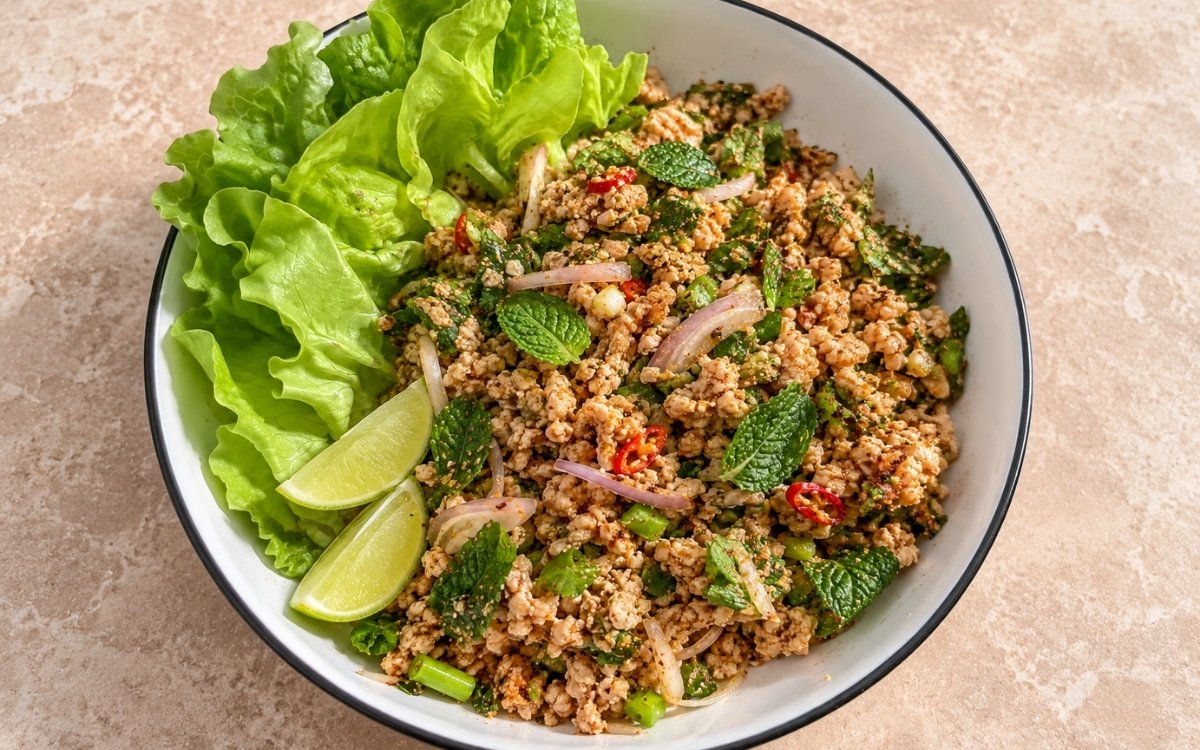
- Spoon the larb into a shallow bowl. Serve with lettuce leaves, lime wedges, extra mint, and optional cucumber or sticky rice. Larb gai should be served warm or room temperature, not fridge-cold. The herbs should look fresh, the chicken should be juicy, and the toasted rice powder should be clearly visible. That specific serving temperature — warm or room temperature, never cold — protects the dish's own real character, since chilling would dull both its aroma and the meat's own fat, working against the vivid, fresh quality larb is meant to have.
Notes
Cooking the minced chicken gently with water or stock, rather than frying it dry in hot oil, deserves genuine recognition as the technique most directly responsible for larb gai's whole characteristic texture. The recipe's own explicit distinction — juicy and tender, not browned and crumbly — reflects a real, deliberate departure from how minced meat is often cooked in other stir-fried dishes, and that moist method is specifically what keeps this lean protein from drying out.
Seasoning the chicken while it's still genuinely warm, and deliberately sharper and more intense than a finished salad should taste, deserves the same attention this technique receives throughout this collection's other layered, herb-heavy salads. That intensity accounts for real, predictable dilution from everything still to be added — the herbs, shallots, and rice powder that follow will all soften and round out the seasoning, meaning an already-mild dressing at this stage would end up flat by the time the dish is finished.
Watching the chicken's temperature carefully before the herbs go in — warm, never piping hot — deserves genuine attention as the detail responsible for protecting the mint's own bright colour and fresh aroma. Real heat at this stage wilts and dulls the mint considerably, undermining the fresh, vivid character that's central to this dish's whole identity.
Toasting the rice to a genuine, deep golden colour, watched carefully to avoid burning, deserves respect as the technique responsible for the dish's characteristic nutty aroma and texture. The recipe's own explicit warning that pale powder tastes flat while burnt powder turns the whole salad bitter reflects real, narrow margins this particular toasting stage depends on getting right.