Ingredients
Method
Prep and Season the Chicken
- Pat the 1.2–1.3kg of wings and drumettes very dry with paper towels, turning each piece so no damp patches remain on the skin. In a large bowl, combine the chicken with 1 tsp kosher salt, ½ tsp black pepper, 1 tbsp rice wine, and 1 tsp grated ginger, then mix well and leave for 30 minutes. Do not extend the marinade much beyond that, because a longer wet seasoning leaves the surface damp and the coating less crisp. That thorough drying is what lets the starch grip the skin directly instead of steaming off it in the oil.
Prepare the Coating
- In a wide bowl or tray, whisk together 120g potato starch, 60g cornstarch, 40g all-purpose flour, 1 tsp baking powder, and ½ tsp salt until evenly combined. Toss the chicken in the mixture until every piece is completely covered, then press the dry coating firmly onto each surface so a thin, rough layer forms, and shake off only the loose excess. The coating should look thin but complete, never thick like American fried chicken, and dredged pieces should not sit long or the starch absorbs moisture and turns patchy. That potato-starch-led mix is what fries into the thin, brittle shell classic Korean fried chicken is known for.
First Fry
- Heat enough neutral oil in a heavy pot to submerge the pieces to 165°C, checking with a thermometer. Fry the chicken in small batches for 6–8 minutes, depending on piece size, until lightly golden and cooked most of the way through. Lift each batch onto a wire rack rather than paper towels and rest for 8–10 minutes, because steam escaping from the underside would soften the crust. That first fry cooks the meat and sets the crust, and overcrowding the pot drops the temperature and leaves the coating greasy.
Second Fry
- Raise the oil temperature to 185°C and let it recover fully before the first batch goes back in. Fry the chicken again in batches for 2–4 minutes, until deeply golden brown, crisp, and crackly, then return it to the rack. The meat should reach at least 74°C at the thickest point, and the crust should feel firm and dry before any glaze touches it; a pale or soft crust means it needs another minute. That second fry is what drives out the last moisture and gives the chicken its signature shattering crispness.
Make the Soy Garlic Glaze
- Warm 1 tbsp neutral oil in a skillet or saucepan over medium-low heat, add the 8 minced garlic cloves, and cook gently for 20–30 seconds, only until fragrant and never browned. Add 60ml soy sauce, 45g light brown sugar, 2 tbsp honey or rice syrup, 1 tbsp mirin, 2 tbsp water, 1 tsp sesame oil, and ¼ tsp black pepper, then simmer for 2–4 minutes until slightly thickened and glossy. If it reduces too far, loosen it with 1–2 tbsp hot water. That gentle garlic start is what keeps the glaze sweet and aromatic, since burnt garlic turns the whole sauce bitter.
Glaze the Chicken
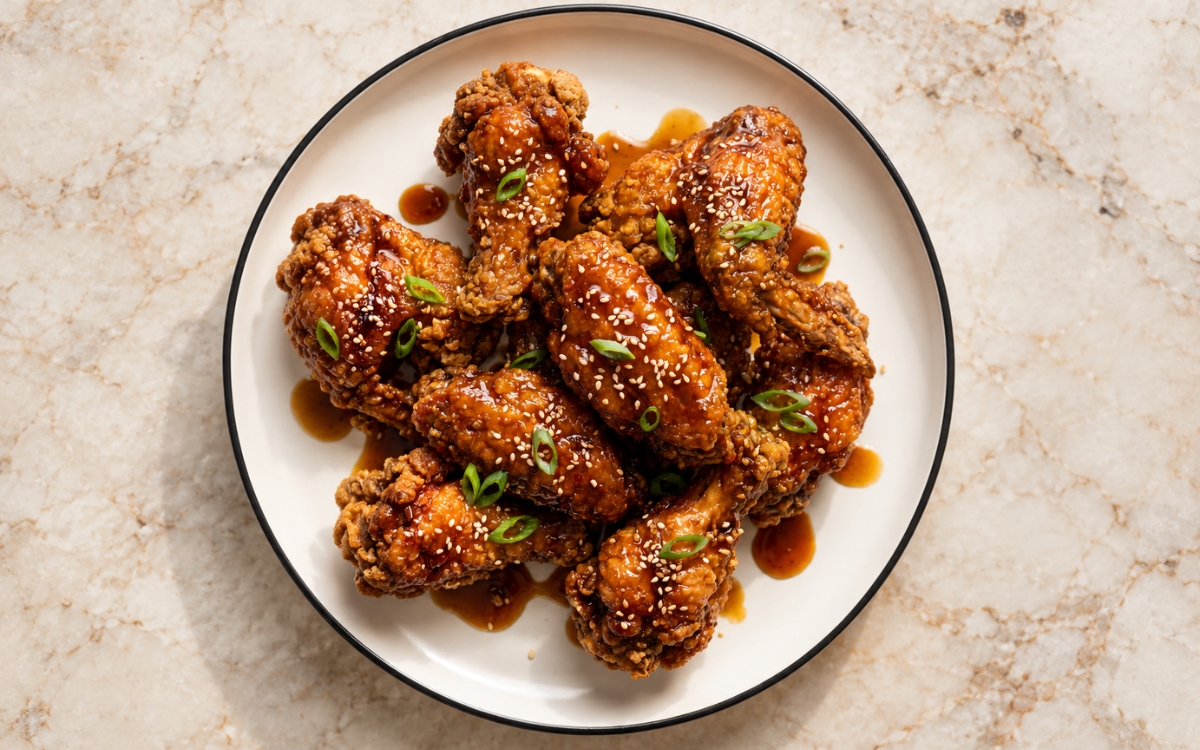
- Add the fried chicken to a large, warm bowl and spoon over only enough glaze to coat it lightly, reserving the rest for the plate. Toss quickly until the pieces are evenly lacquered, with the craggy crust still visibly crunchy beneath the sauce. A little glaze should cling and drip onto the plate, but the coating must never look soggy. That last-moment toss is what protects the crunch, since the crust begins softening as soon as sauce touches it.
Finish and Serve
- Arrange the chicken on a serving plate and sprinkle generously with 2–3 tsp toasted sesame seeds and the 2 sliced scallions. Spoon any remaining warm glaze around the chicken rather than over it, and serve immediately. If holding for a few minutes, leave the chicken uncovered so trapped steam cannot soften the crust. That immediate service matters because the dish is genuinely at its best in the first minutes after glazing, while the shell is still shattering.
Notes
The double fry deserves genuine recognition as the technique most directly responsible for whether the crust stays crisp under the glaze. The first fry at 165°C cooks the meat and sets the starch shell, and the rack rest lets internal steam escape, so the second fry at 185°C only has to dehydrate and brown a shell that already exists — a single fry leaves a damp, leathery coating.
Keeping the potato-starch coating thin and pressed on dry deserves the same attention this technique receives throughout this collection’s other fried-chicken dishes. Potato starch fries into a glassy, brittle crust where flour alone turns bready, and pieces left sitting after dredging draw moisture from the skin, which is exactly what produces a patchy, uneven finish.
The garlic, softened gently in oil for 20–30 seconds, deserves genuine respect as the detail most directly responsible for a glaze that tastes sweet and savoury rather than bitter. Finely minced garlic scorches within seconds over high heat, and once it browns its harsh bitterness spreads through the whole pan, which is why the soy mixture goes in at the first fragrance.
Glazing with only enough sauce, right before serving, deserves attention as a genuine, checkable readiness cue rather than a loose approximation. The craggy crust should still be clearly visible through a thin, glossy lacquer, and a little glaze pooling on the plate instead of soaking into the coating is the clearest sign the amount is right.