Ingredients
Method
Prepare the Korean BBQ Glaze
- In a medium saucepan, combine the gochujang, honey, dark soy sauce, vinegar, sweet soy sauce, and ketchup and place over medium heat, stirring continuously until the mixture reaches a gentle boil. Reduce the heat to low and allow it to simmer steadily for exactly three minutes so the sugars begin to integrate and the sauce slightly thickens while remaining fluid and glossy. Remove the saucepan from the heat and immediately stir in the finely minced garlic so the residual heat releases its aroma without dulling its sharpness, then allow the glaze to cool at room temperature where it will naturally thicken to a smooth, lacquer-like consistency.
Season and Marinate the Wings
- If using whole wings, separate them cleanly at the joints into drums and flats and discard the tips or reserve them for stock, then pat the wings completely dry with paper towels to eliminate surface moisture which interferes with crisping. Place the wings into a large mixing bowl and add the kosher salt, sugar, MSG if using, black pepper, and freshly grated ginger, then massage the seasoning thoroughly into the skin for one to two minutes to ensure full and even coverage. Cover the bowl and refrigerate for a minimum of one hour to allow the seasoning to penetrate the meat, or up to twelve hours for deeper flavor development, then remove from refrigeration fifteen minutes before frying to allow the chill to dissipate slightly.
Prepare the Dry Coating
- In a large bowl, combine the potato starch, flour, salt, sugar, MSG, garlic powder, and white pepper and whisk thoroughly until the mixture is completely uniform and free of clumps, ensuring every ingredient is evenly distributed so the coating crisps consistently during frying. Remove 60 g of this mixture and set it aside in a separate bowl to form the base of the wet batter.
Prepare the Wet Batter
- To the reserved 60 g of dry coating, add the baking powder and whisk to combine before gradually pouring in the very cold water while stirring continuously until a smooth batter forms that is thick enough to cling lightly to the chicken but fluid enough to drip slowly back into the bowl. Adjust the consistency with small additions of cold water only if necessary, being careful not to overmix which would develop excess gluten and toughen the coating.
Heat the Oil
- Pour the vegetable oil into a heavy-bottomed pot to a depth of at least seven centimeters and heat steadily to 163°C, using a thermometer to maintain accuracy and prevent overheating which would darken the coating prematurely. Prepare a wire rack set over a tray near the stove so the fried wings can drain properly without trapping steam underneath.
Coat the Wings
- Remove the wings from the marinade and pat them dry once more if any moisture has accumulated, then flick two or three spoonfuls of wet batter into the dry coating and stir lightly to create small clusters that will attach to the surface and enhance texture. Dip each wing fully into the wet batter, allowing excess to drip away for several seconds before transferring it into the dry coating and pressing firmly so the mixture adheres completely, then place the coated wings onto a tray while finishing the batch.
First Fry
- Carefully lower the coated wings into the oil in small batches to avoid overcrowding and maintain oil temperature, frying them at 163°C for eight to nine minutes until the coating turns pale golden and the internal temperature of the chicken reaches 74°C. Transfer the wings to the prepared rack and allow the oil to return fully to temperature before frying additional batches to ensure even cooking.
Second Fry
- Increase the oil temperature to 177°C and return the wings to the oil in batches, frying for two additional minutes until the exterior becomes deeply golden brown and audibly crisp while remaining rigid to the touch. Remove the wings and place them back onto the rack for two minutes so excess oil drains and the crust sets properly without softening.
Glaze the Wings
- Transfer the hot wings to a large mixing bowl and pour the Korean BBQ glaze gradually over them, beginning with most of the sauce and tossing gently but thoroughly so every surface is evenly coated in a thin, glossy layer without oversaturating the crust. Add additional glaze only if necessary so the wings appear lacquered rather than drenched.
Finish and Serve
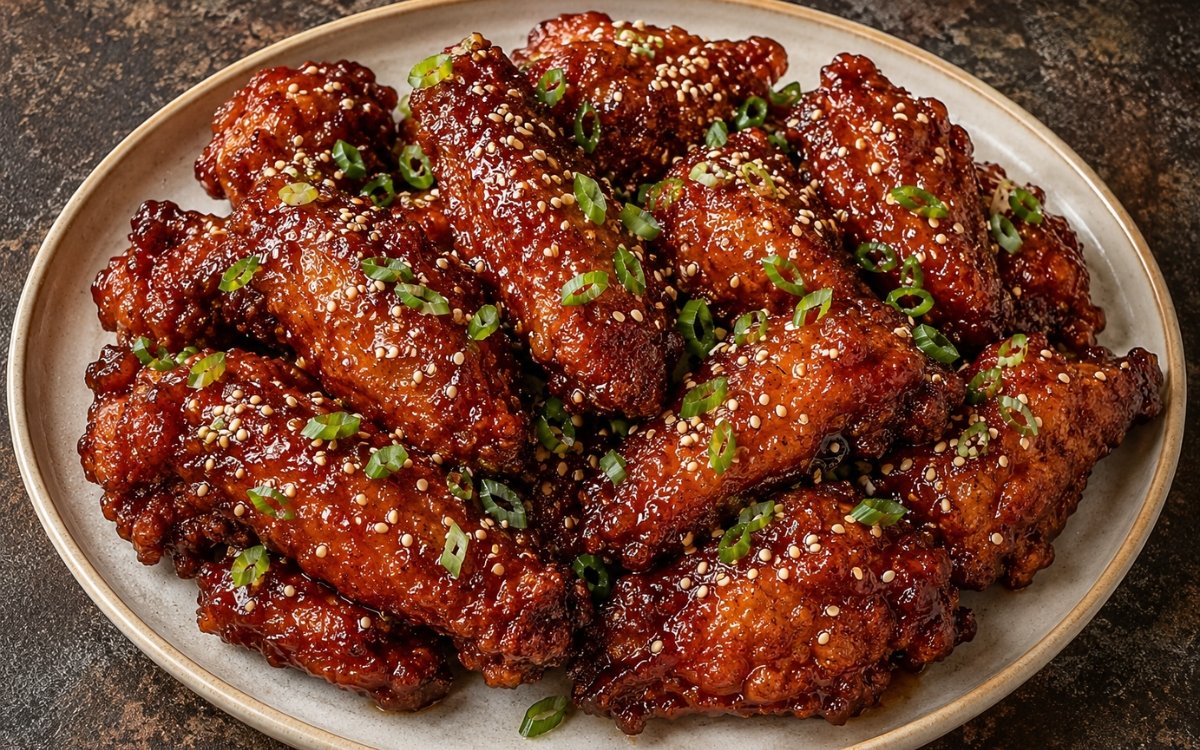
- Arrange the glazed wings on a serving platter and immediately sprinkle with toasted sesame seeds and thinly sliced green onions, serving them hot while the exterior remains crisp and the glaze retains its sheen.
Notes
- Double frying is essential for structural crispness. The first fry cooks the chicken through and begins moisture evaporation, while the second fry rapidly dehydrates the surface starch, creating a rigid crust that can hold glaze without softening immediately. Skipping the second fry results in noticeably weaker texture.
- Patting the wings completely dry before seasoning is critical. Surface moisture prevents proper adhesion of the coating and reduces frying efficiency, leading to uneven browning and potential coating separation.
- Maintain strict oil temperature control. Frying below 160°C causes excessive oil absorption, while overheating above 180°C darkens the coating before the interior fully reheats. Use a thermometer and allow the oil to return to temperature between batches.
- The glaze should remain fluid and glossy, not thick and sticky like syrup. If it becomes overly viscous while cooling, reheat gently with 10–20 ml hot water and whisk until smooth. Over-reduction leads to harsh sweetness and uneven coating.
- Glaze only immediately before serving. Even perfectly fried wings will soften if coated too early, as steam from the hot interior gradually weakens the crust.