Ingredients
Method
Rinse and Cook the Rice
- Rinse the basmati rice in several changes of cold water until it runs much clearer, then soak for 20 minutes and drain well. Combine the drained rice with the 525 ml water, salt, and ghee or oil if using in a saucepan. Bring to a boil uncovered, stir once, lower to the lowest heat, cover tightly, and cook for 12 minutes. Turn off the heat and let the rice rest covered for 10 minutes, then fluff gently with a fork. This water amount is calibrated for soaked basmati; without soaking, increase it slightly to about 550 ml.
Prepare the Kofta Mixture
- Squeeze most of the excess liquid out of the grated onion using a clean towel or your hands — this matters for the koftas holding their shape. Combine the ground meat, squeezed onion, ginger-garlic paste, chopped cilantro, green chili if using, coriander, cumin, chili powder, turmeric, garam masala, salt, gram flour or breadcrumbs, and the tablespoon of oil or ghee if using in a bowl. Mix just until evenly combined, without kneading aggressively, since overworking the meat makes the koftas dense and rubbery. Cover and chill for 20 minutes, which firms the mixture up and makes shaping easier.
Shape the Koftas
- Divide the mixture into 12 equal portions and shape into smooth oval or round koftas. If the mixture feels too soft, chill it a bit longer or add another tablespoon of gram flour or breadcrumbs; if it feels too stiff, add a teaspoon of water or yogurt.
Brown the Koftas
- Heat the 3–4 tablespoons oil in a wide frying pan over medium heat. Brown the koftas in batches, turning carefully, until nicely colored on multiple sides — they don't need to be fully cooked through at this stage, since they'll finish cooking in the salan. Transfer to a plate. The koftas should be browned and holding together, but not cooked so hard that they turn dry.
Build the Salan Base
- Heat the 4 tablespoons oil or ghee in a heavy pan or kadai over medium heat. Add the cumin seeds, bay leaf, black cardamom if using, green cardamom, and cinnamon, cooking for 20–30 seconds until fragrant. Add the sliced onions and cook slowly over medium heat until deep golden brown, which can take 10–12 minutes — stir often so they brown evenly without burning. Add the ginger-garlic paste and cook for 1 minute until the raw smell fades, then add the tomatoes and cook down until soft and jammy, 6–8 minutes. Add the ground coriander, cumin, Kashmiri chili powder, turmeric, and salt, cooking for 1 minute, stirring constantly. Lower the heat and add the whisked yogurt gradually, stirring continuously so it doesn't split. Cook this masala until it thickens and the oil starts to separate at the edges — this stage is one of the main points where the dish's flavor develops.
Turn It Into Salan
- Add 700 ml hot water first, stirring well and scraping up everything from the bottom of the pan, then bring to a gentle simmer. The gravy should be clearly looser than a butter masala or korma, looking like a spoonable curry rather than a thick paste. Add more hot water as needed, up to about 900 ml total, depending on how much the koftas absorb and how thin you want the final salan. Taste the liquid now and adjust the salt if needed.
Simmer the Koftas in the Salan
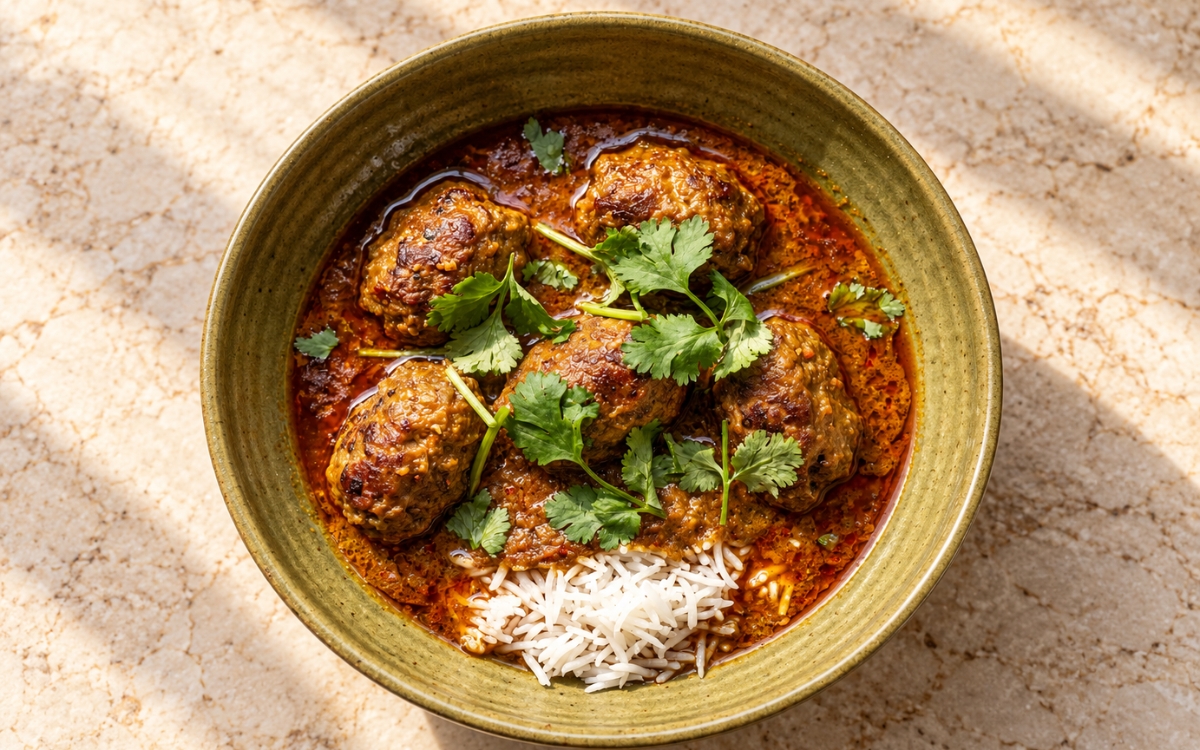
- Gently place the browned koftas into the simmering curry, cover partially, and simmer on low heat for 12–15 minutes, turning the koftas very gently once or twice if needed. Finish with the garam masala and chopped cilantro, then rest the curry for 5 minutes before serving. The koftas should end up fully cooked and tender, with the salan aromatic, lightly oily on top, and medium-thin rather than watery or heavy.
Serve
- Serve the kofta ka salan hot with the basmati rice. Divide the rice and koftas into 4 portions, 3 koftas per serving, spooning some rice into each bowl or plate, then adding the koftas and plenty of salan around and partly over the rice. Finish with a little extra chopped cilantro.
Notes
Squeezing the excess liquid out of the grated onion before it goes into the kofta mixture matters more than it might seem — too much onion moisture is one of the most common reasons koftas break apart during browning or simmering.
Mixing the meat only until combined, rather than kneading it the way you might bread dough, keeps the koftas tender; overworking ground meat develops a denser, more rubbery texture that this dish isn't meant to have.
The salan needs its full frying time to develop real depth: the onions need to reach deep golden brown, the tomatoes need to cook down completely, and the yogurt-masala needs to fry until the oil separates at the edges. Rushing any of these three stages leaves the final gravy tasting thinner and less developed than it should.
Keeping the salan slightly looser than feels necessary when it first goes into a gentle simmer accounts for how much liquid the koftas absorb as they continue cooking in the sauce — a salan that looks right before the koftas go in often turns noticeably thicker by the time it's ready to serve.