Ingredients
Method
Prepare the Kiwi
- Peel the kiwis and slice them into thin rounds, about 3mm thick. Use ripe but still firm kiwis. Very soft kiwi breaks down quickly and makes the water cloudy. Firm flesh holds its own structure through the infusion window, releasing flavour and colour gradually into the water rather than collapsing early and clouding it with soft, broken-down fruit particles.
Prepare the Lime
- Wash the limes very well. Slice them into thin wedges or half-wheels. Do not squeeze the limes hard into the water. The goal is a clean citrus infusion, not sharp lime juice water. Slicing rather than juicing lets the lime's aromatic peel oils and gentle flesh flavour steep gradually into the water, producing a lighter, more rounded citrus note than the sharper, more concentrated acidity actively squeezed juice would introduce.
Build the Pitcher
- Add the kiwi slices and lime pieces to a large pitcher or drink dispenser. Pour in the cold filtered water. Add ice if serving soon. Starting with genuinely cold filtered water, rather than room-temperature water, gives the infusion a cold head start that helps protect both the kiwi and lime from breaking down any faster than the recipe intends.
Infuse Cold
- Refrigerate for 1 to 3 hours. Taste after 1 hour. The water should be lightly fruity, gently tart, and clean. If the lime flavor is strong enough, remove some or all of the lime pieces. Tasting at that one-hour mark, rather than committing to a fixed infusion time blindly, is what lets the lime's own developing intensity be judged directly — lime peel and pith continue releasing flavour the longer they steep, and that active check is the most reliable way to catch the point where the citrus is bright rather than heading toward bitter.
Serve
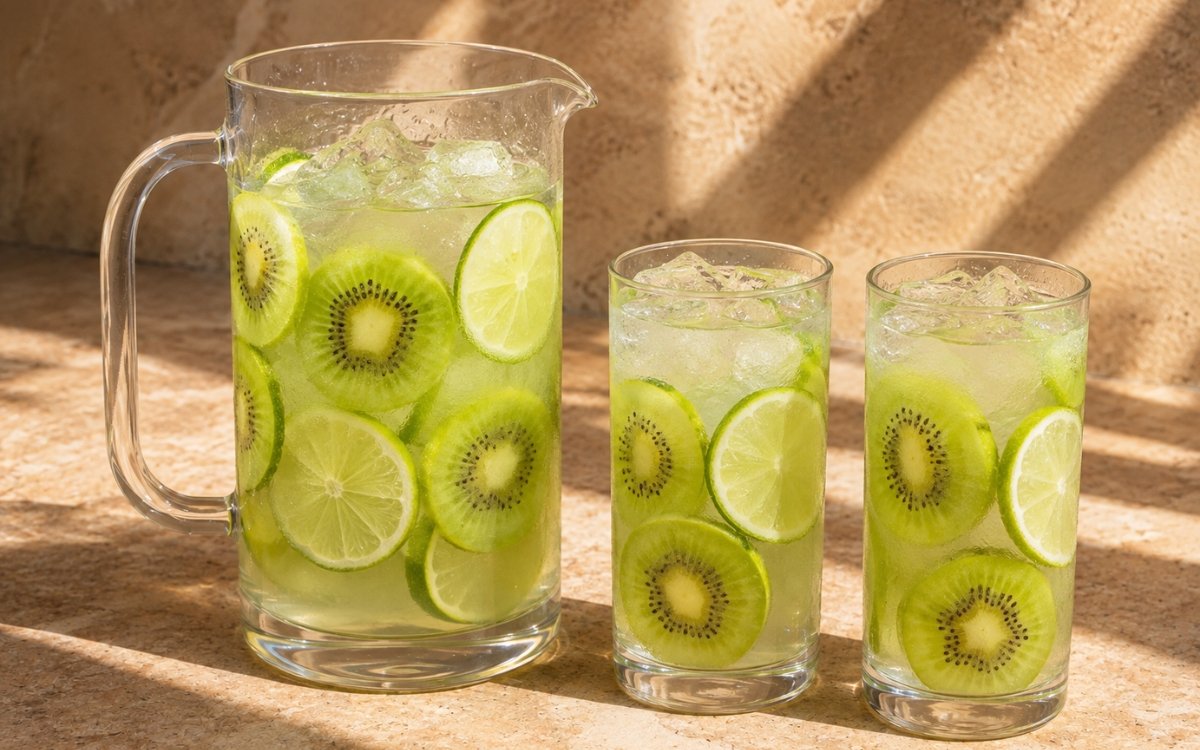
- Fill glasses with fresh ice. Add a few kiwi slices and a thin lime wedge or wheel to each glass. Pour over the chilled infused water and serve cold. Using fresh, unsteeped kiwi and lime specifically for the glass garnish, rather than the pieces that have already infused for hours, keeps that visual presentation looking genuinely vivid and crisp rather than dulled from the extended soak.
Notes
Choosing ripe but still firm kiwi, rather than fruit that's softened past its ideal point, deserves recognition as the detail most directly responsible for whether this water stays clean and clear or turns cloudy partway through infusion. Kiwi's own cell structure is genuinely delicate, and overly soft fruit begins breaking down almost immediately once sliced — firmer flesh, by contrast, holds its shape considerably longer, releasing flavour gradually rather than collapsing and clouding the water with fine fruit particles.
Slicing the lime rather than squeezing it into the water reflects a real, deliberate choice about this infusion's intended character. Squeezed juice delivers a concentrated, sharp hit of acidity all at once; sliced lime pieces instead release their flavour slowly and gently over the infusion period, producing a lighter, more rounded citrus presence that suits this water's overall clean, understated identity far better than actively juiced lime would.
Tasting the water specifically after the first hour, rather than trusting a single fixed infusion time, deserves genuine respect given how directly lime's own peel and pith continue developing flavour the longer they're left in water. That active tasting checkpoint is what lets the lime be pulled at precisely the point where its brightness is at its best, before extended contact pushes it toward the bitterness citrus pith is prone to releasing over time.
The recipe's own explicit guidance against muddling the fruit deserves to be treated as a genuine technique principle rather than a minor aside. Muddling would rupture both the kiwi and lime far more aggressively than simple slicing does, releasing pulp and cloudy particulate matter into the water that works directly against this infusion's whole clean, nearly clear identity.