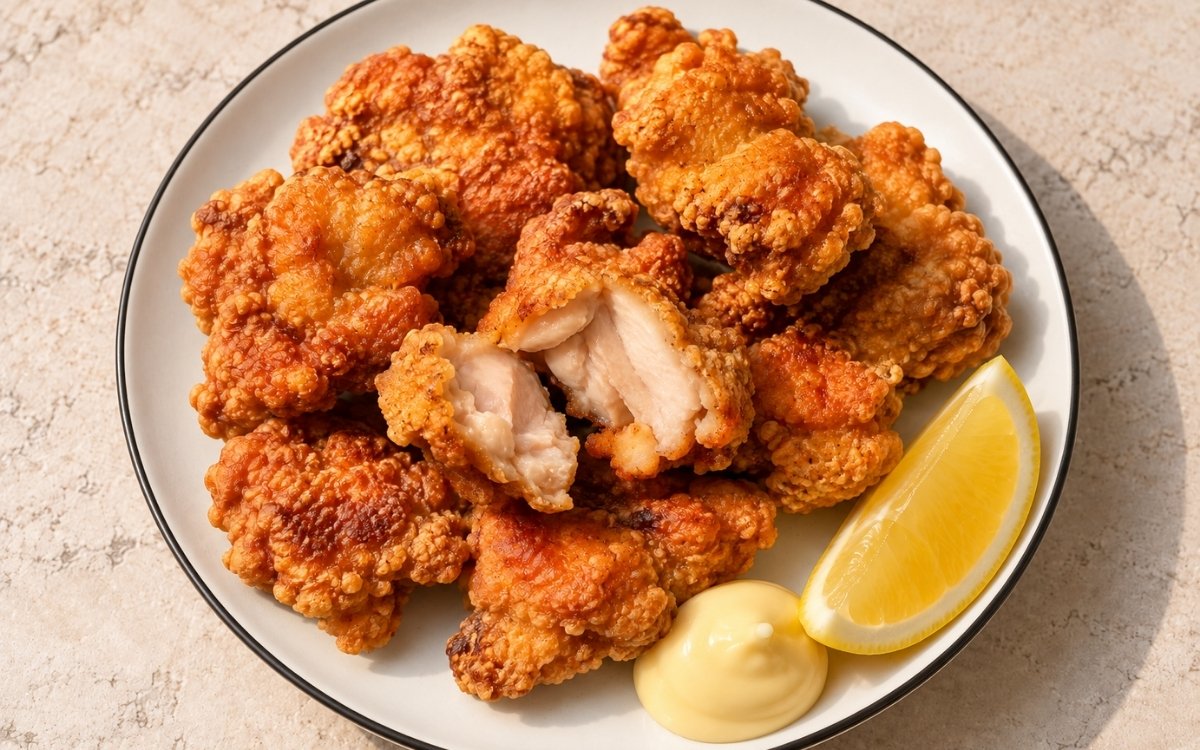
Ingredients
Method
Cut the Chicken
- Cut the chicken thighs into irregular bite-size pieces, about 4–5cm each. Keep some natural folds and uneven surfaces. Do not cut the pieces too small. Karaage should have juicy chunks, not thin nuggets. Pieces that are too small dry out before the crust becomes properly crisp. That deliberately irregular, real-sized cut protects the chicken's own real moisture content — smaller pieces would need considerably less time to cook through, leaving them dry well before the crust has developed its full, characteristic craggy texture.
Marinate
- In a bowl, mix soy sauce, sake, mirin, grated ginger, grated garlic, sugar, sesame oil if using, and white pepper. Add the chicken and massage well for 1–2 minutes so the marinade coats every piece. Cover and refrigerate for 30 minutes minimum, or 1–2 hours for better flavor. Do not marinate all day in this amount of soy sauce. The chicken can become too salty and slightly cured in texture. That specific, bounded marinating window reflects real understanding of soy sauce's own concentrated salt content — left too long, it would actively begin curing the meat's own texture rather than simply seasoning it.
Drain Lightly
- Remove the chicken from the marinade. Let excess liquid drip off, but do not wipe the pieces dry. The surface should still be slightly tacky. The starch needs a damp surface to cling to, but the chicken should not be dripping wet. Too much liquid makes the coating gummy and heavy. That specific, deliberately tacky surface is exactly what gives the starch coating something real to adhere to — a fully dry surface would give it nothing to cling to, while dripping wet chicken would turn the coating gummy instead of crisp.
Coat with Starch
- Place the potato starch in a wide bowl or tray. Add cornstarch if using. Coat each chicken piece thoroughly, pressing starch into the folds and rough edges. Shake off loose excess. Place coated chicken on a rack or tray and rest for 5–10 minutes while the oil heats. After resting, the coating should look patchy, slightly hydrated and rough, not completely dry and powdery. That rough surface becomes the craggy karaage crust. That brief resting period lets the starch begin absorbing a little of the chicken's own surface moisture, and it's specifically that patchy, rough hydration that transforms into karaage's own signature craggy crust once it hits the hot oil.
First Fry
- Heat oil to 160–165°C. Fry the chicken in batches for 3–4 minutes, depending on piece size. Do not crowd the pot. The first fry should cook the chicken through and set the crust. The color should be pale golden to medium golden, not deeply browned yet. Transfer to a wire rack. Do not stack fried chicken on paper towels. Steam softens the crust. Doneness cue: the chicken should be mostly cooked after the first fry, but the crust should not yet be at its final crunch. That deliberately moderate first-fry temperature gives the chicken genuine time to cook through at a manageable pace, leaving the crust's own colour and crunch intentionally underdeveloped so the second, hotter fry has real room to finish the job.
Rest Between Fries
- Rest the chicken on the rack for 3–5 minutes. This lets carryover heat finish the interior and lets surface steam escape before the second fry. This rest is part of the crisping process. Going straight into the second fry traps more moisture inside the crust. That resting window does genuine, active work beyond simple pause — letting residual heat distribute evenly through the meat while surface moisture has real time to evaporate, both of which set the crust up to actually crisp rather than steam during the second fry.
Second Fry
- Increase the oil temperature to 180–190°C. Return the chicken in batches and fry for 1–2 minutes, until deeply golden brown, craggy and crisp. Transfer back to a clean wire rack. The internal temperature should reach 74°C. The second fry is short and hot. It is for crispness and color, not long cooking. That higher second-fry temperature is specifically what builds real, deep colour and maximum crispness quickly, in a genuinely brief window — since the interior is already properly cooked from the first fry, this stage exists purely to finish the crust.
Serve
- Let the karaage rest for 2 minutes, then serve hot with lemon wedges and Kewpie mayo. Optional: sprinkle very lightly with fine salt only if the final flavor needs it. Serving while genuinely hot delivers the chicken at its crispest — that craggy, crunchy exterior softens steadily the moment it comes off the heat.
Notes
Double-frying the chicken in two genuinely distinct stages deserves recognition as the technique responsible for karaage's whole characteristic crust. The recipe's own explicit distinction — the first fry cooks and sets, the second drives off moisture and delivers crunch — reflects real understanding that these are two separate jobs, each requiring its own specific temperature and timing to accomplish properly.
Resting the chicken between the two fries deserves the same attention this technique receives throughout this collection's other two-stage fried proteins. That window lets residual heat distribute evenly through the meat while surface moisture has genuine time to evaporate, both of which are what set the crust up to crisp properly during the second fry rather than steaming under any lingering surface wetness.
Draining the marinated chicken only lightly, leaving it genuinely tacky rather than dry or dripping, deserves attention as a real, deliberate balance point. That specific surface condition is what lets the starch coating actually adhere in the first place — either extreme, fully dry or dripping wet, would compromise how well the coating clings and, ultimately, how it crisps.
Cutting the chicken into genuinely real, bite-sized chunks rather than smaller nuggets deserves genuine respect as the detail responsible for karaage staying juicy throughout its two fries. Smaller pieces simply don't have the same volume to protect their own moisture through two rounds of hot oil, drying out well before the crust has had its full chance to develop.