Ingredients
Method
Preheat for Even Cooking
- Preheat the oven to 200°C (400°F) and line a baking sheet with parchment paper. High heat is required to develop browning quickly while minimizing the time the meat spends drying out.
Build the Panade
- Combine breadcrumbs and milk in a bowl and let sit for 5 minutes until fully absorbed. Mash lightly into a soft paste. This step creates a panade — a starch-liquid mixture that acts as a moisture-retaining system within the meat. The starch absorbs liquid and forms a gel that keeps the meat tender during cooking.
Combine the Base Mixture
- Add ground beef, panade, egg, garlic, grated onion, parsley, salt, pepper, and oregano into a bowl. Distribute everything evenly before mixing — this reduces the need for aggressive mixing later.
Mix with Control
- Mix gently using your hands just until combined. Do not knead or overwork the mixture. Overmixing causes the proteins to bind too tightly, resulting in dense, rubbery meatballs instead of a tender structure.
Shape with Consistency
- Form evenly sized meatballs (around 40g each) using lightly wet hands. Consistent size ensures even cooking across all pieces. Avoid compressing too tightly — the mixture should hold together but remain slightly soft.
Prepare for Baking
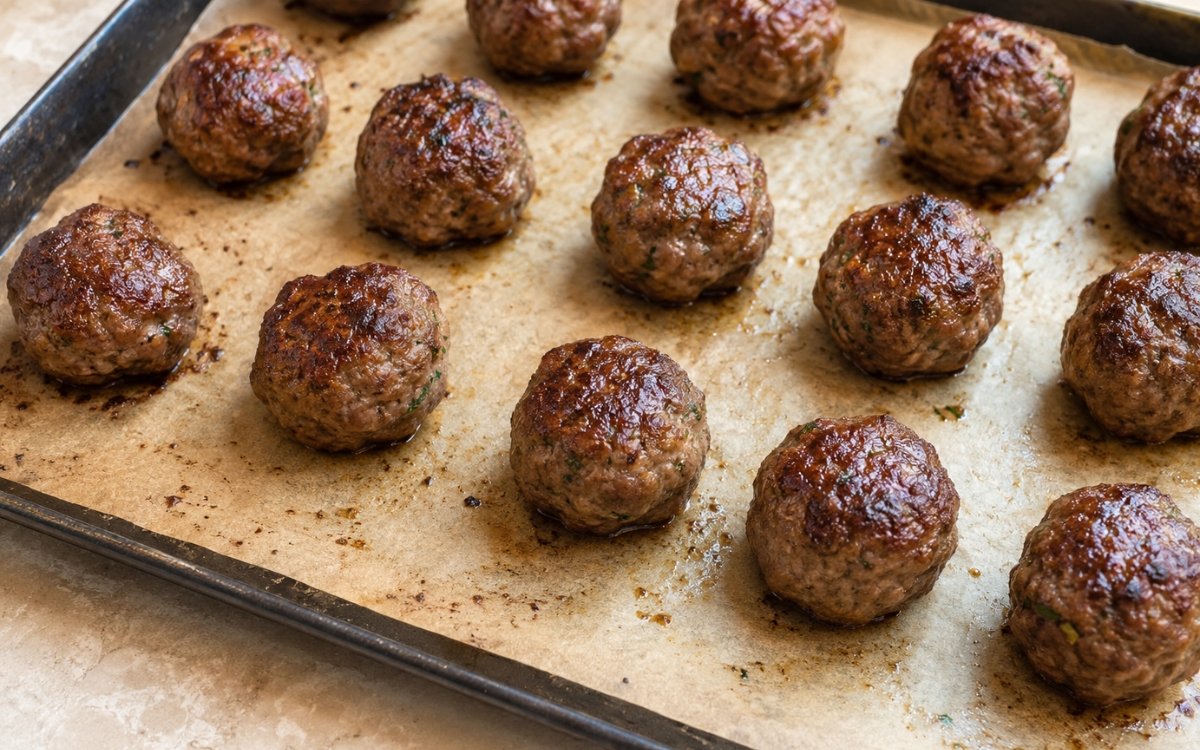
- Place the meatballs on the lined tray with space between each piece. Drizzle lightly with olive oil. This promotes surface browning and prevents dryness during oven cooking.
Bake and Develop Structure
- Bake for 18–20 minutes until browned and cooked through to 74°C (165°F). During cooking, the exterior browns while the interior sets gently. The panade prevents excessive shrinkage and moisture loss, keeping the texture soft instead of tight.
Optional Broil for Crust
- For a more pronounced crust, switch to broil for the final 2 minutes. This step adds additional Maillard browning, enhancing both texture and flavor without overcooking the interior.
Rest Before Serving
- Allow the meatballs to rest for 3 minutes before serving. This stabilizes internal juices and prevents moisture loss when cut or bitten into.
Notes
The panade is genuinely the foundation this whole recipe depends on. Breadcrumbs soaked fully in milk and mashed into a paste form a starch-based gel once mixed into the meat, and that gel structure is specifically what allows the meatballs to retain moisture through baking's relatively dry heat — ground beef without a panade loses considerably more moisture and shrinks more aggressively during the same cooking time.
Mixing gently rather than kneading protects the meat's protein structure from overworking. Ground beef's proteins bind together more the more they're handled, and while some binding is necessary to hold the meatballs together, too much produces the dense, rubbery texture that a panade alone cannot fully counteract if the mixing itself goes too far.
Consistent 40g portioning is a small detail with a real effect. Meatballs of noticeably different sizes on the same tray finish cooking at different times, meaning some risk overcooking while waiting for larger ones to reach a safe internal temperature.