Ingredients
Method
Roast the Sweet Potatoes
- Heat the oven to 190°C / 375°F. Scrub the sweet potatoes well and dry them. Rub lightly with neutral oil and a small pinch of salt. Place on a parchment-lined tray. Roast for 50–70 minutes, depending on size, until completely tender when pierced with a skewer. Let cool for 15–20 minutes, just until you can handle them. The potatoes must be fully soft all the way through. If the centers are firm, the custard will be grainy. That genuinely complete tenderness reflects real, thorough starch breakdown throughout the flesh — any remaining firmness at the centre would carry directly into the blended custard as an unwanted, grainy texture.
Cut and Hollow the Shells
- Cut each sweet potato in half lengthwise. Carefully scoop out the flesh into a bowl, leaving about 8–10mm of potato attached to the skin so each half keeps its shape. Measure 320g roasted sweet potato flesh for the custard. Reserve any extra for another use. Place the hollowed shells on a tray. If they wobble, nest them in crumpled foil so they sit level. Do not scrape the skins too thin. The shells need structure after filling and chilling. That deliberately preserved thickness of remaining flesh is what gives each shell real, structural integrity — scraped too thin, they'd risk collapsing or tearing under the weight of the custard still to come.
Make the Custard Base
- Blend or mash the 320g roasted sweet potato flesh with the softened butter, sugar, salt, vanilla, cream, and milk until smooth. Add the egg yolks and blend again briefly until fully combined. For the smoothest texture, pass the mixture through a fine sieve. The custard should be thick, smooth, and pourable, like loose pastry cream. If it is stiff, add 1–2 tbsp more cream. That final straining step is what actually removes any residual fibrous texture the roasted sweet potato commonly retains even after thorough blending — a step blending alone genuinely can't fully accomplish.
Fill the Sweet Potato Shells
- Lower the oven to 150°C / 300°F. Divide the custard evenly between the 4 sweet potato halves, filling each almost to the top. Smooth the surface gently with the back of a spoon. The shells need to sit level before baking. If they tilt, the custard will set unevenly and the brûlée layer will be harder to torch cleanly. That level, stable positioning protects the custard's own surface from setting unevenly, which would directly complicate torching a genuinely thin, even brûlée layer later.
Bake the Custard
- Bake for 18–25 minutes, until the custard is just set. It should look matte around the edges and still have a slight wobble in the center when gently moved. Remove from the oven and cool to room temperature, then refrigerate for at least 3–4 hours, preferably overnight. Do not overbake. The custard should stay creamy and spoonable, not firm like a baked sweet potato mash. That specific wobble-check, rather than waiting for full visual firmness, accounts for real, continued carryover setting the custard undergoes as it cools — pulling it too late would leave it firm and dense rather than genuinely creamy and spoonable.
Dry the Surface Before Brûlée
- Before torching, lightly blot the surface of each custard with paper towel if there is any condensation. Sprinkle each half with a thin, even layer of caster sugar. Condensation ruins the brûlée. The sugar needs a dry surface to melt into a thin glassy crust instead of turning wet and patchy. That deliberate blotting step removes real, residual moisture the chilled custard's own surface would otherwise carry, protecting the sugar's ability to melt into a genuinely thin, glassy crust rather than a wet, uneven one.
Brûlée the Tops
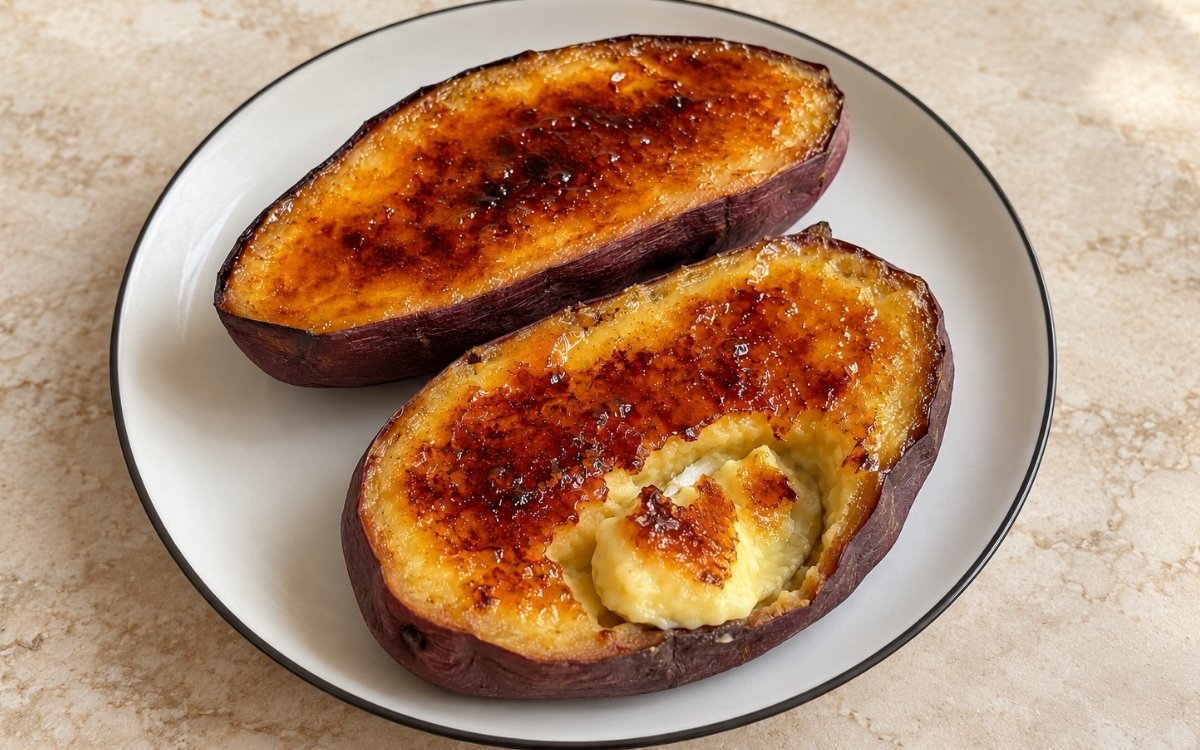
- Use a kitchen torch to caramelize the sugar until amber-brown and glossy, with a few darker mahogany spots. Let sit for 1 minute so the caramel hardens. Serve immediately. The caramel should be thin and crisp enough to crack with a spoon. If the sugar layer is too thick, it becomes hard and bitter. That specific, checkable target — thin enough to genuinely crack with a spoon — protects against a heavier sugar layer, which would harden into something considerably tougher and more bitter than this dessert's own delicate crust is meant to be.
Notes
Roasting the sweet potatoes until genuinely, fully soft all the way through deserves recognition as the technique most directly responsible for whether this custard achieves real smoothness. The recipe's own explicit warning that firm centres "will be grainy" reflects a real, common failure point — that complete tenderness is what lets the flesh blend into a genuinely smooth base rather than carrying unwanted texture through into the finished custard.
Straining the custard base through a fine sieve deserves genuine attention as the technique responsible for the custard's own clean, refined texture. The recipe's own explicit note that "roasted sweet potato can stay fibrous even after blending" reflects real understanding of a limitation blending alone can't fully overcome, and straining is specifically what corrects it.
Blotting away any surface condensation before the sugar is added deserves genuine respect as a small but consequential detail specific to this dessert's brûlée topping. The recipe's own explicit warning that "condensation ruins the brûlée" reflects a real, direct cause-and-effect relationship — a wet surface prevents the sugar from ever properly melting into the thin, glassy crust this dish depends on.
Keeping the torch flame moving in small, continuous circles deserves attention as the detail responsible for protecting both the sugar and the delicate sweet potato skin beneath it. The recipe's own explicit warning that lingering "too long in one spot burns the sugar and can scorch the potato skin" reflects a real, narrow margin this final finishing stage depends on watching closely.