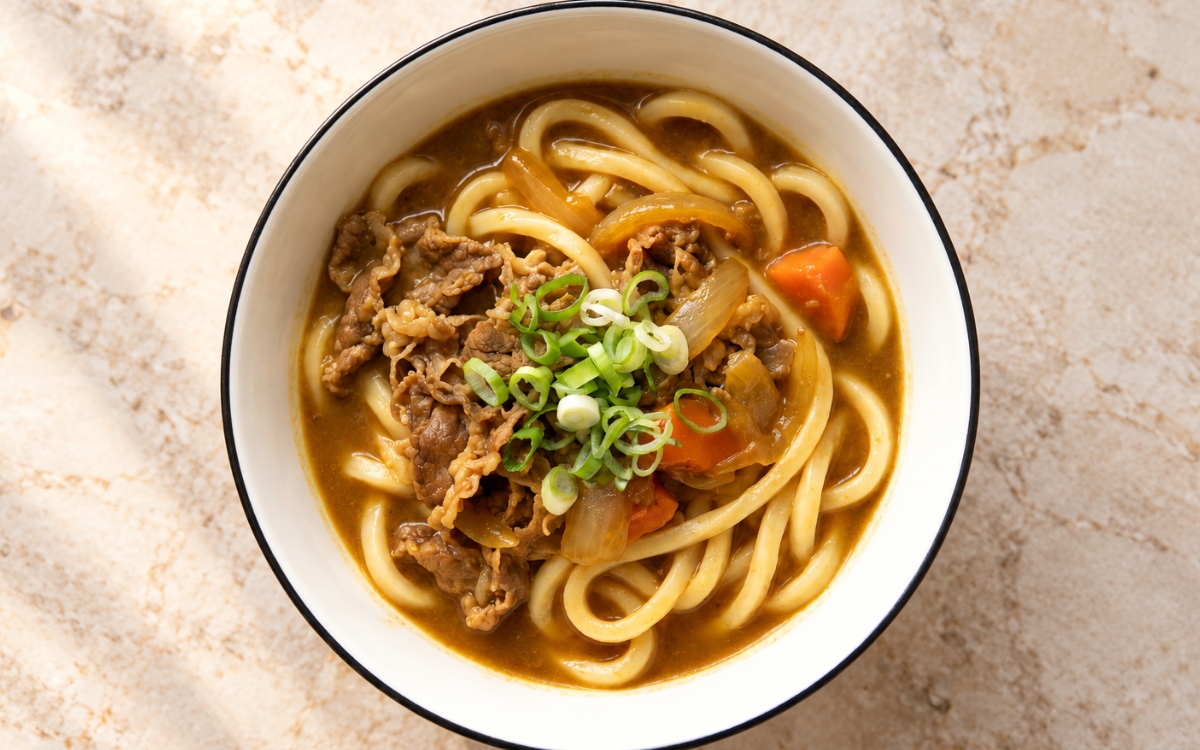
Ingredients
Method
Prep the Ingredients
- Halve the 2 medium yellow onions and slice them thinly and evenly, then peel the carrot and cut it into small, thin half-moons so it softens quickly in the broth. Separate the 350–400g of beef slices if they are stuck together, chop the 90–120g of curry roux into small pieces, and finely slice the 2–3 scallions for garnish. Set everything within reach of the stove, because the cooking moves quickly once the onions go in. That small-carrot, paper-thin-beef preparation is what lets every element finish tender in the same short cooking window.
Soften the Onions and Carrot
- Heat 1 tbsp neutral oil in a medium pot over medium heat, then add the onions and cook for 5–7 minutes, stirring often, until softened and just starting to turn translucent. Add the carrot and cook for 2 more minutes, keeping the heat moderate so nothing takes on deep colour. The onions should look pale gold and glossy, never dark or roasted, because this dish should stay gentle and rounded. That patient softening is what removes the sharpness from the onions and gives the finished broth its mellow sweetness.
Build the Dashi Broth
- Pour in 1,000ml of dashi, then add 3 tbsp soy sauce, 2 tbsp mirin, and 1 tsp sugar, stirring to combine. Bring the pot to a gentle simmer and cook for 6–8 minutes, until the carrot pieces are just tender when pierced and the onions are completely soft. Keep the bubbles lazy rather than rolling, so the dashi stays clear and fragrant. That short simmer is what seasons the vegetables and builds a savoury-sweet base before the roux ever goes in.
Dissolve the Curry Roux
- Lower the heat to low, or lift the pot off the burner, and add the chopped roux a little at a time, stirring after each addition until it dissolves completely before adding more. Simmer gently for 2–3 minutes, until the broth turns glossy and golden-brown and lightly coats the back of a spoon without looking heavy like plate curry. If it is too thin, simmer 1–2 minutes more or stir in the cornstarch slurry of 1–2 tsp cornstarch and 1 tbsp cold water; if it is too thick, loosen it with a splash of hot dashi. That gradual, low-heat dissolving is what prevents clumps and keeps the broth smooth.
Cook the Beef
- Once the broth is completely smooth, add the thinly sliced beef and push the slices apart with chopsticks or a spoon so they do not clump. Simmer gently for 1–2 minutes, just until the beef changes from red to pale brown and turns tender, then lower the heat further. Never let the broth boil hard at this stage, since thin beef tightens and turns tough within moments. That brief, gentle simmer is what leaves the beef silky and juicy instead of grey and chewy.
Prepare the Udon
- Cook the 800g of udon according to the package instructions: frozen udon usually needs 1–2 minutes in boiling water, while fresh vacuum-packed udon needs only a brief loosening in hot water. Drain well, rinsing only if the package requires it, and divide the hot noodles among 4 bowls. The udon should stay thick, springy, and chewy rather than soft. That quick cook and thorough drain are what keep the noodles bouncy and stop stray water from thinning the curry broth.
Assemble and Serve
- Ladle the hot curry broth, with the beef, onions, and carrots, over the udon so the noodles are partly submerged but still visible. Scatter the finely sliced scallions over the top and serve immediately while the bowls are piping hot. If the broth thickens as it waits, loosen it with a splash of hot dashi or hot water and rebalance with a little soy sauce. That immediate service is what keeps the broth silky and lightly coating, since curry thickens steadily as it cools.
Notes
Dissolving the roux gradually deserves genuine recognition as the technique most directly responsible for a smooth, glossy broth. Roux blocks are packed with flour and fat, so large pieces melt unevenly in hot liquid and form stubborn lumps, whereas small additions stirred in over low heat disperse evenly and thicken the broth in a controlled way.
Softening the onions without browning them deserves the same attention this technique receives throughout this collection’s other gentle, rounded noodle soups. Deep browning turns the sugars dark and bitter and pushes the broth towards a roasted plate-curry flavour, while patient softening keeps it sweet, mellow, and light enough to suit a bowl of udon.
Using paper-thin beef and a very short simmer deserves genuine respect as the detail most directly responsible for tender meat. Shabu-shabu slices cook through in a minute or two, and any longer or any harder boil tightens the proteins and leaves the beef dry and chewy in an otherwise silky bowl.
The thickness of the broth deserves attention as a genuine, checkable readiness cue rather than a loose approximation. It should coat a spoon lightly yet still run freely, looser than curry rice and thicker than ordinary noodle soup, because a heavy sauce clings to the udon in clumps while a watery one slides straight off.