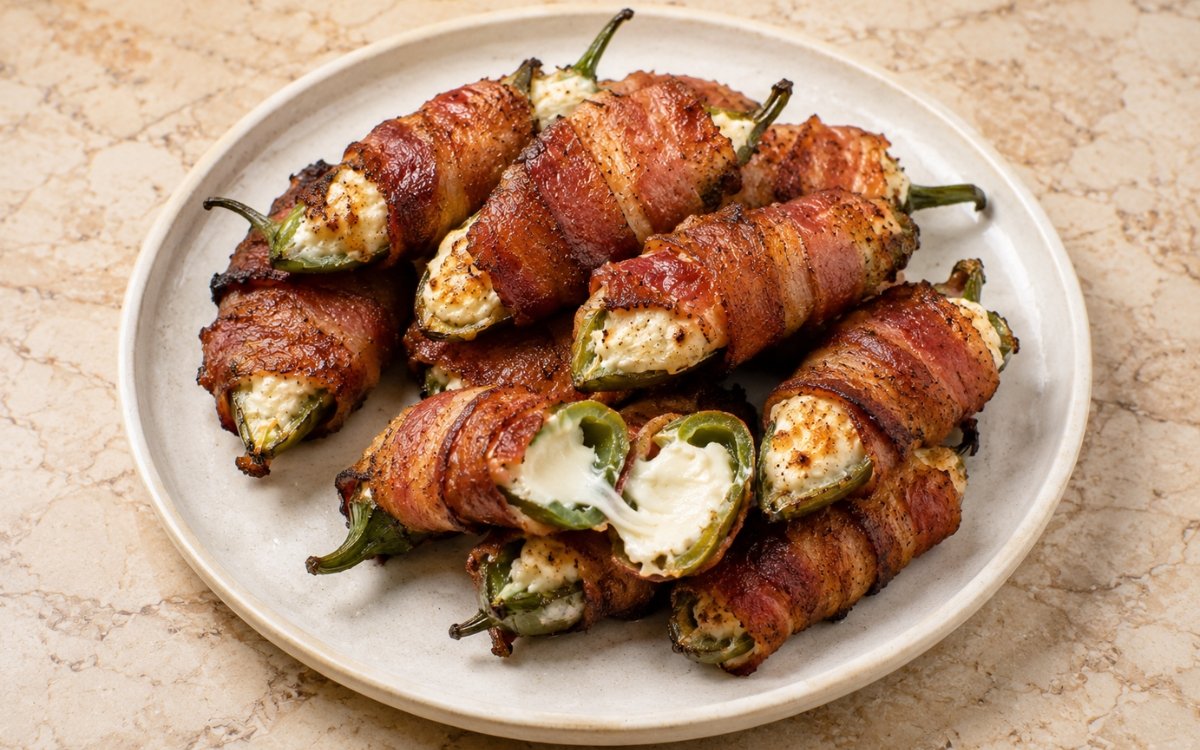
Ingredients
Method
Prepare the Jalapeños
- Preheat the oven to 220°C. Line a baking tray with parchment, or preferably set a wire rack over a tray so the bacon can render and crisp more evenly. Slice each jalapeño in half lengthwise, keeping the stems attached for appearance and structure. Use a spoon or small knife to remove the seeds and white membranes from each half. Removing the membranes is what controls the heat level most directly. Leave a little membrane behind only if you want them spicier. Try not to tear the jalapeño walls, because intact halves hold the filling better during baking. The membrane, not the seeds themselves, is where the pepper's capsaicin is most concentrated — scraping it out thoroughly is a far more effective way to tame the heat than simply removing the visible seeds alone.
Make the Filling
- In a bowl, combine the softened cream cheese, shredded sharp cheddar, sriracha, garlic powder, onion powder, salt, and black pepper. Mix until fully combined and evenly smooth. The mixture should be thick, creamy, and spreadable, with the cheddar distributed throughout rather than sitting in clumps. The cream cheese needs to be properly softened before mixing. If it is still cold and firm, the filling stays lumpy and does not spread cleanly into the jalapeño halves. Cold cream cheese resists blending into a uniform mixture no matter how vigorously it's stirred — softening it first is what allows the sharper cheddar and seasonings to distribute evenly throughout rather than sitting in separate pockets.
Fill the Jalapeños
- Divide the filling evenly among the 24 jalapeño halves. Pack each half full, slightly mounding the filling, but do not overfill so much that it spills heavily once the cheese softens in the oven. Press the filling in so it sits snugly inside each pepper. The filling should reach close to the edges of each jalapeño half but still remain contained. Overfilling makes the cheese overflow before the bacon has time to crisp. Pressing the filling in snugly rather than simply spooning it on top is what keeps it anchored inside the pepper through the bake — loosely piled filling is more likely to slide or spill as the cheese softens and the bacon shrinks slightly while rendering.
Wrap with Bacon
- Wrap each filled jalapeño half with one half-slice of bacon, starting at one end and spiraling around just enough to secure the filling while still leaving a little of the jalapeño and filling visible. If needed, secure the bacon with a toothpick, though with properly wrapped thin bacon this often is not necessary. Arrange the poppers seam-side down on the prepared rack or tray. Thin-cut bacon works best here. Thick-cut bacon often needs longer than the jalapeños and filling do, and can stay chewy before the poppers are otherwise finished. Placing each popper seam-side down uses the bacon's own weight to help hold its spiral in place through the early part of baking, before the fat has rendered enough to set the wrap on its own.
Bake
- Bake at 220°C for 25–35 minutes, depending on the thickness of the bacon and the size of the jalapeños. The poppers are done when the jalapeños are softened but still hold their shape, the cream cheese filling is fully hot, softened, and creamy, the cheddar has melted into the filling, and the bacon is rendered, browned, and crisp at the edges. If needed, finish under the broiler for 1–3 minutes at the end to crisp the bacon further, watching closely so the tops do not burn. The ideal finish is when the bacon is visibly crisp and the cheese is bubbling lightly, but the filling has not fully run out of the jalapeños. A wire rack elevates the poppers just enough that rendered bacon fat drips away freely rather than pooling around the base — pooled fat both stops the bacon from crisping evenly and can make the bottoms of the peppers greasy rather than tender.
Rest and Serve
- Let the poppers rest for 5 minutes before serving. This gives the filling time to settle slightly so it stays creamy but does not immediately spill out. Serve hot. The final poppers should have tender jalapeños, extra-creamy molten filling, and crisp bacon with enough structure to hold each half together when picked up. Cheese straight out of the oven is at its most fluid; the brief rest lets it firm up just enough to stay contained within the pepper when picked up, while remaining fully melted and creamy when eaten.
Notes
Controlling heat through the membrane rather than the seeds alone is worth understanding clearly, since it's a common point of confusion. The white membrane running along the inside of a jalapeño carries a disproportionate share of the pepper's capsaicin compared to the seeds themselves, which mostly just cling to that membrane rather than containing much heat on their own. Scraping the membrane out thoroughly is what actually tames the pepper toward mild; removing only the visible seeds while leaving membrane behind will still produce a noticeably spicier result than intended.
The choice of thin-cut bacon over thick-cut is a genuine timing calculation rather than a simple preference. This recipe's other components — the jalapeño's tenderness and the filling's melt — both reach their ideal point within a fairly narrow window at 220°C. Thick-cut bacon typically needs meaningfully longer than that window to fully render and crisp, which forces an uncomfortable choice between undercooked, chewy bacon or a jalapeño and filling pushed well past their own ideal doneness.
Using a wire rack rather than a flat baking tray addresses a problem that's easy to overlook until it's already happened. As the bacon's fat renders out during baking, it has to go somewhere — on a flat tray, that fat pools directly beneath each popper, and the bottom of the jalapeño essentially fries and steams in that pooled fat rather than staying tender and roasting cleanly. A rack lets that same fat drip away and collect on the tray below, keeping the peppers themselves from sitting in grease.
The brief resting period after baking, though short, protects against one of the more common frustrations with jalapeño poppers — filling that spills out the moment they're picked up. Cheese immediately out of a hot oven is at its loosest, most fluid state, and a few minutes of rest lets it firm up just enough to stay contained within the pepper's shell, without cooling so much that it loses its creamy, molten quality.