Ingredients
Method
Choose a High-Quality Olive Oil
- Olive oil is the dominant flavor here, so quality matters more than in most sauces. Use fresh extra-virgin olive oil with grassy, fruity, slightly peppery notes. Oils sold in dark bottles with a visible harvest date are usually more reliable. Avoid old or flat-tasting oils — they will make the finished sauce dull regardless of technique.
Gently Warm the Oil
- Pour the olive oil into a small heavy-bottomed saucepan and set it over the lowest heat. The goal is gentle warming, not frying. The oil should feel warm and aromatic but never smoke or bubble aggressively.
Infuse the Garlic
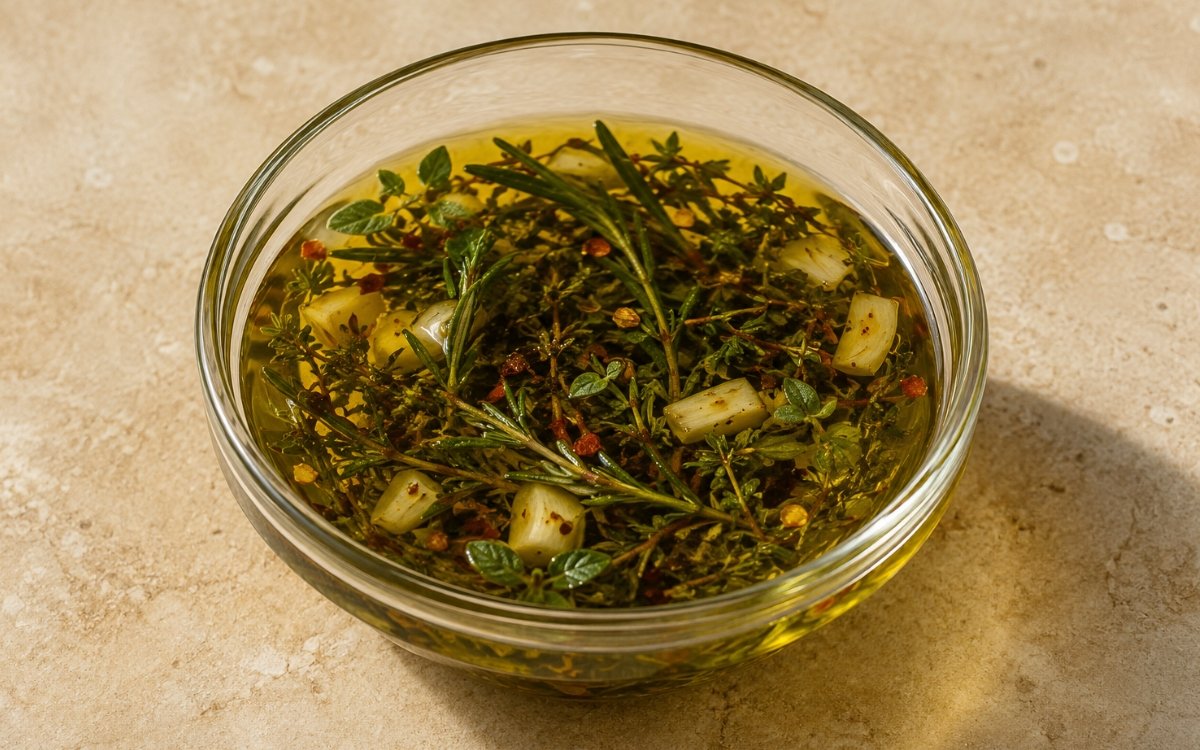
- Add lightly crushed garlic cloves and let them infuse for about 2 minutes. Watch closely — they should turn pale golden at the edges but never brown or crisp, which would introduce bitterness.
Add Herbs and Chili
- Drop in whole herb sprigs and infuse for another 2–3 minutes on low heat. Add chili flakes only during the final 30 seconds so their heat stays balanced.
Rest the Oil Off Heat
- Remove the pan from heat and let the oil sit undisturbed for about 5 minutes. Residual warmth continues extracting herbal aroma while the temperature drops to a stable serving range.
Strain or Serve Rustic
- Serve with the herbs and garlic for a rustic look, or strain through a fine sieve for a cleaner finish. Season with flaky salt and black pepper. If storing, cool fully before sealing.
Notes
The crucial distinction in this recipe is the difference between infusing and frying. Frying requires high heat — typically 175°C or above — where foods cook rapidly, develop crust, and release Maillard reaction compounds. Infusing requires low heat — typically 60–80°C — where volatile aromatic compounds in herbs and spices dissolve slowly into the fat without the herbs cooking, browning, or releasing bitter compounds. The entire technique of this recipe depends on keeping the heat low enough for infusion while avoiding the heat level that would begin frying.
Rosemary and thyme are specified as the primary herbs because their relatively robust structure holds up well to heat infusion, releasing their aromatic oils reliably without disintegrating. More delicate herbs — basil, parsley, chives — cannot withstand even low heat infusion and should always be added raw to a sauce rather than infused.
The food safety consideration: fresh herbs infused in olive oil can potentially support the growth of Clostridium botulinum bacteria in certain conditions. For food safety, this oil should either be used within 2 hours of making if stored at room temperature, or refrigerated and used within 5 days. Never store fresh-herb-infused oil at room temperature for extended periods.