Ingredients
Method
Cook the Farro
- Bring the water to a boil with the salt and bay leaf if using. Add the farro and simmer uncovered for 22–30 minutes, depending on the type, until tender but still chewy. Drain well. Remove the bay leaf. Spread the farro on a tray and toss with 1 tbsp olive oil. Let it cool for 10–15 minutes. Farro should be chewy and separate, not soft like porridge. If it is overcooked, the salad becomes heavy and wet. That genuinely chewy, distinct texture protects the entire salad's own intended lightness — grains cooked past this point would begin breaking down, turning the whole dish considerably heavier and wetter than intended.
Roast the Vegetables
- Heat the oven to 220°C / 425°F. Place the zucchini, cherry tomatoes, and red onion on a large baking tray. Toss with olive oil, salt, black pepper, and oregano. Roast for 22–28 minutes, turning once, until zucchini is golden at the edges, tomatoes are blistered and slightly collapsed, and onion is softened and lightly charred. Let the vegetables cool for 5–10 minutes before mixing. The vegetables should be roasted enough to concentrate their sweetness, but not so soft that they fall apart completely in the salad. That specific, checkable target — real colour and softening without full collapse — protects each vegetable's own distinct identity in the finished salad, rather than letting them dissolve into an undifferentiated mass.
Toast the Pine Nuts
- Toast the pine nuts in a dry pan over medium-low heat for 2–4 minutes, stirring often, until golden and fragrant. Transfer immediately to a plate. Pine nuts burn very quickly. Remove them from the pan as soon as they are golden. That immediate transfer off the hot pan protects the pine nuts from their own real, narrow margin between properly toasted and burnt — leaving them in even briefly longer, on residual pan heat alone, risks tipping them into real bitterness.
Make the Vinaigrette
- Whisk together olive oil, red wine vinegar, Dijon mustard, garlic, honey, salt, and black pepper. Taste and adjust. It should be bright, tangy, and slightly sharp because the farro will absorb some of the acidity. That deliberate sharpness accounts for real, predictable dilution once the grains soak up a portion of the dressing's own acidity, protecting the finished salad from tasting flat.
Dress the Farro
- Place the warm or room-temperature farro in a large bowl. Add about two-thirds of the vinaigrette and toss well. Let it sit for 5 minutes so the grains absorb the dressing. Dressing the farro before adding the cheese and basil gives better flavor without bruising the delicate ingredients. That deliberate sequencing, dressing the grain first, lets the vinaigrette actually work into every kernel before the more fragile basil and crumbled cheese are ever introduced to the tossing process.
Assemble the Salad
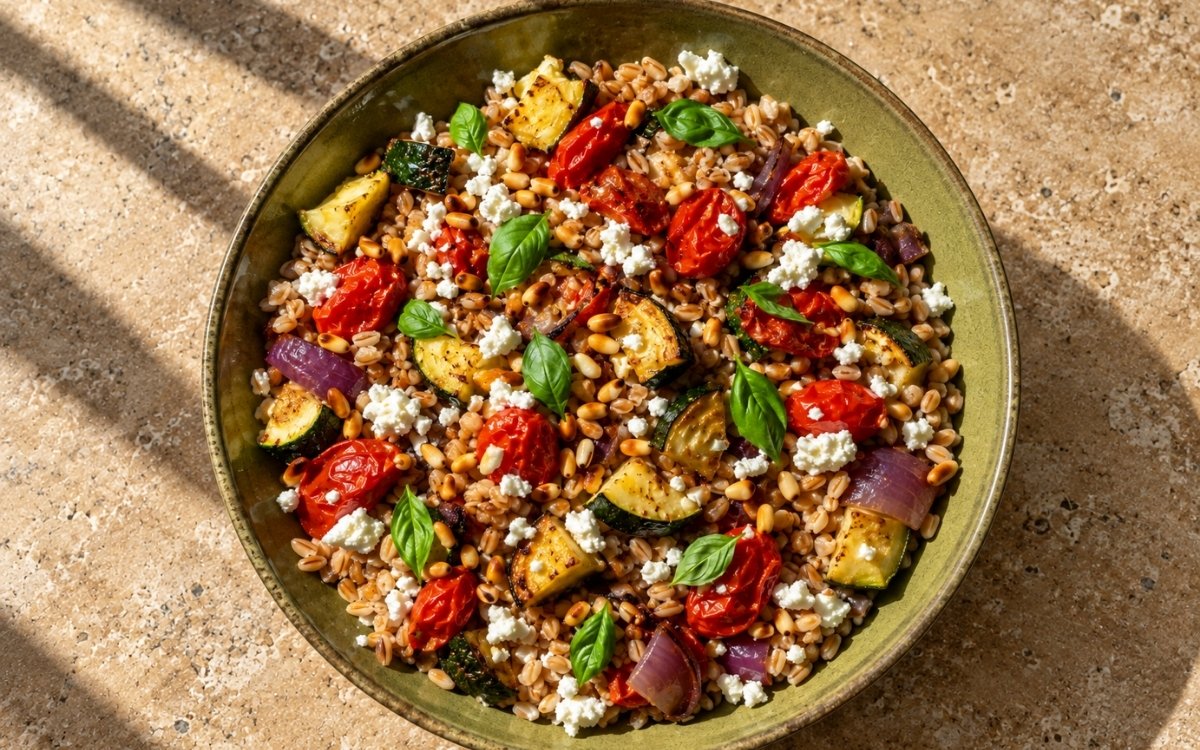
- Add the roasted zucchini, tomatoes, and red onion to the dressed farro. Toss gently. Fold in most of the basil, most of the ricotta salata, and most of the pine nuts. Transfer to a wide serving bowl. Finish with the remaining ricotta salata, pine nuts, basil leaves, a little extra olive oil, and black pepper. Serve slightly warm, room temperature, or lightly chilled. Reserving a portion of ricotta salata, pine nuts, and basil specifically for this final finish keeps those elements genuinely visible and fresh right at the surface of the finished salad.
Notes
Cooking the farro only until tender but genuinely chewy deserves recognition as the technique most directly responsible for this salad's whole intended texture. The recipe's own explicit warning that overcooked farro "becomes heavy and wet" reflects a real, common failure point — that distinct, separate chew is specifically what keeps the finished salad feeling loose and defined rather than dense and porridge-like.
Dressing the farro before the cheese and basil are added deserves the same attention this technique receives throughout this collection's other grain-based salads. The recipe's own explicit note that this sequencing gives "better flavor without bruising the delicate ingredients" reflects real, deliberate ordering — the grains genuinely absorb dressing more fully when given that dedicated stage, while the more fragile basil and cheese are spared unnecessary handling.
Roasting the vegetables to a specific, checkable point — real colour and softening without full collapse — deserves genuine attention as a deliberate technique protecting each component's own visual and textural identity. Vegetables roasted past this point would dissolve into an undifferentiated mass, losing the distinct contrast this salad is built around.
Removing the pine nuts from the pan the moment they turn golden deserves respect as the detail responsible for protecting the whole dish from real, dominant bitterness. Pine nuts carry a genuinely narrow margin between properly toasted and burnt, and even residual pan heat after the heat source is removed can push them past that point if they're left sitting even briefly.