Ingredients
Method
Make the Giardiniera
- Combine the cauliflower, celery, carrot, green bell pepper, serrano or jalapeño, olives if using, and sliced garlic in a bowl. Toss with the salt, cover, and refrigerate for 8–12 hours. Drain the vegetables and rinse briefly under cold water. Drain very well. In a clean jar or container, combine the vinegar, water, oregano, red pepper flakes, black pepper, and oil. Add the drained vegetables and mix well. Refrigerate for at least 12 hours, ideally 24 hours. The giardiniera should be crunchy, sharp, oily, spicy, and green-heavy. If it tastes flat, it needs more salt or vinegar. If it tastes like raw vegetables floating in oil, it was not rested long enough. The initial dry salting draws excess moisture out of the vegetables before they ever meet the vinegar brine — skipping that step would leave the vegetables holding onto extra water that dilutes the final pickle's sharpness.
Make the French Roll Dough
- In a large bowl, combine the warm water, yeast, and sugar. Let stand for 5–10 minutes until slightly foamy. Add the flour, salt, and oil. Mix until a rough dough forms, then knead by hand for 8–10 minutes, or in a stand mixer for 6–8 minutes, until smooth and elastic. The dough should be tacky but not wet. Use the lower amount of water first, then add the remaining water only if the dough feels dry and tight. Kneading to a smooth, elastic consistency develops the gluten structure needed for a roll sturdy enough to hold juicy, jus-soaked beef without falling apart.
First Rise
- Shape the dough into a ball, place in a lightly oiled bowl, cover, and let rise for 1–1½ hours, until doubled. The dough should look clearly expanded and feel airy. Under-risen dough gives dense rolls that will not open properly for beef. Letting the dough reach a genuine doubling gives the yeast time to produce the gas volume needed for a roll with enough interior structure to hold a generous pile of beef without collapsing.
Shape the Rolls
- Turn the dough out and divide into 4 equal pieces, about 190g each. Shape each piece into a long roll, about 18–20cm long. Place on a parchment-lined tray with space between them. Cover and proof for 45–60 minutes, until puffy. Preheat the oven to 220°C during the final 20 minutes. Preheating during the final stretch of proofing ensures the oven is fully up to temperature the moment the rolls are ready, rather than letting them overproof while waiting for a cold oven to heat.
Bake the Rolls
- Slash each roll once lengthwise with a sharp blade. Spray lightly with water or add steam to the oven. Bake for 18–22 minutes, until golden, set, and lightly crusty. Cool on a rack before slicing. The roll should be crusty enough to hold juicy beef, but not so hard it fights the sandwich. If you bake it into a baguette, you missed the target. This roll occupies a deliberate middle ground between soft and hard — sturdy enough to withstand dipping in hot jus, but yielding enough to bite through cleanly rather than fighting back like a true baguette crust would.
Season and Roast the Beef
- Preheat the oven to 150°C. Pat the beef very dry. Season all over with salt, black pepper, garlic powder, onion powder, and oregano. Heat oil in a heavy skillet over medium-high heat. Sear the beef on all sides until browned. Transfer to a roasting pan and roast until the center reaches 52–55°C for medium-rare, about 35–50 minutes, depending on shape and thickness. Rest for 20 minutes, then chill until firm enough to slice very thinly. The beef needs to be sliced thin. Thick slices are trash for Italian beef. If you cannot slice it thin while warm, chill it first and slice it cold. That thorough searing before roasting builds a fond on the pan that becomes the foundation of the au jus later — pale, unseared beef would leave the jus noticeably weaker regardless of how it's seasoned afterward.
Make the Au Jus
- Place the roasting pan or skillet with the beef drippings over medium heat. Add the minced garlic and cook for 30 seconds. Add the beef stock, oregano, basil, onion powder, garlic powder, red pepper flakes, black pepper, celery salt if using, Worcestershire sauce, and beef bouillon if using. Scrape up any browned bits from the pan. Simmer for 20–25 minutes until deeply seasoned and aromatic. Taste and adjust salt. The jus should taste stronger than normal soup because it has to season the beef and soak into bread. Weak jus gives weak Italian beef. Do not serve weak jus. Deglazing directly with the beef stock, scraping up every bit of fond from searing and roasting, is what carries that concentrated pan flavour straight into the jus rather than leaving it stuck to the pan.
Slice and Warm the Beef
- Slice the chilled beef as thinly as possible across the grain. A deli slicer is ideal, but a very sharp knife works if the beef is cold and firm. Lower the jus to a gentle heat. Add the sliced beef and warm for 1–2 minutes only. Do not boil the sliced beef. Boiling tightens it and turns it dry. The beef should be hot, loose, and dripping with jus. Chilling the roast firm before slicing is what makes genuinely thin, even slices achievable — beef still warm and soft from resting is too pliable to slice consistently thin, while a firm, cold roast holds its shape cleanly under the knife.
Roast the Sweet Peppers
- Slice the red and green bell peppers into strips. Toss with olive oil and salt. Roast at 220°C for 15–20 minutes, or cook in a skillet until softened, lightly blistered, and sweet. The peppers should be tender and glossy, not raw-crunchy. Roasting fully rather than just warming the peppers develops real sweetness and a soft, glossy texture that contrasts against the giardiniera's sharp crunch — a quickly seared version would stay closer to raw and miss that intended sweetness.
Assemble the Sandwiches
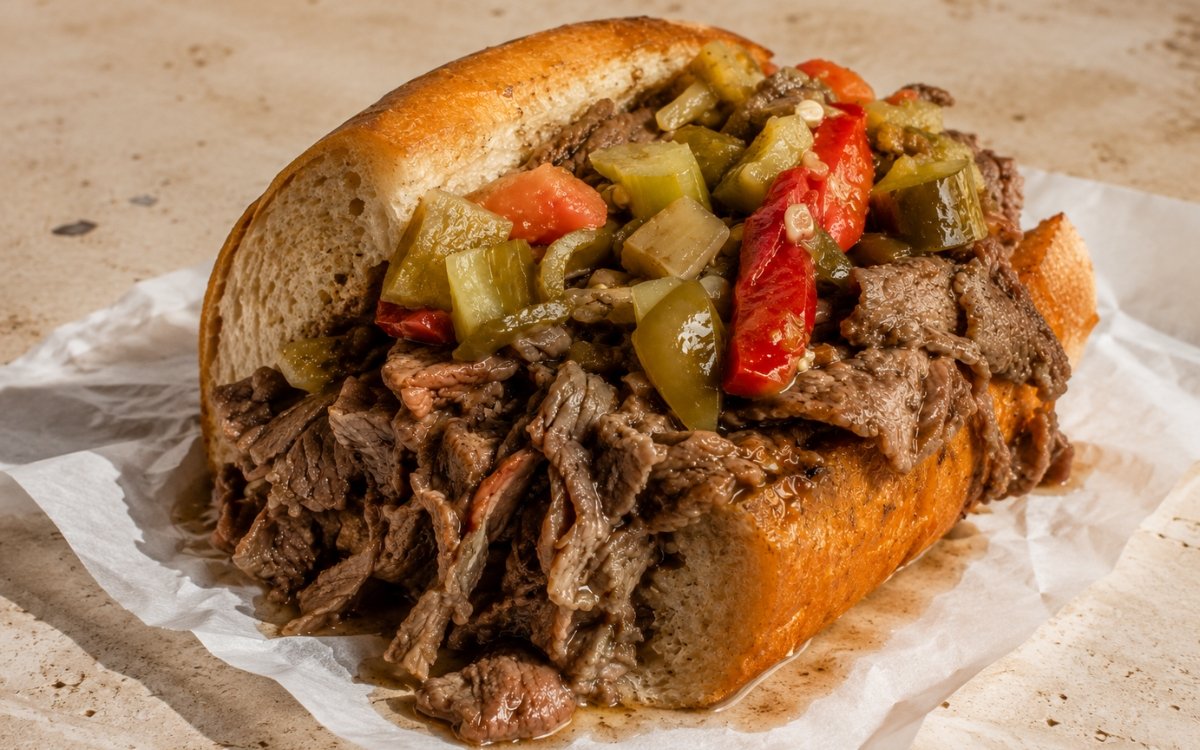
- Split the rolls lengthwise without cutting all the way through. Toast lightly if desired. Pile each roll with about 200g hot sliced beef, letting the meat spill over the edges. Spoon extra jus over the beef or quickly dip the cut side of the roll into the jus if you want it wet. Top with roasted sweet peppers and a generous spoonful of green giardiniera. Serve immediately with extra hot au jus on the side if desired. Dipping the roll only right at serving, rather than earlier, is what keeps it from turning to mush before the sandwich even reaches the table — that "wet" preparation has a genuinely short window once it happens.
Notes
The giardiniera's extended pickling time is worth respecting rather than rushing, since it's directly responsible for the condiment's defining character. Same-day giardiniera is technically edible but tastes closer to raw vegetables sitting in oil and vinegar rather than something genuinely pickled — the full 12–24 hour rest is what allows the salt, vinegar, and oil to properly penetrate the vegetables and develop the sharp, rounded flavour this sandwich depends on for contrast against the rich beef.
Slicing the beef thin, after chilling it fully firm, deserves to be understood as the single most consequential technical decision in the whole recipe. Chicago-style Italian beef's entire textural identity depends on paper-thin slices that warm through and soften almost instantly in hot jus — thick-cut beef, even from the same well-roasted piece, simply doesn't behave the same way, staying chewier and less integrated with the jus regardless of how long it's warmed.
The au jus needs to taste noticeably more concentrated and seasoned than a jus meant to be sipped on its own, and that's a genuine, deliberate calibration rather than an accident of the recipe. This jus has two separate jobs — seasoning the thin-sliced beef as it warms through, and soaking into the bread once the sandwich is dipped — and a jus built to taste balanced on a spoon will read as under-seasoned once it's spread across those two additional roles.
The French roll's specific texture, deliberately positioned between a soft burger bun and a hard baguette crust, matters more than it might seem for a sandwich built around dipping bread into hot liquid. A soft bun would collapse almost immediately under that treatment, while a true baguette crust would resist biting through cleanly. This roll's middle-ground crust is calibrated specifically to survive a dip while still yielding easily to the bite.