Ingredients
Method
Prep and Coat the Paneer
- Pat the 600g paneer cubes gently dry with paper towels, taking care not to crumble the edges. In a large bowl, toss the cubes with the 2 tbsp cornstarch, ¼ tsp salt and ¼ tsp black pepper until every side is lightly and evenly dusted. The coating should look thin, matte and dry — never pasty or clumped in the corners of the bowl. If it looks pasty, the paneer was too wet, so shake off the excess and pat those cubes dry again before frying. While the paneer sits, slice the onion, both bell peppers and the spring onion whites, and roughly chop the garlic, ginger and green chillies. That thin, dry coat is what lets the paneer brown lightly in very little oil and gives the finished sauce something to cling to.
Brown the Paneer
- Heat the 2 tbsp neutral oil for shallow-frying in a wide frying pan over medium to medium-high heat until it shimmers. Add the paneer in a single layer, working in 2 batches if the pan is crowded, and cook for 1–2 minutes per side, turning carefully with tongs, until the edges are lightly golden and just crisp. Lift the cubes onto a plate as they finish. The paneer should still feel genuinely soft when pressed, with pale patches on each face rather than deep brown crusts. If the oil starts smoking, lower the heat slightly before the next batch. That light, quick browning is what keeps the interior tender, since deeply fried or over-browned paneer turns dense and rubbery.
Build the Sauce Base
- Return the same pan to medium heat and add the 2 tbsp neutral oil for the sauce, using a little less if oil remains from the paneer. Add the onion, red and green bell pepper, garlic, ginger, green chillies and spring onion whites, and cook for 5–7 minutes, stirring often, until everything is soft and lightly coloured. Add the 2 tbsp ketchup, 1½ tbsp red chilli sauce, green chilli sauce if using, 1½ tbsp light soy sauce, 1 tsp dark soy sauce, 1 tbsp vinegar, 1 tsp sugar and ½ tsp black pepper, and cook for 1 minute more, until the mixture smells cooked and turns slightly jammy. Pour in 120ml of the water and simmer for 2–3 minutes, until the peppers collapse easily under a spoon. Keep the heat moderate so the garlic never darkens. That full softening is what lets the base blend completely smooth, while scorched garlic would carry its bitterness through the whole sauce.
Blend Until Smooth
- Transfer the hot sauce base to a blender, filling it no more than halfway, and remove the centre cap of the lid, covering the opening with a folded kitchen towel so steam can escape. Blend for 1–2 minutes, until completely smooth, with no flecks of pepper skin or fibres of ginger visible. Add a splash more of the remaining water only if the blades struggle to turn. The purée should look thick, smooth and glossy, with the body of a loose ketchup rather than the thinness of a soup. Scrape every bit back out of the jar with a spatula. That thorough blending is what gives the sauce its velvety, restaurant-style texture and lets it coat the paneer evenly.
Finish the Sauce
- Return the blended sauce to the pan over medium heat and bring it to a gentle simmer. If it looks too thick to bubble softly, loosen it with more of the remaining water, 1–2 tbsp at a time. Taste and add salt only if needed, since the soy sauces and chilli sauces already carry plenty. Stir the 1½ tsp cornstarch into the 2 tbsp cold water until smooth, pour the slurry into the sauce while stirring, and simmer for 30–60 seconds, until it thickens and turns sticky and shiny. The finished sauce should coat the back of a spoon and hold softly when a finger is drawn through it. If it tightens into a gluey paste, stir in 1 tbsp of the remaining water. That small slurry is what gives the sauce its cling while keeping it rich and spoonable rather than set.
Add the Paneer
- Slide the browned paneer into the sauce and fold gently with a spatula until every cube is coated. Keep the heat low and simmer very gently for 1–2 minutes only, just until the paneer is heated through to the centre. Scatter over the sliced spring onion greens and the 1 tsp toasted sesame oil, if using, and fold once more. If the sauce has loosened, simmer it a few seconds longer; if it looks too thick, loosen it with 1–2 tbsp of the remaining water. Avoid stirring vigorously, which breaks the cubes and smears off their coating. That brief, gentle simmer is what warms the paneer without firming it, since paneer turns tougher the longer it cooks.
Finish and Serve
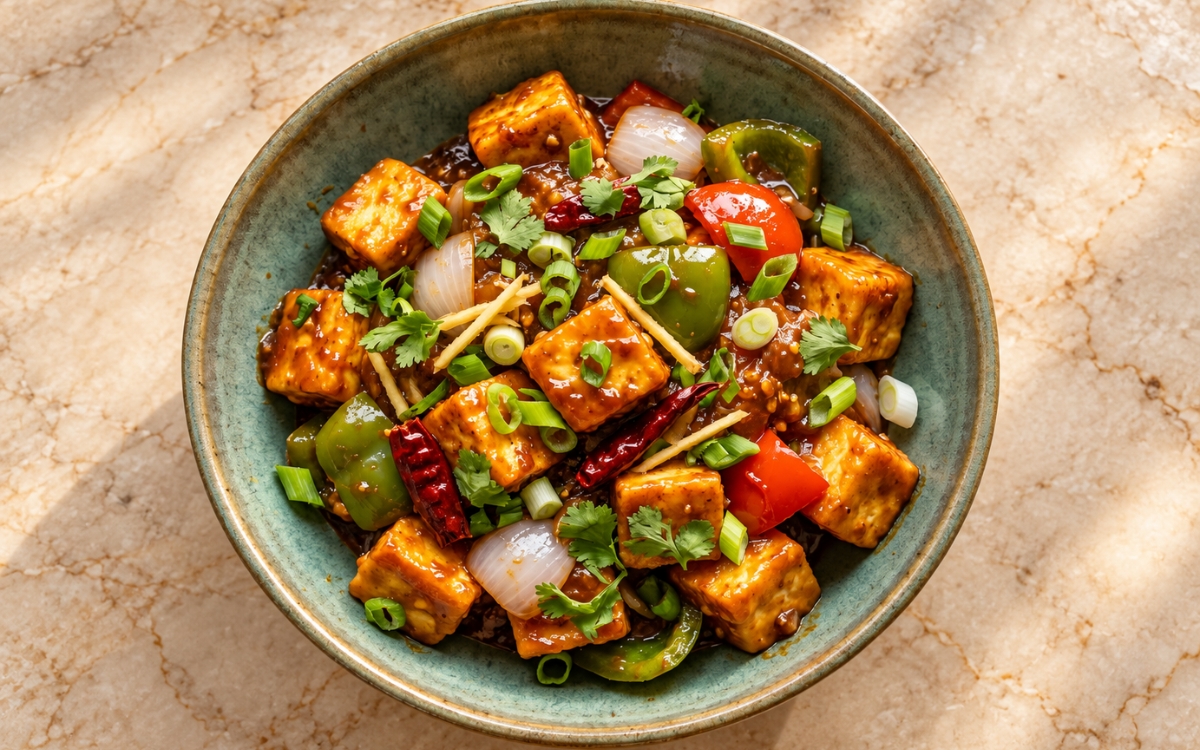
- Spoon the chili paneer into 4 warm bowls, dividing the sauce evenly so each portion has plenty clinging to the cubes. Scatter the 2 tbsp chopped cilantro over the top. Drizzle the 2–3 tbsp cream in a light swirl across each bowl, roughly 1½–2 tsp per portion, leaving it on the surface rather than stirring it in. The finished dish should look glossy and reddish-brown, with green flecks of scallion and cilantro and soft white ribbons of cream. Serve hot, with steamed rice or fried rice alongside. That restrained cream finish is what softens the sharp edges of the chilli sauce without pushing the dish away from its Indo-Chinese character.
Notes
Softening the vegetables completely before blending deserves genuine recognition as the technique most directly responsible for whether this sauce turns velvety or stays grainy. Onion and pepper that are only half-cooked still hold firm cell walls and a raw sharpness, so they blend into a coarse, pale purée — the 5–7 minute sauté and 2–3 minute simmer break them down until the blender can turn them genuinely glossy.
The light browning of the paneer deserves the same attention this technique receives throughout this collection’s other paneer and fresh-cheese recipes, because the texture of the cubes is decided in the pan, not in the sauce. The recipe’s own warning that “Overcooked paneer turns rubbery” holds because prolonged heat tightens paneer’s milk proteins and squeezes out moisture, so 1–2 minutes per side is all the cubes need.
The restraint with dark soy sauce deserves genuine respect as the detail most directly responsible for the sauce’s reddish-brown colour rather than a muddy near-black. The recipe’s own note that “Dark soy is used mainly for color and depth; keep it restrained” reflects how strongly a single teaspoon tints the whole sauce — more would darken it and push the salt beyond what the ketchup and chilli sauces can balance.
The thickness of the finished sauce deserves attention as a genuine, checkable readiness cue rather than a loose approximation. It should coat the back of a spoon and hold softly around the paneer — the recipe’s own line that “Chili paneer sauce should be rich and clingy, but still spoonable” is the reason the slurry stays at 1½ tsp and simmers for only 30–60 seconds.